In the global UTV (all-terrain side-by-side vehicle) market, China has become the core production and export base. Relying on perfect industrial chain, mature production technology and super cost-effective advantages, domestic electric and fuel UTV have been exported to Europe, America, Southeast Asia, Middle East, Africa and other regions of the world.
For overseas distributors, traders and outdoor equipment practitioners, UTV imported from China is a low-cost, high-profit high-quality start-up and customer promotion channel. However, many novice merchants often face many problems, such as not understanding local import regulations, not screening reliable factories, incomplete preparation of customs clearance materials, logistics delays, uneven quality and other problems.
Compared with the UTV brands in Europe and America, China UTV products have irreplaceable comprehensive advantages in cross-border trade, which is also the core reason why global importers continue to choose domestic UTV.
The first is the ultimate cost advantage, the second is the extremely rich product category, and the third is the high flexibility of customized services. Fourth, the industrial chain is mature and stable. Finally, the minimum threshold is lower. Compared with the high-volume procurement requirements of overseas brands, most China UTV manufacturers support small-batch trial orders, and small and medium-sized dealers and start-up traders can also easily enter the market, reducing the risk of cross-border entrepreneurship.
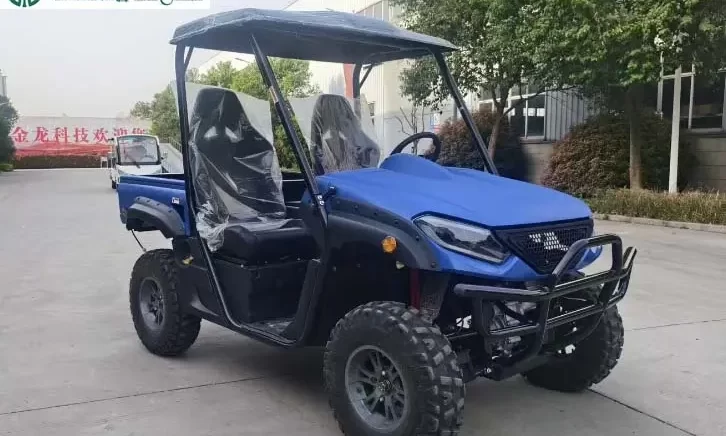
Import The first core step of importing UTV is not to find factories and talk about prices, but to comprehensively find out the local market rules of the target country. The market research is not in place, and it is easy to have serious problems such as products unable to clear customs, unable to sell on the license, fined for violation of regulations, goods detained, etc.
It is first necessary to accurately target the import target area, determine specific countries and cities, and avoid general market planning. The economic level, consumption habits and terrain climate of different regions directly determine the suitable model of UTV.
At the same time, it is necessary to investigate the local market scale, consumer income, outdoor operation demand, mainstream UTV price segment. Combined with Google Trends, local chamber of commerce data, census reports, determine the market acceptance of electric UTV and fuel UTV, accurately locate the category of goods.
In addition, it is necessary to observe the situation of local competitors, analyze the configuration shortcomings and price pain points of UTV sold locally, and customize differentiated domestic UTV products based on this to quickly seize the market gap.
Different countries have completely different requirements for road use, safety standards and emission specifications of UTV, and distinguish between legal road models and pure off-road vehicles. The import standards of the two types of vehicles are greatly different.
The European and American markets have the strictest control over UTV, mandatory requirements for EPA emission certification, DOT safety certification, CE vehicle certification, and California also needs to meet CARB stringent standards. Australia and New Zealand are required to comply with ADR safety design rules.
Southeast Asia, the Middle East, Africa and other emerging markets have relatively loose certification thresholds, but they still need to meet basic safety and emission compliance requirements. At the same time, they need to apply for formal import license documents. Goods without compliance certificates will be detained by customs.
It is the key to calculate import cost to accurately match HS code corresponding to UTV between tariff, tax and overall import cost. The universal HS code of UTV is 8703 category, and the codes of different sub-models are slightly different. The wrong code selection will lead to overpayment of customs duties and obstruction of customs clearance.
The total import cost not only includes the bare car price, but also needs to be superimposed on sea/air logistics fees, customs duties of the destination country, VAT, customs clearance agency fees, insurance fees, etc. Only by doing cost accounting well in advance can we accurately price and control profits.
Select the strength of reliable China UTV manufacturers and suppliers, and directly determine the product quality, certification compliance, delivery efficiency and after-sales guarantee of UTV. There are many traders, middlemen and small workshops in the market. Choosing the wrong supplier will lead to problems such as batch product quality defects, no compliance certification, and no after-sales guarantee.
2026 mainstream high-quality domestic UTV brand recommended CFMOTO spring power: domestic head export brand, high global popularity, mainly high-performance off-road UTV, products adapted to European and American high-end market, complete certification, strict quality control, mature dealer system, suitable for importers in the middle and high-end market.
Hisun Huansong: Large-scale OEM factory, OEM production for many international brands, strong mass production capacity, mainly cost-effective practical UTV, suitable for agricultural and engineering operation scenarios, suitable for large-scale cheap goods merchants.
Linhai Power: Deep cultivation of power machinery for decades, mature engine technology, high product stability, the main cost-effective tooling UTV, obvious advantages in batch procurement, suitable for just-in-demand market distribution.
AODES: High-end performance UTV, equipped with large displacement engine and high-end suspension system, focusing on off-road experience, suitable for outdoor off-road, high-end leisure market.
In addition, Tao Motor, Loncin Longxin, Segway Segway and other brands have unique advantages in the fields of entry-level leisure UTV, powertrain and electric UTV respectively, which can be selected according to their needs.
The core assessment criteria for selecting factories first check the factory qualifications, confirm that they have formal production qualifications and ISO9001 quality system certification, give priority to the source factories with their own production lines, and reject middlemen and small OEM workshops with no production capacity.
Secondly, verify the matching degree of export certification, confirm that the factory can provide a full set of EPA, CE, DOT and other certificates suitable for the target market, and the certificate completely matches the export model and engine model, so as to avoid the problem of certificate application and expiration.
At the same time, focus on the factory customization capacity, capacity stability, delivery cycle. High-quality factory can stably undertake batch orders, 2 – 4 weeks to complete mass production delivery, and support personalized customization.
Finally verify the after-sales and accessories supply capacity, reliable factory can provide original spare parts, technical guidance, fault solutions for a long time, solve the after-sales problems of overseas merchants.
All-round verification of product quality and quality verification before batch purchase to avoid the risk of batch defective products is an essential risk control link for imported UTV. The true quality cannot be judged only by the manufacturer’s propaganda and product catalogue, and the quality must be fully controlled through due adjustment, factory review, quality inspection and trial.
Verification of pre-qualification and certificate Check the true business status, export records and whether there are any violations and disputes through the domestic enterprise publicity platform. At the same time, independently verify the authenticity of various compliance certificates, and do not blindly believe the paper copies provided by the manufacturers.
Give priority to checking the order records of the factory in the past export market and overseas customer evaluation, judge the adaptability and reputation of the product in the target market, and avoid the products that are not suitable for the environment.
On-site/remote factory audit The first cooperation is recommended to check the production line equipment, production process and quality control system through a third-party quality inspection organization or remote video inspection. Focus on checking core processes such as UTV frame welding, engine assembly, circuit wiring, spraying technology, etc.
At the same time, confirm the quality control process of the factory, including incoming quality inspection, process sampling inspection, finished product full inspection, defective product handling mechanism, and control the quality stability of batch products from the source.
Before shipment third-party inspection (PSI) After mass production is completed, before shipment, third-party inspection personnel must be arranged for on-site inspection. According to AQL international quality inspection standards, random sampling of finished vehicles covers all dimensions of appearance, performance, safety and accessories.
Focus on detecting core functions such as vehicle starting, idling, acceleration, braking, four-wheel drive switching, light circuit, suspension and shock absorption, and check whether the body size, load parameters and safety protection configuration meet the standards.
After qualified inspection, it can be loaded into the cabinet for shipment. The defective products require factory rework and rectification to prevent defective products from flowing into overseas markets from the root cause.
Confirm the full set of compliance certification and eliminate the risk of customs clearance. UTV belongs to motor vehicle products and is the key inspection category of customs of various countries. Lack of certification, non-conformity of certificates and substandard standards will directly lead to detention, return and high fines of goods, which is one of the biggest risk points of import.
Core certification requirements for each mainstream market US market: Fuel UTV must have EPA emissions certification and submit Form 3520-21. Road-compatible vehicles require additional DOT safety certification, California mandatory CARB certification, and CPSC consumer product safety standards.
EU market: All imported UTV must have EEC vehicle certification and CE mark, and meet REACH and RoHS environmental protection standards. Electrical system, materials, emissions and noise must meet the standards.
ANZ: ADR safety design rules must be met, RAWS vehicle registration must be completed, and local safety and emission tests must be passed before it can be sold in compliance with import regulations.
Electric UTV exclusive certification: In addition to general safety certification, it is also required to pass UN38.3 battery transportation certification and UL/IEC electrical safety certification to ensure the safety of battery transportation and use.
Certification verification practical operation skills require manufacturers to provide the corresponding model specific certificate, reject the general set of certificates, expired certificates. Check that the engine model, frame parameters and model number on the certificate are completely consistent with the shipped vehicle.
Authoritative third parties such as TÜV and SGS can be entrusted to review the authenticity of the certification to ensure full compliance with the latest import standards of the destination country. At the same time, the certification clause shall be written into the purchase contract to stipulate the non-compliant compensation clause.
Apply for sample test in advance to reduce the risk of batch procurement. No matter how good the reputation of the factory is and how complete the qualification is, it is not recommended that novice merchants place orders directly in batches. Apply for 1 – 3 samples first, which is the lowest cost and most efficient way to control wind.
The core value of sample test The sample test can visually verify the true workmanship, material and assembly accuracy of the vehicle, and make up for the information difference of the graphic data. At the same time, it can simulate local terrain, climate and operation scenarios to test vehicle adaptability.
Through the real vehicle test, the short board and deficiency of the product can be accurately found, and the factory can be optimized and adjusted in advance to avoid large-scale quality problems after batch arrival and reduce huge losses.
Sample application and test process Lock 2 – 3 high-quality factories, accurately submit requirements, clarify models, configurations, compliance standards, customization requirements, and apply for sample vehicles. Samples generally need to pay the full price or discount price, after the bulk order can be negotiated to return part of the cost.
After receiving the samples, carry out full-dimensional measurement, including appearance process inspection, dynamic performance test, load test, complex road driving, long-term idle running, electrical system stability test, etc.
Take photos and video records of the whole process, record the advantages and disadvantages of vehicles, compare multiple samples, screen out the most suitable models for the local market and the highest cost performance ratio, and finalize the batch procurement partners.
bargaining negotiation and safe payment, lock the optimal cooperation conditions After the sample test is qualified, you can enter the batch order bargaining and signing link. Reasonable bargaining strategy and safe payment method can reduce procurement cost and avoid capital risk.
The core factor affecting the purchase price of UTV is the purchase batch size, which is the core bargaining chip. The larger the order quantity, the lower the price of bicycles, and more accessories, gifts, and after-sales rights can be obtained. Customized configuration and high-end accessories will slightly increase costs, which can be flexibly selected according to profit margins.
Procurement period will also affect the price, industry off-season, factory capacity spare stage, manufacturers give more space. Long-term cooperation, annual framework orders, but also can lock in annual stable low prices.
Practical bargaining skills At the same time docking 2 – 3 factories of the same level, horizontal comparison of quotation, configuration, after-sales, delivery cycle, competitive quotation as a bargaining chip, for 5%-15% price discount.
In addition to the price reduction of bicycles, additional rights and interests such as free parts gift package, extended warranty period, reduction of customization fee, priority scheduling, etc. can be negotiated to enhance the comprehensive cooperation value.
Safe payment method (avoiding capital risk) Sample order: The mainstream payment method is 100% wire transfer (TT), and the transaction process of small orders is simple and more efficient.
Bulk orders: The industry’s general security plan is 30% deposit +70% final payment (settlement before shipment), taking into account the rights and interests of both buyers and sellers, and eliminating the risk of full payment in advance.
Large long-term orders: L/C can be used for payment, relying on bank credit guarantee to ensure the safety of funds to the greatest extent, suitable for stable large-scale procurement merchants.
Resolutely avoid the 100% prepayment requirement of strange manufacturers, and avoid the risks of delayed delivery, cutting corners, lost connection and running after payment.
Organize a full set of import documents to ensure smooth customs clearance. UTV import customs clearance has extremely high requirements for document integrity and consistency. Missing documents and inconsistent information are the primary reasons for customs clearance delay and cargo detention. The complete set of materials shall be collated synchronously during the production and stock preparation stage.
Common Basic Customs Clearance Documents Essential basic documents include commercial invoice, detailed packing list, ocean bill of lading/air waybill, certificate of origin, cargo transportation insurance policy, export declaration form in Chinese and English. Product name, quantity, value and HS code must be identical for all documents.
The core exclusive documents of UTV exclusive compliance documents include vehicle compliance certificate, manufacturer’s compliance statement, test report and vehicle VIN code filing information. The US market requires additional preparation of EPA 3520-21 declaration form, and the EU market requires a full set of EEC/CE certification materials.
If the goods are packed in wood, fumigation certificate shall be provided to avoid obstruction of quarantine inspection in the destination country. Batch inspection reports also need to be filed with the goods for random inspection by the customs.
All document information must be accurate and correct, and errors and omissions in amount, quantity, model parameters and codes must be avoided. 1 – 2 weeks in advance to complete the data collation, reserve correction time.
It is recommended to entrust professional freight forwarders and customs clearance consultants to assist in reviewing the information and adjusting the documents according to the latest policies of the destination country to maximize the risk of customs clearance.
Logistics transportation and customs clearance, complete the preparation of goods landing documents, complete the factory stock, arrange logistics delivery, complete the cross-border transportation and destination country customs clearance process, which is the key closing link of import landing.
The mainstream logistics mode selects sea transportation (FCL/LCL): the highest cost performance, suitable for large-volume UTV orders, and is the preferred mode for cross-border imports. The whole container transportation can avoid the collision loss of goods and greatly reduce the logistics cost of a single unit.
Air freight: The fastest time, 3 – 7 days to land, but the freight cost is high, only suitable for emergency replenishment, sample transportation, small batch trial scenarios.
China-Europe Railway: It takes into account both timeliness and cost performance, mainly adapts to European and Central Asian markets, has strong stability, and is not affected by shipping congestion and weather.
Detailed explanation of the whole process of customs clearance Before the arrival of the goods, submit a full set of information to the local customs clearance bank in advance, complete the pre-declaration, and shorten the customs clearance cycle. Upon arrival of the goods, the customs clearance agent formally submits the declaration information to the Customs.
Customs will review documents, and some goods will trigger random inspection to check whether the goods are consistent with the declared information and compliance certificate. After inspection, the merchant pays corresponding customs duties, value-added tax and other taxes.
After the tax payment is completed, the customs will issue a release notice, and the trailer can be arranged to transport the goods to its own warehouse. The goods shall be opened for inspection as soon as possible after warehousing, check whether there are collision and damage problems in the transportation process, and timely claim compensation from the insurance company.
Customs clearance and pit avoidance skills Preferred local certified customs brokers with vehicle clearance experience, familiar with UTV import policies, can efficiently handle inspection, error correction and other emergencies
build spare parts inventory, improve the after-sales system perfect spare parts inventory and after-sales system, is to enhance customer reputation, improve the repurchase rate, create differentiated competitive advantage of the key, but also long-term stability to do UTV overseas business core.
Focus on stocking high-loss accessories, including oil filter, air filter, spark plug, brake disc, brake pad, transmission belt, tire, bearing, shock absorber bushing and other wearing parts.
At the same time, reserve batteries, lights, switches, wiring harnesses and other common electrical accessories, as well as frame connectors, seals, winch accessories, etc. to meet the daily maintenance and replacement needs.
Inventory management and stocking strategy The initial stocking can be adjusted according to the proportion of 5%-20% of the total number of vehicles. In agricultural and off-road high-frequency use scenarios, it is necessary to increase the stock of wearing parts.
ABC classification management mode is adopted, high-frequency spare parts are ready in sufficient quantity, low-frequency expensive spare parts are ordered on demand, and inventory cost and service capacity are balanced.
When purchasing the whole vehicle order, we can customize the parts gift package to the factory simultaneously, strive for batch parts discount, and reduce the stocking cost.
clear warranty and after-sales system, build long-term competitiveness Many imported merchants only pay attention to the sale of goods, ignore warranty after-sales, resulting in more customer complaints, poor reputation, low repurchase rate. Standardized quality assurance after-sales system is the core barrier of long-term operation.
Domestic UTV universal warranty standard mainstream regular factory warranty period is 6 – 24 months or 1000 – 2000 hours of working time (whichever comes first). Core components such as engine, frame, transmission system warranty period is longer, filter, belt and other consumables are not covered by warranty.
CFMOTO and other high-end brands can provide 1 – 2 years standard warranty, some factories can negotiate to extend the warranty period, suitable for the mid-to-high-end terminal market.
Set up a localized after-sales system to connect with the factory to obtain a full set of technical manuals, maintenance videos, troubleshooting solutions, set up a professional after-sales team, and quickly respond to customer maintenance and consulting needs.
Establish a clear warranty claim process, clarify the definition standards for man-made damage and quality problems, efficiently handle after-sales disputes, and enhance customer trust.
At the same time, paid extended warranty and regular maintenance packages can be launched to improve customer experience and increase store additional revenue.
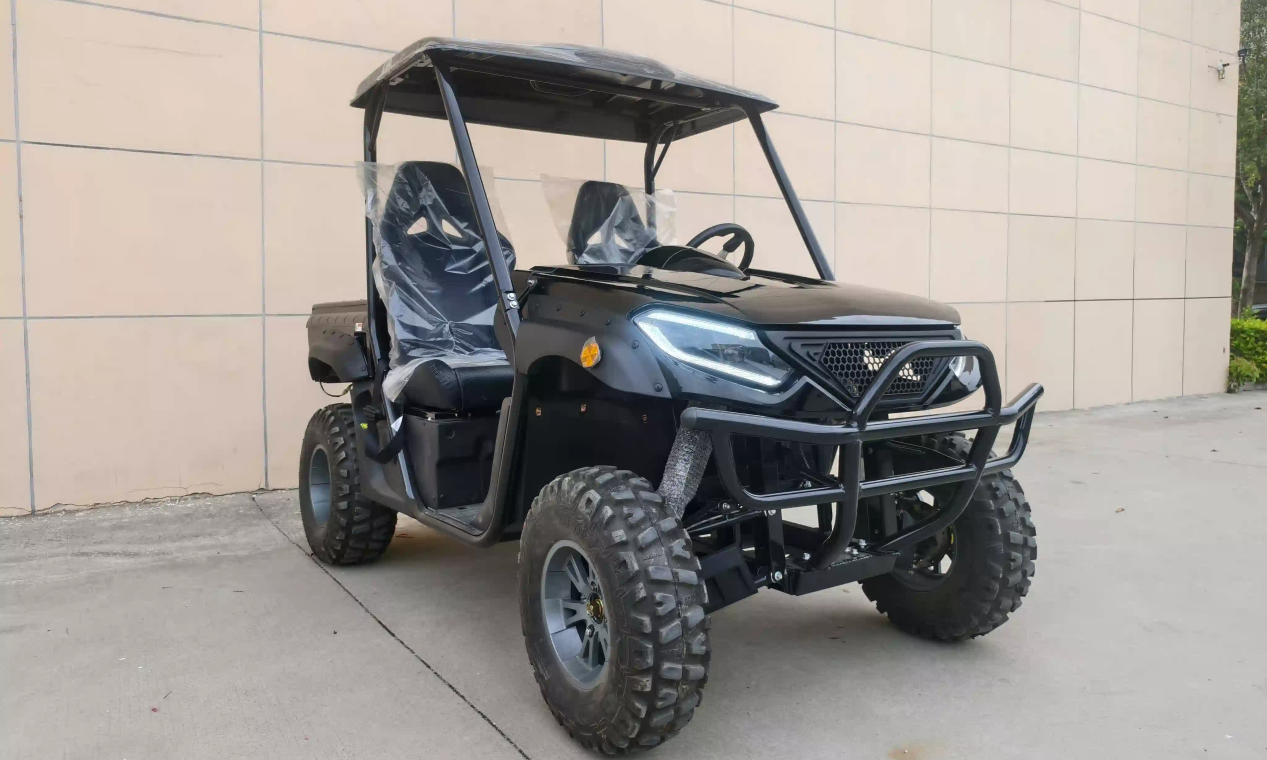
UTV imported from China is a cost-effective channel for entrepreneurship and customer expansion in overseas outdoor equipment trade and auto parts industry. However, the import process is cumbersome, compliance requirements are strict, and standardized procedures must be followed.
The complete import logic is: local market compliance research → screening high-quality source factories → sample measurement and quality verification → certification compliance confirmation → bargaining and signing safety payment → complete document arrangement → logistics customs clearance landing → building parts inventory and after-sales system.


-150x150.png)