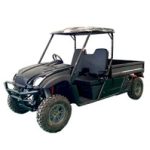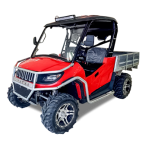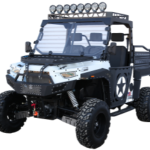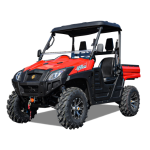
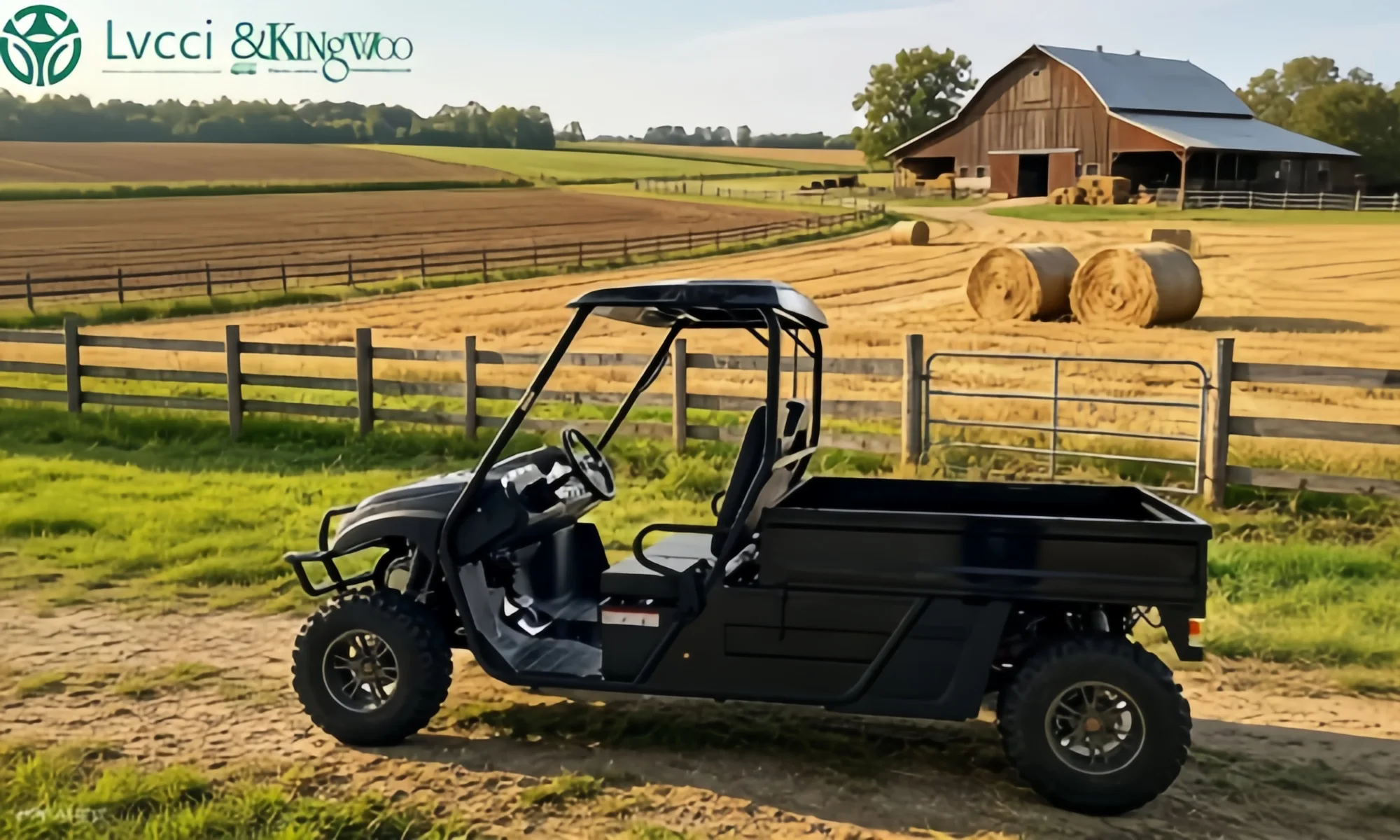
Agricultural UTV (multi-function task vehicle, also often referred to as side-by-side all-terrain vehicle SxS) has become the current farm just need operation equipment with super terrain adaptability, flexible control and multifunctional expansion. Whether it is daily material transportation, livestock management, field maintenance, heavy towing, site cleaning and other work, high-quality agricultural UTV can be efficient and competent.
The daily operation of the farm involves a large amount of material transfer work, such as the round-trip transportation of feed, fodder, fertilizer, agricultural tools, autumn harvest crops and breeding materials, which takes up a lot of labor time. Manual walking efficiency is very low, large tractors travel slowly, turn radius is large, can not adapt to field path, narrow shed area operation.
The agricultural UTV is equipped with a dedicated cargo hopper, most professional models support hydraulic/electric dumping function, can carry hundreds to thousands of pounds of materials at a time, easy to complete the loading, transportation and rapid unloading of bulk materials. At the same time, the car body is small and flexible, and can freely shuttle between field ridges, breeding sheds, and forest glades, greatly shortening the material transfer time. A single person can complete the handling work of multiple people, and long-term use can greatly reduce farm labor expenditures.
Simple loading and transportation cannot meet the needs of full-scene farm operations. Sowing, fertilization, weeding, site leveling, equipment traction and other work require stable drag capability of equipment. Professional agricultural UTV equipped with special rear axle and traction interface, drag capacity far more than ordinary ATV, can adapt to seeder, fertilizer, lawn mower, rake equipment, small trailer and other agricultural machinery accessories.
Whether it is field preparation in spring ploughing season, weed cleaning in summer and autumn, snow cleaning and site repair in winter, UTV can complete one-stop operation by mounting different machines and tools. The multi-purpose characteristics of one machine effectively avoid the cost waste of repeated procurement of various small agricultural machinery on farms and greatly improve the utilization rate of equipment.
Farm operation terrain is complex and changeable, muddy fields, gravel slopes, undulating pastures, wet low-lying planting areas, overgrown forest areas, are common scenes of daily operation. Ordinary household vehicles are easy to slip, sink, chassis is too low easy to scratch damage, simply can not pass normally.
Professional agricultural UTV is equipped with high ground clearance chassis, heavy-duty shock absorption system and all-terrain wear-resistant tires, supports two-wheel drive/four-wheel drive switching, differential lock locking function, and can pass stably in the face of muddy, steep slope, gravel and potholes. At the same time, the center of gravity of the vehicle body is low, the stability is strong, and there will be no rollover and skid problems under full load, which perfectly meets the all-weather and all-terrain operation requirements of the farm.
UTV is the core tool for fine livestock management in large-scale pastures and breeding farms.
Breeding operations require frequent inspections of fences, inventory of livestock, transfer of cubs, and transportation of breeding materials. Manual inspections are time-consuming and laborious, and long-distance ranch inspections are even more inefficient.
UTV runs smoothly, noise is controllable, livestock groups will not be disturbed, and large-scale pasture fence inspection and livestock status inspection can be quickly completed. In case of livestock transfer, sick animal transfer, forage fixed-point delivery and other scenarios, UTV’s loading and flexible advantages can be brought into full play to help the farm realize refined and efficient breeding management.
Most agricultural UTV supports two or more passengers. Some full size models can accommodate 4 – 6 people, which fully meets the operation needs of farm teams. Daily field management and maintenance, equipment maintenance, site rectification and other multi-person collaborative work, staff can arrive at the operation area in the same vehicle, no need to go back and forth in batches.
At the same time, professional agricultural UTV is equipped with compliance anti-roll frame, seat belt and shock absorption seat. Long-term outdoor operation can effectively reduce the fatigue of staff, adapt to the working rhythm of early departure and late return and long-term continuous operation on the farm, and comprehensively improve the team operation efficiency.
Many farmers will struggle with the selection of UTV and ATV. Although they belong to all-terrain equipment, there is a significant difference in farm adaptability. ATV is designed for single rider, without special cargo bucket, weak dragging ability, only suitable for short-distance patrol in a small range, light walking, unable to undertake heavy transportation, agricultural machinery traction and other core agricultural work.
Large tractors are mainly used for heavy deep plowing and large-area land preparation. They are large in size and have poor mobility. They cannot enter narrow fields, shed areas, and forests for operations, and their use costs, fuel consumption, and operation and maintenance costs are extremely high. UTV just fills the gap between the two, taking into account flexibility, load, drag and versatility, and is a “all-purpose equipment” suitable for farm full-scene operations.
The farm area and terrain conditions are the core factors that determine the UTV size, chassis parameters and driving mode. Small family farms, boutique plantations, fruit and vegetable greenhouse bases, small area, narrow field roads, compact space between sheds, priority needs to be given to compact UTV with compact body, flexible steering and strong passability.
Large and medium-sized farms, ten thousand mu pastures and mountain planting bases have a wide operation range and complex terrain, covering steep slopes, muddy fields, gravel mountain roads and potholes and wasteland. It is necessary to give priority to the full size UTV with high ground clearance, heavy load suspension, four-wheel drive locking and large load, so as to adapt to high-frequency operation with long distance and complex terrain.
In addition, perennial rainy, wet soil farms, must focus on the vehicle’s waterproof, dustproof, anti-skid performance; northern snowy, low temperature areas, need to give priority to low temperature start stability, suitable for snow tire models; mountain slope farms, focus on the assessment of vehicle climbing performance and body stability.
It is clear that the core operation contents of different farms in daily core operation scenarios are very different, and the corresponding UTV parameter requirements are completely different. Only by accurately positioning the core operation scenarios can functional redundancy or insufficient performance be avoided. Farms with material transfer, forage transportation and autumn harvest loading as the core focus on bucket volume, rated load and dumping function.
For farms with field preparation, seeding and fertilization and agricultural machinery traction as the core operation, priority should be given to low torque power, drag tonnage and interface expansion ability of vehicles. Farms focusing on pasture farming, fence inspection and livestock management pay more attention to vehicle stability, low noise, long endurance and flexibility.
For comprehensive farms with multiple operations, it is necessary to select universal agricultural UTV with strong balance and high expandability, which can adapt to different agricultural work by adding accessories to realize multiple uses of one machine.
The frequency of use and operation intensity of UTV directly determine the model grade and material configuration. Small farms with seasonal use only, occasional short-distance operation and light load can choose entry-level compact models to meet the basic operation needs and have higher cost performance.
For large and medium-sized farms with daily high-frequency operation, long-term continuous operation, heavy-duty dragging and normal operation on harsh terrain, entry-level leisure models should never be selected. Must choose professional heavy-duty agricultural UTV, its thickened frame, strengthened transmission system, wear-resistant accessories, stable power system, can withstand high-intensity continuous operation, avoid frequent failures, maintenance downtime.
UTV is fully sufficient for small farms that just need to work independently, with more flexible body and lower cost. For large-scale farms that require team cooperation, multi-person synchronous inspection and batch transfer of workers, priority shall be given to four or more crew versions of UTV without batch transfer of personnel, so as to greatly improve team operation efficiency.
UTV can not only look at the price of bare car, but also consider the cost of full life cycle use. Entry-level models have low initial investment, but limited load, durability and expandability, and are easy to damage in high-intensity operations; medium and high-end professional agricultural models have higher initial investment, but excellent materials, stable performance, low failure rate, lower long-term operation and maintenance costs and longer service life.
At the same time, it is necessary to consider the local after-sales outlets in advance, the supply of accessories and the convenience of maintenance. The price of a small number of miscellaneous brand models is low, but the accessories are difficult to find and the maintenance is difficult. Once the fault occurs, the farming operation will be delayed for a long time, and the loss will not be worth the loss.
The core difference between agricultural UTV and entertainment sports UTV is that the power adjustment direction is different. Sports UTV mainly focuses on high speed, high speed and pursuit of driving speed; while agricultural operation does not require high-speed driving, and the core requirements are low speed and large torque, stable power and strong continuous output capability.
For daily light operations, short-distance transportation, and small farm use, the 25 – 50 horsepower engine can fully meet the demand, with sufficient power, lower energy consumption, and more fuel economy. For large and medium-sized farms with heavy towing, long-distance driving, steep mountain slopes and all-weather high-intensity operation, it is recommended to select high-power models with more than 50 horsepower. The abundant low-torque power can easily cope with high-intensity scenarios such as full-load climbing, agricultural machinery traction and muddy escape.
At the same time, priority shall be given to the engine with stable reputation after field scene measurement, focusing on low temperature starting performance, heat dissipation performance and durability, so as to avoid power attenuation, high temperature failure, starting difficulty and other problems during operation.
UTV, which directly determines the efficiency of daily material transfer. Ordinary small leisure UTV load is generally less than 500 pounds, can only meet light travel; professional agricultural UTV rated load recommended to choose more than 1000 pounds, can easily carry feed, fertilizer, farm tools, autumn harvest crops and other heavy materials.
Bucket design is also critical, preferably high-strength steel wear-resistant bucket, anti-collision, anti-corrosion, heavy-duty, adapt to the rough working environment of the farm. It must be equipped with hydraulic or electric dumping function. Compared with manual unloading, the dumping design can save a lot of manpower. One person can complete the rapid unloading of full materials, which greatly improves the operation efficiency.
At the same time, pay attention to the fixed binding point and expansion space of the cargo hopper, so as to facilitate the fixing of long agricultural tools and scattered materials, and avoid the sliding and loss of materials during driving.
If the farm needs frequent towing of equipment such as seeders, fertilizer applicators, lawn mowers, small trailers, etc., the towing parameter is a mandatory indicator. For conventional small-scale farm operations, 1000 pounds of drag tonnage can meet the basic needs; large-scale farming operations, heavy trailer traction, large agricultural machinery mounting, it is recommended to choose 1500 – 2500 pounds of drag capacity models.
When purchasing, you should not only look at the official drag parameters, but also confirm whether the original factory is equipped with standard traction interface, special drag line and brake assist system. The original standard traction configuration model has stronger stability and safety, which can avoid the hidden trouble and cost increase caused by later modification.
The complex terrain of the farm is extremely demanding for the UTV chassis and drive system, which is the key to avoid trapping, scratch and failure. The intelligent drive system with switchable two-wheel drive/four-wheel drive shall be preferred for driving mode. The two-wheel drive mode shall be used for smooth road surface to reduce energy consumption and tire wear; the four-wheel drive mode shall be switched on muddy, steep slope and gravel road surface to improve grip and escape ability.
Differential lock is a necessary configuration for agricultural UTV. In muddy and slippery situations, locking differential lock can realize balanced power distribution, quickly get out of trouble and greatly improve the traffic stability of complex terrain.
It is recommended to select more than 10 inches of ground clearance, and 12 inches or more shall be preferred for field operation in mountainous areas, potholes and high crops, so as to effectively avoid chassis scratch and collision obstacles and protect the core components of vehicle body. Equipped with a heavy-duty independent suspension system, it can effectively buffer road bumps under full load, not only protect the vehicle chassis, but also avoid material bumps and spills, and improve operation stability.
Farm working environment dust, rain, frequent material collision, the durability of the body requirements are extremely high. Thickened steel frame is preferred, stable structure, anti-twist, anti-impact, long-term heavy load, bumpy operation is not easy to deform. The body shell is made of waterproof, dustproof and anti-corrosion materials, which can resist muddy water in the field, chemical fertilizer corrosion, sun and rain, and prolong the service life of the equipment.
Low-priced miscellaneous models mostly use thin-walled frames, inferior accessories, short-term use will appear frame deformation, aging accessories, sealing failure and other problems, frequent failure shutdown, seriously affecting the progress of farming, long-term use of cost-effective far lower than regular professional models.
Farm operations are mostly long-term outdoor work, and safety and comfort configurations directly affect the working experience and personal safety. The standard anti-roll frame, three-point seat belt and high-intensity braking system are the basic requirements, which can effectively avoid the safety risks caused by bumping and rollover.
For long-term operation, it is recommended to choose the model with power steering, shock absorption seat and low vibration adjustment to greatly reduce the fatigue feeling of long-term driving. For farms that operate all year round, enclosed cab, windshield, wiper and heater can be selected preferentially to realize all-weather uninterrupted operation without fear of rainy days, strong winds, low temperatures and dusty weather.
Professional agricultural UTV equipped with leisure models do not have farm special configuration: the whole machine is sealed waterproof and dustproof, muddy dust working condition failure rate is lower; the original bright LED work light is suitable for dim light operation, with multi-mode power adjustable, taking into account load drag power and energy consumption; the whole machine reserves convenient maintenance points, maintenance time and effort.
Farm UTV just need to be equipped with 3000 pounds and above pre-winch, can get out of trouble, drag, build fences, adapt to complex field conditions; can mount fertilizer, seeding, spraying equipment to achieve field mechanization, winter snow shovel snow cleaning operation. Luggage rack, protective fence, storage box and livestock baffle can also be selected to enhance protection and practicality. The regular original accessories are stable and the modification does not affect the warranty and vehicle performance.
For high-frequency, all-weather operation requirements, enclosed cab, door, heater, sunroof and other configurations are particularly important. In summer, it can shield the sun and block dust, in winter, it can resist cold wind and low temperature, and avoid rain to wet the operators in rainy days. It can optimize the working environment in an all-round way and prolong the effective working time.
UTV Gasoline UTV is the mainstream model of small and medium-sized comprehensive farms, with comprehensive advantages: smooth power response, adaptation to most agricultural work such as transfer, light drag, patrol, etc.; Fuel can be added everywhere, stable at low temperature, easy to use all year round; Purchase price is lower than diesel, high-end electric models, rich selection of models. The short board is low torsion and weak, heavy load and long-term drag, steep slope operation is not as good as diesel vehicle, high-frequency oil use cost, maintenance cost is higher, spark plug and engine oil need to be replaced regularly. Suitable for fruit and vegetable gardens, ordinary pastures, mainly convenient and general, mainly for medium and light farming farms.
UTV diesel UTV mainly low speed and large torque, heavy load, long-term high-intensity operation ability far exceeds gasoline model, climbing, traction agricultural machinery, long-distance heavy load power stability attenuation is small; fuel utilization rate is high, battery life is longer, engine durability is less, long-term high-intensity operation life is long, operation and maintenance cost is lower. Disadvantages are higher purchase price, heavy body, poor low-speed smoothness; inconvenient diesel supply in remote areas, difficult to start at low temperature, and higher maintenance cost per time. It is suitable for large-scale farms, ten thousand mu pastures and mountain farms, and is suitable for continuous heavy-load dragging and high-intensity all-weather operation scenarios.
With the upgrading of green agriculture and low-cost operation and maintenance requirements, electric UTV has gradually become a popular choice for small and medium-sized farms and boutique farms. Its biggest advantage is that the use cost is extremely low, no fuel consumption, only daily charging can complete the operation, long-term use can greatly save energy consumption.
At the same time, the electric UTV has extremely low noise and zero exhaust emission, which will not disturb livestock and pollute the field environment. It is especially suitable for breeding pastures, greenhouses, closed planting bases, suburban ecological farms and other scenes with requirements for noise and environmental protection.
At the operation and maintenance level, the electric UTV has simple structure, no engine, spark plug, oil circuit and other vulnerable parts, few daily maintenance items, almost no complex maintenance, and the failure rate is much lower than that of fuel models, saving a lot of maintenance time and cost. Smooth power output, simple operation, novice can also quickly learn.
The short board of electric UTV is also outstanding, and the battery life is limited, which cannot meet the long-distance, all-weather uninterrupted operation requirements of super-large farms. Battery life will be greatly attenuated in extreme low temperature environment, and there is no quick recharge method. Charging requires fixed site and time, and flexibility is not as good as fuel model. At the same time, the purchase cost of high-end electric UTV is relatively high in the early stage, and the battery has long-term loss and replacement cost.
Adaptation scenarios: small family farms, fine plantations, breeding pastures, greenhouse greenhouses, suburban ecological farms, agricultural scenarios dominated by short-distance, light and daily high-frequency fine crushing operations, with convenient charging conditions.
Quick selection of three power models summarizes heavy-duty drag, large-area high-intensity operation, pursuit of long-term durability, priority selection of diesel UTV; consideration of multi-scene general operation, pursuit of convenience and peace of mind, moderate budget, gasoline UTV is the optimal solution; short-distance lightweight operation, pay attention to low cost, environmental protection and quiet requirements, electric UTV has the highest cost performance.
Compact UTV 50-64 inches wide, compact and flexible body, suitable for orchard, greenhouse, small farm and other narrow sites, not easy to scratch crops, light weight and not easy to compact soil. Low cost of car purchase and use, convenient storage, short-distance transfer, patrol and other light farm work, high cost performance. Short board is weak in load dragging performance, only two seats, unable to load, pull large farm implements and multi-person high-intensity operation.
Full size UTV width exceeds 64 inches, wheelbase long frame sturdy, suitable for large and medium-sized farm pasture. Load 800-1500 pounds, drag 1500-3000 pounds, large cargo bucket capacity, can pull heavy agricultural machinery; support 4-6 people ride, complete expansion accessories, stable chassis, strong bearing capacity on complex terrain, suitable for high-intensity long-distance operations. Disadvantages The car body is wide, it cannot pass orchards, greenhouses and narrow roads, the storage area is large, and the cost of car purchase, energy consumption and maintenance is higher.
Size selection core judgment standard small narrow site, fine operation, single operation, limited budget, priority compact UTV; large area open site, heavy load high frequency operation, multi-person team cooperation, large-scale production, priority full size UTV. Most small and medium-sized farms can give priority to medium-sized balanced models, giving consideration to flexibility and practicality, and the best cost performance.
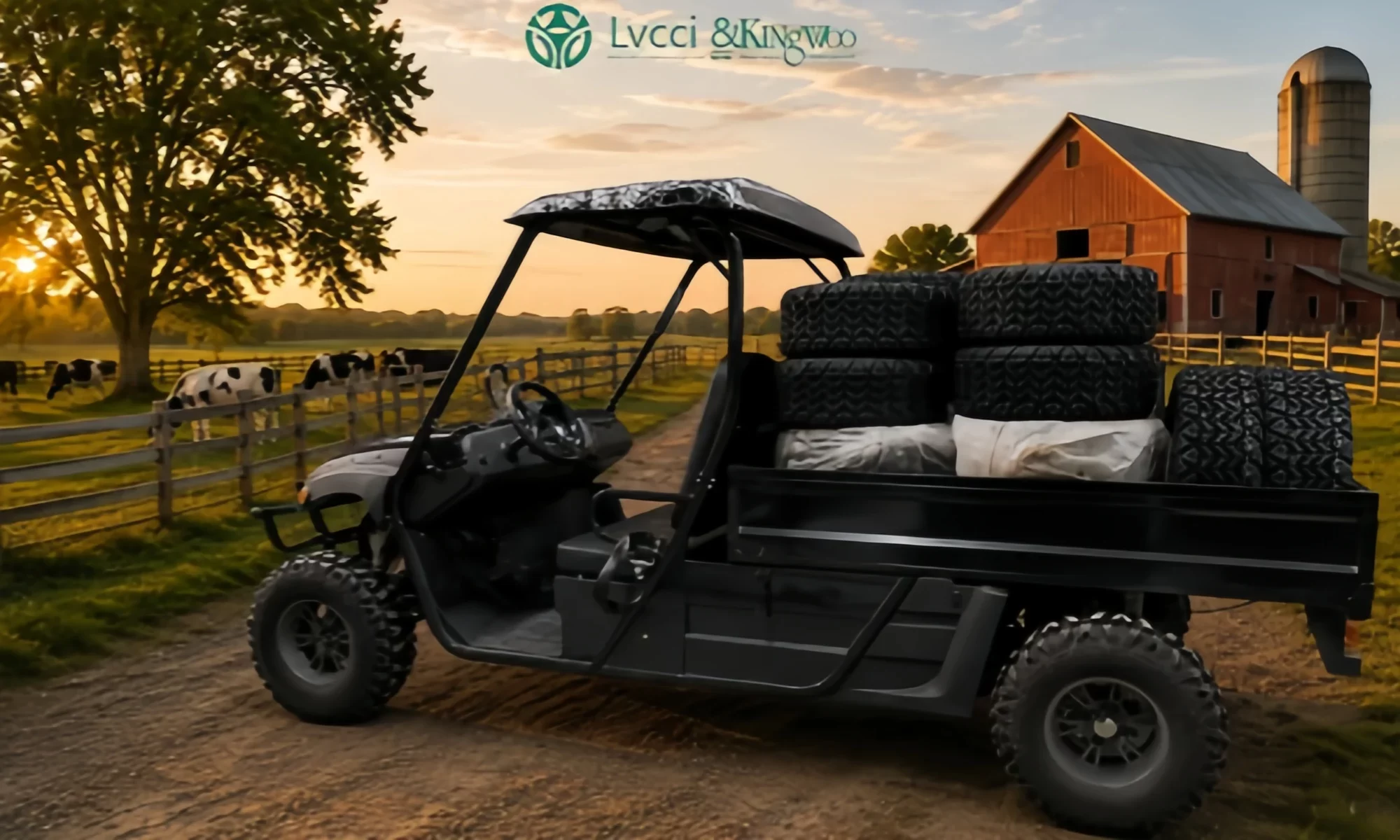
Many farmers when purchasing priority to compare prices, blindly pursue low prices, ignoring the core configuration, materials and performance. Low-priced miscellaneous models seem to have high cost performance, but the frame is thin, the power is false, the load is not up to standard, the accessories are inferior, and short-term use will cause deformation, insufficient power, oil leakage and other failures.
Agricultural UTV is a long-term operation equipment. The low-cost model has high failure rate, frequent downtime and maintenance, which seriously delays the progress of farming. The long-term operation and maintenance cost far exceeds that of the regular model. When purchasing, give priority to core parameters, material workmanship, brand reputation, rather than simply compete for bare car prices.
This is the most common and most influential purchase error. Many users can’t distinguish between sports and agricultural UTV, blindly buying cool, fast sports models. Sports UTV focuses on high-speed off-road, entertainment experience, power adjustment tends to high speed, frame, suspension, cargo bucket are not optimized for heavy load operation.
When used for farm operations, the sports model has insufficient load, weak drag ability, non-wear-resistant chassis, long-term heavy-duty bumpy operation is easy to cause parts damage, frame deformation, completely unable to meet the farm high-intensity operation requirements. Be sure to recognize professional agricultural and utility tooling models and reject sports alternatives.
Some farmers think that the larger the horsepower and the larger the size, the better, regardless of the actual needs of their own small farms and narrow operation scenarios, blindly purchase full size high-power models. Finally, the car body is too large to pass through the field path, the power surplus energy consumption waste, storage difficulties and other problems, practicality greatly reduced.
The core of the purchase is to match the demand. Small farms do not need high-power models for lightweight operations. Accurate adaptation is the most cost-effective choice.
Many users only pay attention to load power when purchasing, ignoring terrain adaptation configurations such as chassis ground clearance, four-wheel drive, differential lock, etc. In muddy, potholes, sloping farms, two-drive, low-chassis models are easy to sink, scratch the chassis, slip out of control, simply can not operate normally.
As long as there is non-paved complex terrain on the farm, priority must be given to ensuring ground clearance of more than 10 inches, switchable four-wheel drive and differential lock configuration to avoid terrain adaptation problems from the root cause.
The models without after-sales outlets are cheap, but the biggest problem is that accessories are scarce and maintenance is difficult. Agricultural UTV high-frequency operation is inevitable loss, regular brand has a perfect after-sales system, sufficient spare parts reserve, local maintenance network, fault can be quickly solved, do not delay farming.
Once a no-brand model fails, it may face problems of out-of-stock parts and unmanned maintenance. The agricultural losses caused by long-term downtime far exceed the equipment price difference.
Some basic bare car models have no expansion interface and no accessory adaptation system. When you want to add winch, sprayer, snow shovel and other accessories after purchase, you can’t modify or the modification cost is extremely high. When purchasing, you must give priority to the original model with strong expandability and perfect accessory system, and reserve sufficient modification space.
Table data is omitted for reference only, and the actual operation experience is very different. Many users only rely on parameters, publicity video orders, after the purchase found that the dynamic smoothness, control flexibility, load stability does not meet expectations.
It is suggested that field test drive, full load test, drag test, field terrain traffic test, simulation of real farm operation scenario, confirmation of performance standards before starting. Second-hand models need to focus on checking chassis wear, transmission system, frame status, and operation history to avoid purchasing faulty or refurbished machines.
Some users blindly pursue load, power and drag ability when purchasing, ignoring safety configuration such as roll cage, seat belt, brake system and work light. The outdoor complex terrain operation of the farm has high risk of rollover, skid and collision. The lack of safety configuration will greatly increase the operation risk and threaten the personal safety of operators.
Electric UTV has low operation and maintenance cost, environmental protection and silence, but not all farms are suitable. For farms with no fixed charging site, wide operation range and all-weather uninterrupted operation, blindly purchasing electric models will face the problems of insufficient battery life and difficulty in replenishing energy, which seriously affects the operation progress. It is necessary to select the type according to its own replenishment conditions and operation time.
Many users were attracted by promotional activities and online models, and impulse orders were placed. They did not compare the adaptability of different brands and models, nor did they consult senior farmers and professional sales suggestions. The final model does not match the needs of its own operation, resulting in waste of funds. It is suggested to compare more, test drive more, investigate more and make rational decisions.
Comprehensive full-text purchase logic, agricultural UTV core purchase principle is not to pursue high configuration, high price, large size, but accurately match their own farm operation needs, giving consideration to practicality, durability, economy and expandability. In order to facilitate the rapid selection of farmers, the practical operation and purchase points are summarized and sorted out.
The first step is to locate the requirements. According to farm scale, terrain environment, core operation, use frequency and manned demand, determine the size specification, load drag standard and power type of UTV required. Compact type shall be selected for small narrow farms, full size shall be selected for large open farms; electric/gasoline shall be selected for light and fine crushing operation, and diesel oil shall be selected for heavy and high intensity operation.
Second step, parameter selection. Priority shall be given to ensuring five core configurations: load of more than 1000 pounds, drag of more than 1000 pounds, ground clearance of more than 10 inches, four-wheel drive + differential lock and dump cargo bucket. Power priority shall be given to low torque and stable adjustment, and useless high-speed performance shall be abandoned.
The third step is functional expansion. According to seasonal operation and special demand, confirm vehicle expansion capacity, plan winch, agricultural machinery mount, protective cab and other accessories configuration according to demand, and include them in budget planning in advance.
The fourth step is cost accounting. Comprehensive consideration of the purchase cost, energy consumption cost, maintenance cost, accessories cost, residual value, give priority to the regular brand, after-sales perfect, long-term cost-effective models, reject low-priced miscellaneous trap.
The fifth step is field verification. All selected models must be tested on the spot to simulate real operation scenarios such as full load, drag and complex terrain passage, and the procurement shall be completed after confirming that the performance, control and stability meet the standards.
A suitable agricultural UTV can completely liberate farm manpower, improve operation efficiency and reduce long-term operation cost, which is the investment just needed for modern agricultural production. Accurate selection and rational purchase of machines can make the equipment truly serve agricultural production, improve quality and efficiency for farms and create greater value.


-150x150.png)