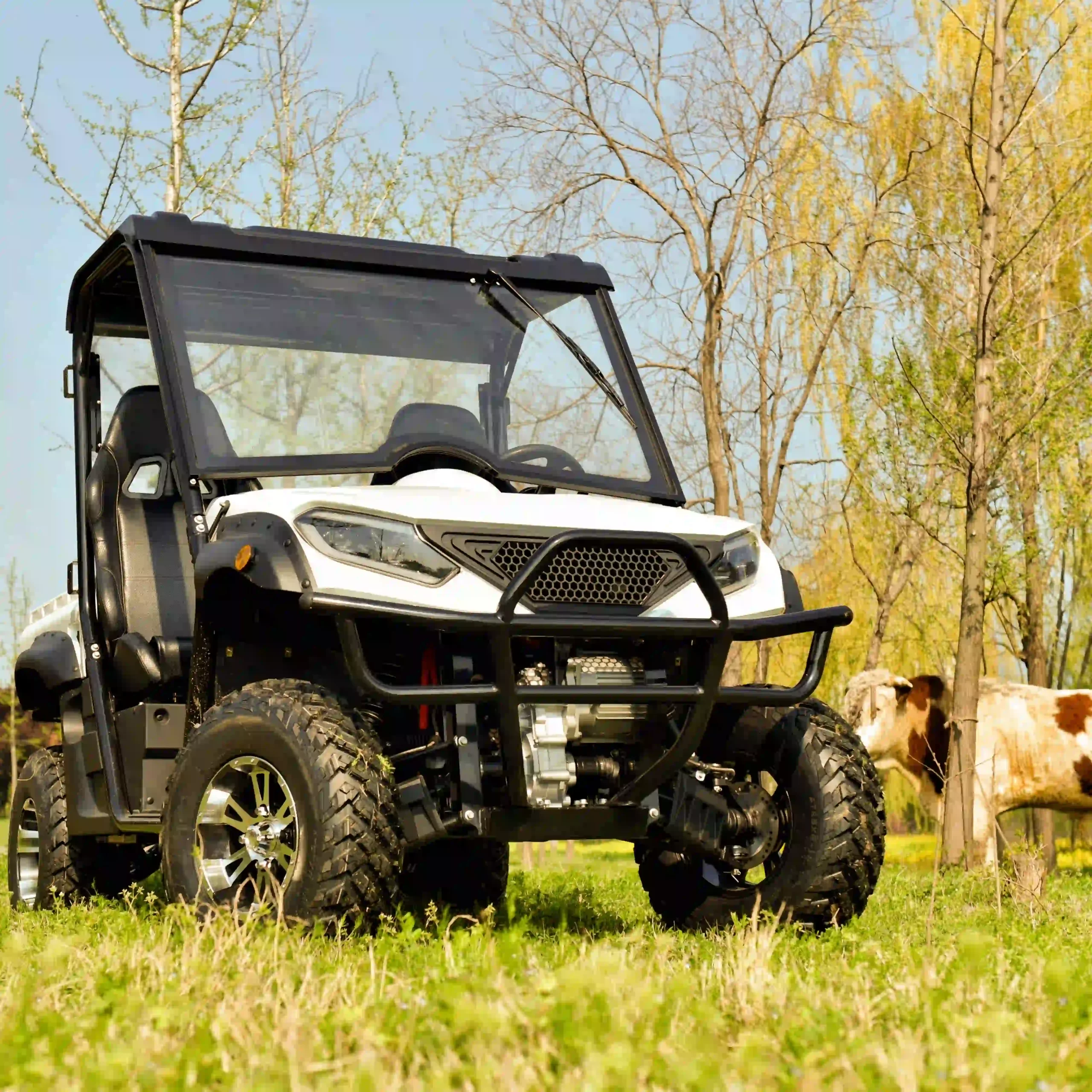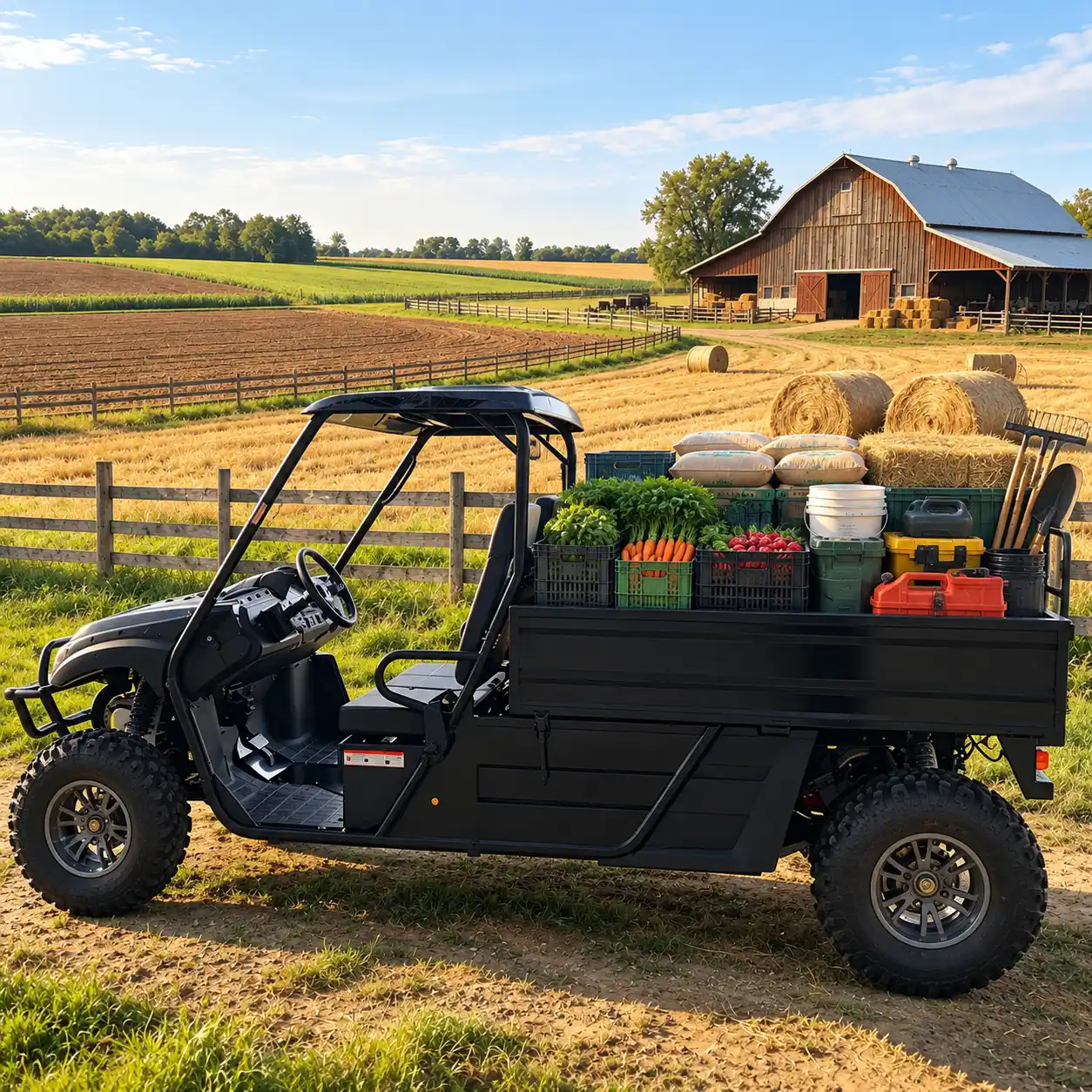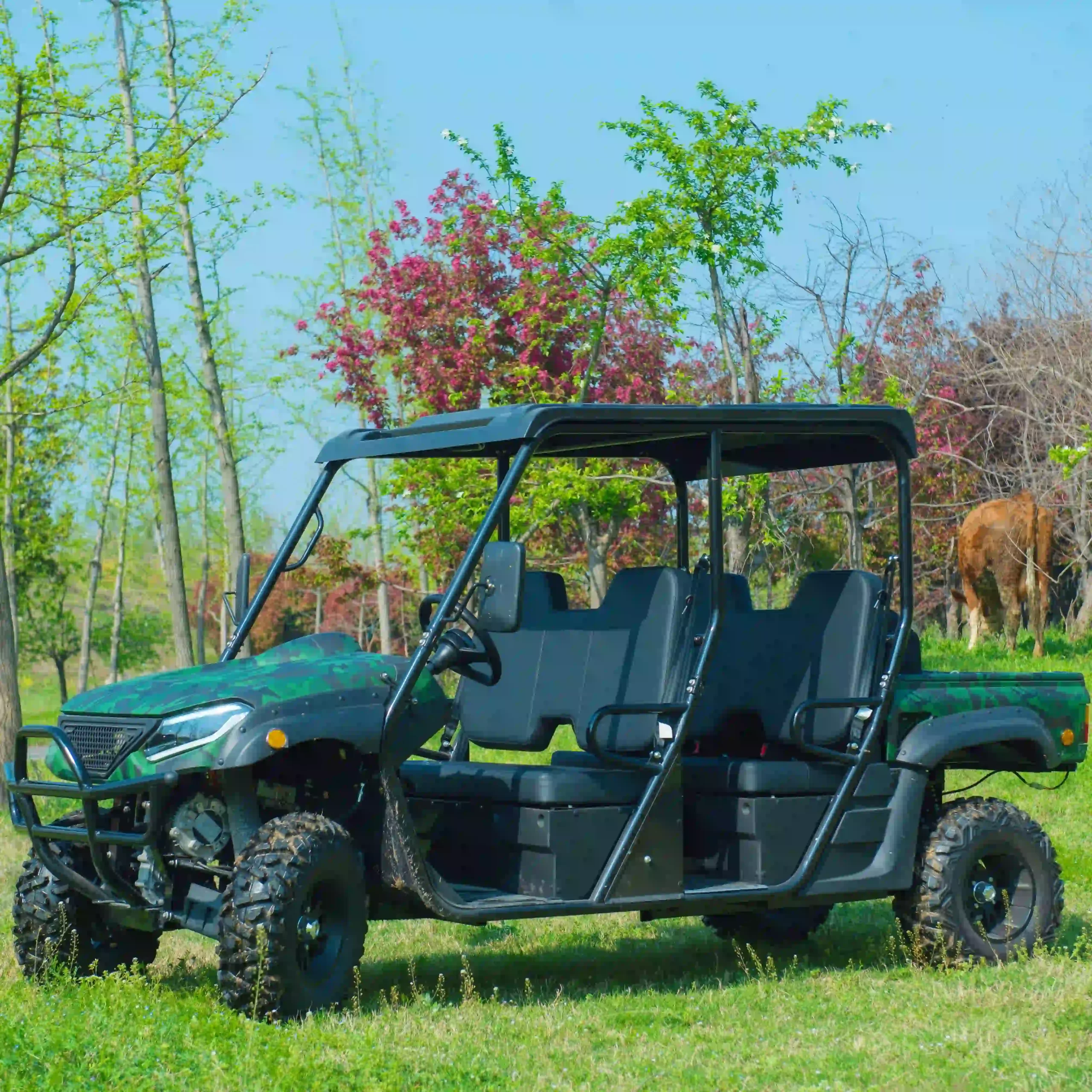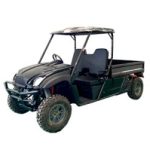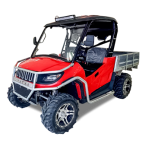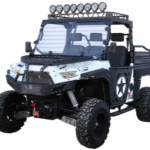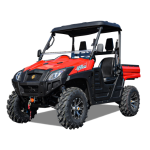
The best midsize UTV is the one that fits your tightest route and completes your heaviest routine job within its rated limits. For most farm and property buyers, a two-seat utility side-by-side with utility dump boxes that can be turned around in existing aisles deserves priority commissioning. Teams that patrol in quiet venues every day and can return to fixed locations to recharge after work can give priority to evaluating electric UTV. Buyers who often walk the ramp with a fully loaded trailer should check the combined load and ramp towing restrictions before deciding whether full-size UTV is required.
When looking for the best midsize UTV, first record the narrowest passage, the weight of people and tools, and the route to run on the busiest day. With this data, you can see which configurations are worth spending money on and which cars should be removed from the shortlist.
Midsize UTV is the category used by manufacturers to describe vehicle positioning. The dividing caliber of each manufacturer may be different, and the purchase should be based on the outline size, seat layout and load rating of the specific configuration. Both cars are marked as midsize. After installing the door, rearview mirror and different tires, the performance through the same door opening may be different. Engine displacement and motor power alone can not answer whether the vehicle can be loaded into the transport trailer.
Compact UTV is worthy of priority evaluation in venues with narrow passages, light cargo and small garages. Midsize UTV is suitable for buyers who want to balance traffic and carriage. If many people, large tools and heavy materials are to be transported at the same time every day, or if heavy trailers are often taken on ramps, full-size UTV with corresponding ratings should be included in the comparison.
First, compare the overall width and overall height of the delivery state, and then look at the wheelbase, turning radius, and ground clearance. The door can just go straight through, and after entering the door, it may not be possible to turn due to the narrow corridor. During the test run, check the range swept by the rear of the vehicle, and let the vehicle pass through the slope top or loading ramp with daily load, and check whether there is enough space at the bottom and the roof.
When comparing midsize UTV vs full-size UTV, you can ask two common drivers to try the same route separately. If the cart had to reverse several times at the loading/unloading point or could not open the door in the existing garage, the cost of rearranging the site was included in the comparison. If the medium-sized vehicle has to deliver the material in two trips each time, record the additional round trip and loading and unloading time. This is the only way to judge what the extra space or capacity can save every day.
| Use Case | First Configuration to Compare | Verify Before Shortlisting |
| Farm and ranch work | Two-seat utility model with a dump bed | Bed floor dimensions, remaining payload, and traction on routine routes |
| Narrow trails and tight properties | Narrow utility model with a manageable turning radius | As-equipped width, route access rules, and turning space |
| Quiet site maintenance | Electric utility model with a reliable charging location | Loaded shift completion, end-of-shift charge, and recharge time |
| Frequent towing | Utility model with documented combined-load and grade limits | Loaded trailer weight, hitch tongue weight, and the steepest route segment |
If you have to transport feed bags, fencing tools and maintenance parts every day, first put the most commonly transported items into the appearance of a flat-speed car, and then measure the floor space and height. The volume on the container specification sheet can hardly tell you whether a toolbox can be laid flat, whether the fence pile is easy to fix, or how much space is needed to open the tailgate. Try loading, unloading and reversing again to compare the time required to complete the same trip.
In the case of farms where long-distance transshipment and short-distance frequent loading and unloading exist at the same time, the two tasks can be recorded separately. The former looks at the cargo volume, driving time and loading status of each trip, while the latter looks at the height of the cargo box from the ground, the tailgate operation and the steering space around the loading and unloading point. During the test run, employees who often move goods are also allowed to get on and off the bus and reach out to pick up the goods. The container rating is the same, the loading and unloading method may still change the amount of work that can be completed by the 1 shift.
Forest trails, greenhouse passages and barn corners usually predetermine the width of the car before deciding on the boxes and seats. If the actual work only requires two people to carry tools for inspection, you can start with a narrower model. If a small container is selected to pass through a bottleneck, it is also necessary to count the number of additional trips in the 1 week.
If the noise at low speed is paid attention to around the park, holiday facilities and livestock houses, electric UTV can be arranged to carry the goods on the actual road for trial use, while listening to the sound of tires, suspension and cargo boxes. Buyers who often tow should check the ramp and combined load limits in the manual before comparing the cargo box size, power and comfort configuration.
Measure the inside of doorposts, guardrail corners, garage entrances and transport trailer ramps along the actual route. When measuring the door opening, the hinges, door stops and protruding hardware are included. When encountering a doorway that follows a turn, record the available space before and after entering the door. Garages and closed trailers also measure the net height of the entrance and the position of the roof when the vehicle enters uphill.
Obtain the configuration dimensions from the supplier consistent with the quoted price and confirm whether the mirrors, doors, tires, roof and front and rear bumpers are included. During actual acceptance, the widest and highest positions shall be measured in the delivery state. Also check the loading capacity of the transport trailer and calculate the weight of the battery, options and on-board equipment into the transport plan. The available margin depends on the corner, ground flatness and operating conditions, and is suitable for confirmation on site with a real vehicle.
When there are several alternative routes on site, the detour distance should also be noted. If a car must bypass the narrow door of the greenhouse to reach the loading area, it can multiply the time of each detour by the number of trips per day and compare it with the number of trips increased by the smaller cargo box of the narrower car. Necessary headroom, normal operating routes and daily time costs are best determined together before selecting accessories.
Public trails should check the current vehicle category, width and seasonal restrictions on the route. In the U.S. National Forest, you can check the Motor Vehicle Use Map of the local U.S. Forest Service, and then check the temporary closure announcement and site logo. When the nominal width is exactly equal to the route threshold, confirm the local measurement caliber and the actual width of the vehicle after delivery.
Payload capacity sets the vehicle-wide load limit, while cargo bed capacity sets a separate limit for the bed. Confirm which weights are included in the payload according to the specific owner’s manual. Common accounting items include the driver, passengers, cargo, add-on parts, and the vertical load exerted by the trailer on the hitch. When calculating the towing, the total weight of the trailer with loaded goods shall be weighed, and the vertical load allowed at the hanging point shall be checked separately.
Illustrated with a sample car. It has a payload capacity of 1,000 lb and a cargo bed capacity of 500 lb. The owner’s manual includes occupants, add-ons and hitch tongue weight in the total load. Assuming a total of 360 lb for two people, the weight of the added parts is 100 lb, the hitch tongue weight measured after connecting the fully loaded trailer is 120 lb, and there is no other load on the car.
Remaining Payload = 1,000 lb − 360 lb − 100 lb − 120 lb = 420 lb
Available Bed Load = min(500 lb, 420 lb) = 420 lb
If you fill the container with 500 lb of cargo, the total vehicle load will reach 1,080 lb, which is more than the payload capacity of the sample vehicle. The 420 lb calculated here only solves the intersection of the two upper limits of the vehicle and the container. If the configuration has a separate upper limit of the container when towed, the lower limit should continue to be used to account for the full weight of the tow point and trailer.
If the same trailer is changed to only one person per day, the available load on the container may rise again, but still be subject to its own rating. Conversely, if a heavier cab accessory is added to the delivery, the remaining load must be re-checked against the actual configuration. For farms that are used to purchasing by bags, the remaining load can be converted into the maximum number of bags that can be transported in a single trip, and then check whether the containers can put down these bags. Weight should also be set aside for tools, fixtures for securing goods and items that are often carried with the vehicle.
Some manufacturers’ manuals will give the towing upper limit for flat ground and specified slope respectively, and some models will also list the upper limit of container load when towing. Give the steepest section of the usual route, the weight of the trailer after installation, and the personnel and goods to be transported at the same time to the supplier, please confirm in writing according to the specific configuration manual. Pay attention to the slope units in the manual and avoid taking degrees and percentages directly as the same value.
| Check | What to Measure or Confirm | Purchase Decision |
| Loaded trailer weight | Weigh the trailer with its usual cargo and equipment. | Check the rating for the intended terrain and grade. |
| Hitch tongue weight | Measure vertical load in the intended trailer loading condition. | Check the hitch rating and count it toward payload where the manual requires. |
| Bed load while towing | Weigh the cargo carried on the vehicle at the same time. | Apply any separate towing-mode bed limit and the remaining payload. |
| Route and operating limits | Identify the steepest segment and check the manual for speed, grade, and trailer brake requirements. | Confirm that the whole route falls within the documented limits. |
If the daily task involves two very different trailers, such as a light tool trailer and a fully loaded feed trailer, it is recommended to list their respective loading status and usage routes. A ramp where light vehicles can walk may not be suitable for heavy vehicles. If the manual only lists flat ratings, first confirm with the manufacturer whether the configuration can take on your ramp tasks, and then decide whether to adjust the route, split the transportation, or replace the model. The towing rating of different slopes shall be subject to the conditions given by the manufacturer, and the procurement personnel shall directly check the corresponding values.
If the vehicle goes back and forth between the warehouse, livestock house and operation area every day, and there is also a fixed parking space after the shift is closed, UTV will be electric on trial according to the complete duty cycle. Record the shift mileage, load, ramp, stop and restart frequency, and the use of heating or lighting accessories. The remaining power and energy replenishment time after the completion of the 1 shift with the goods shall be taken as the basis for acceptance. The manufacturer’s endurance instructions will also distinguish between light load estimates and actual influencing factors, and the purchase should include common tires, goods and passengers in the test run.
If the vehicle works on a plot far away from the charging point for a long time, or is put into the next 1 shift immediately after the shift is handed over, gas UTV is worth quoting together. The comparison is whether the next 1 can be made on time: electric UTV should check the actual power supply, charging power and available charging window, while gas UTV should calculate the round trip time required for replenishment and daily maintenance arrangements. When multiple vehicles share a charging point, the available time is calculated by fleet scheduling.
For example, the vehicle completes 3 transportation in the morning and two inspections in the afternoon. If it is planned to use lunch break to supplement electricity, the actual available power supply on site shall be used during the test run, and the electricity quantity at the beginning of lunch break and the electricity quantity at the time of the second half shift shall be recorded. If other cars are to be charged at the same location, the queuing arrangement should be tested according to their arrival time. This record is closer to the situation encountered in daily scheduling than looking at the nominal power of the charger alone.
When two batteries are available, the supplier is required to provide a basis for comparison with the same load, route and environmental conditions. Focus on checking the available power, vehicle weight, charging time under the specified power source, battery warranty terms and replacement costs. Buyers with a fixed single shift can first ask which configuration can complete the task within the budget. Buyers with tight shifts should put the replenishment time and the available electricity at the front of the quotation comparison table.
Give the same working condition description to both suppliers, listing the common number of people, cargo weight and size, full trailer weight, narrowest aisle, maximum slope, mileage per shift and site power supply. The other party is requested to submit the vehicle size, rated load, spare parts list and relevant working condition limits in the manual according to the model and configuration corresponding to the quotation. If a version with doors, roof and different batteries is reported, re-check the dimensions and loads according to the delivery configuration.
When reviewing the quotation, confirm item by item whether the specifications under the same name are comparable. For example, both suppliers have written the towing capacity, and it should be confirmed whether they both refer to the full load of the trailer under the same working conditions. If one party reports the parameters of the standard car and the other party reports the parameters of the installed cab and optional battery, please submit the final configuration data to the first party. Dealers or fleet buyers can confirm the parts catalog, spare parts delivery date and repair response method at the same time to avoid discovering that different batches of configurations require different spare parts after arrival.
Select a line that includes the narrowest entrance, typical turns, common ramps and loading and unloading points within the load and route conditions allowed by the manual. Match the candidate car with the tires, cab and battery in the quotation, and use the same crew, load and route. The following table can be used to record the shift performance of electric vehicles. The power reserve value shall be agreed in advance in combination with the site return distance, emergency tasks and the use conditions given by the supplier.
| Test Item | What to Record | Acceptance Condition |
| Route and load | Distance, surface, grade, occupants, cargo, and trailer if used | Matches an agreed representative shift within documented limits |
| Access and maneuvering | Minimum clearance and turns at gates, sheds, and unloading points | Clears every required point with the agreed operating margin |
| End-of-shift charge | Starting and ending state of charge, temperature, and accessory use | Finishes above the agreed reserve |
| Recharge and availability | Charger, power supply, plug-in time, and time to the next shift’s target charge | Reaches target charge before the next dispatch |
A test run only represents the temperature, road conditions and workload of the day. If cold season, wetland or continuous heavy load are normal, add the most electricity-consuming working conditions to the acceptance, and keep the original records for retesting after delivery.
Summarize the cost of vehicles and accessories, delivery, energy, maintenance and wearing parts by the same service life and estimated annual working hours. Electric vehicles should be included in the charging facilities and possible battery replacement, fuel vehicles should be included in the fuel and regular maintenance. If the available container load of the vehicle type is different, compare how many trips it takes to complete the same batch of transportation. When the equipment price is close, the extra round trip and waiting time may affect the amount of work completed per shift.
When calculating the workload, you can choose a daily task as a common benchmark, such as 1 shift to deliver the same amount of feed to several feed points. According to the available container load and container size, the two cars will determine how much to load in each trip, record the time required for loading, unloading, driving and replenishment, and then compare how much can be completed in each shift. For fleets with spare vehicles, it is also possible to record which types of spare vehicles need to be occupied for routine maintenance and how long it takes to make up common wearing parts locally.
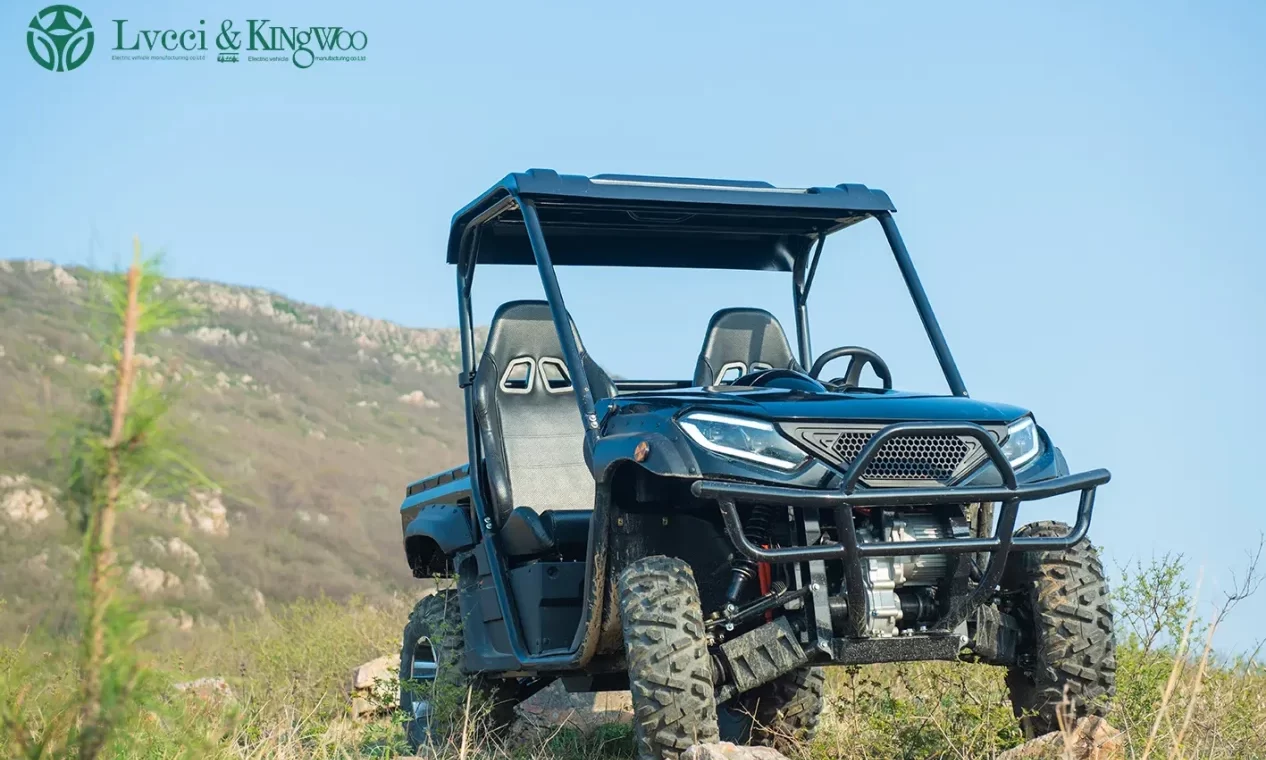
If your main task is to transport tools and inspect facilities for short distances on farms, pastures or parks, and you can return to fixed charging points every day, you can include LVCCI & KINGWOO RUE725 Pro as a candidate. LVCCI & KINGWOO is available in both 2WD and 4WD configurations. When the route is mainly based on hardened road and flat site, 2WD can be tried first. In case of daily passing through wet grass, gravel slope or muddy rut, 4WD shall be included in the field test, and the working conditions specified in the ground clearance, tires and manual shall be checked according to the delivery configuration.
The RUE725 Pro offers lead-acid gel and lithium battery options. Compare the two quotations based on the busiest 1 class of the vehicle, and require each to indicate the battery configuration, charging equipment, charging conditions under the specified power source and warranty scope. If the car needs to be equipped with roof, door or tool rack, write these accessories into the same configuration sheet, and ask the supplier to confirm the delivery size and corresponding load together.
If you are purchasing for multiple sites, you can first find the most representative route to complete the test run, and then check whether other sites have narrower entrances, larger slopes or shorter charging periods. This makes it easy to decide whether to purchase 1 configuration uniformly or individually for a few high-load points. If the vehicle still needs to be used on public roads, the target sales market, specific configuration and use should be written into the inquiry, and it is required to check the documents corresponding to the delivered model and the local access conditions.
When contacting LVCCI & KINGWOO, please provide the narrowest lane width, common load, full trailer weight, maximum slope, mileage per shift and available charging period. Use the same set of data to request configuration recommendations and specification sheets for RUE725 Pro, and agree on acceptance conditions for commissioning with cargo.
Explore our high-performance electric utility vehicles designed for tough terrains, off-road adventures, and sustainable utility tasks. Direct factory pricing.