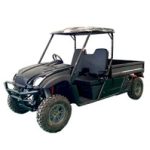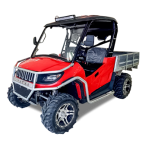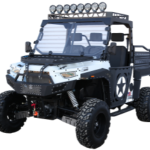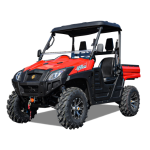
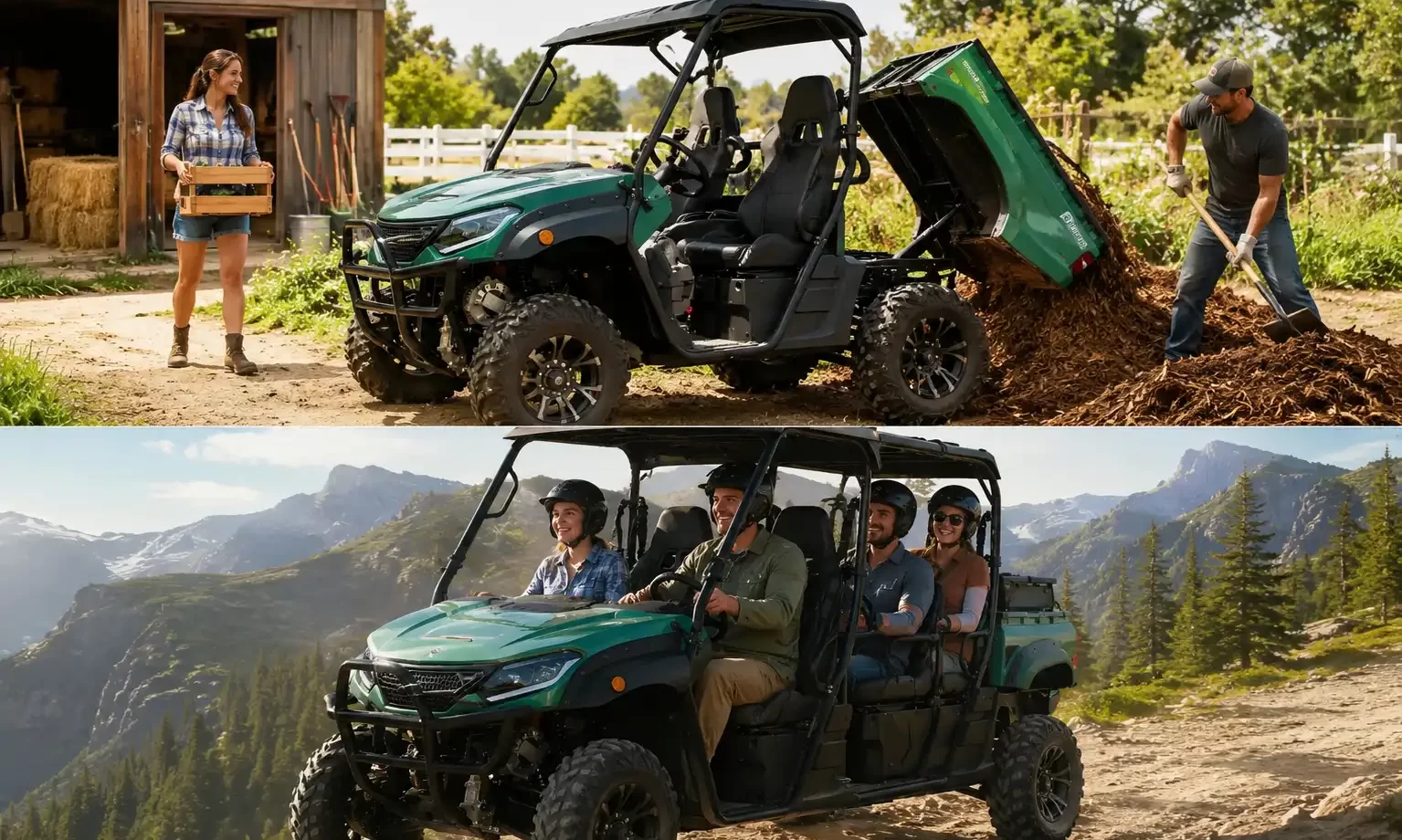
In recent years, there are more and more people in the outdoor cross-country, farm and ranch operation and maintenance, and park site inspection, and when we choose off-road all-terrain vehicles, we will always fall into the difficulty of choosing: lightweight and flexible ATV four-wheel motorcycle, hardcore cross-country Jeep, small tractor, or the UTV side-by-side all-terrain vehicle that is on the fire nowadays?
This article combines the mainstream UTV model parameters in 2026, the real use of the scene, all-round dismantling of the top ten reasons to buy UTVs, while comparing the mainstream off-road vehicle models on the market differences, attached to the industry to adapt to the scene and the complete purchase strategy, after reading the car will never buy the wrong one.
Want to understand why to buy UTV, first of all to clarify the core difference between UTV, ATV, motocross, hardcore off-road vehicles. Four types of mainstream off-road vehicles on the market, their respective short boards are very obvious, and UTV just make up for all the pain points.
– Seat layout: 2-6 people side-by-side seats, no need to ride across the ride, ride more relaxed
– Maneuvering mode: the same type of steering wheel + gas brake pedal, novice zero threshold to get started.
– Safety configuration: the original anti-roll bar + three-point safety belt, passive protection pull full
– Practical configuration: with self-unloading bucket, standard trailer interface, load towing capacity pull full
In order to let you more intuitively distinguish the differences between the four models, the following five core dimensions, a straightforward text comparison, at a glance to see the respective advantages and disadvantages:
UTV support 2-6 people riding side by side, perfect to meet the family companionship, teamwork, multi-people cross-country travel needs;
ATV most of the single-player models, only a very few special versions to support the two-person ride, space is very constricted;
off-road motorcycle can only be a single person riding, completely unable to carry passengers;
hardcore cross-country Jeep and pickup trucks can accommodate more than 4 people and more than enough space to carry people, but the size of the body is too large.
UTV adopts the same type of steering wheel + throttle and brake pedals of family cars, novice zero basis can also get started quickly without deliberately adjusting the center of gravity of the body;
ATV and off-road motorcycle are handlebar control, need to cooperate with the body center of gravity to complete the steering, the threshold of the first hand is high, and it is very easy to fatigue for a long time;
hardcore off-road vehicle control logic is the same as that of UTV, and it’s simple and easy to get started.
UTV is equipped with special self-unloading cargo bucket and trailer interface, which has strong loading and towing capacity, and is fully suitable for farms and construction sites with heavy-duty operation scenarios;
ATV can only rely on the small cargo rack to carry small items, and has almost no heavy-duty capacity;
off-road motorcycle does not have any cargo structure, and is unable to carry materials;
hardcore pickup trucks and off-road vehicles have excellent loading capacity, but with a wide body, they are unable to enter the fields and narrow roads in the mountains and forests.
UTV is equipped with high-strength anti-roll-over frame + three-point safety belt as standard, perfect passive safety protection, and can effectively avoid injuries caused by rollover;
ATV does not have any original protective structure, and its riding safety relies on helmets, protective gear and other external equipment; off-road motorcycle protection is blank, and the risk of injury from rollover and fall is extremely high;
hardcore highway and off-road vehicle comes with a complete body safety structure with the highest level of protection, but is not a part of the professional non-road off-road equipment. The hardcore road buggy comes with a complete body safety structure and the highest level of protection, but it is not a professional off-road equipment.
UTV is suitable for both work and play, covering the whole scenarios of construction site operation and maintenance, daily operation of farms, multi-person cross-country group building, and hunting and inspection in mountains and forests;
ATV focuses on single-player extreme off-road, and is more suitable for traveling through the extremely narrow forest trails;
off-road motorcycle is specially designed for professional off-road racing, and is inclined to be used in hardcore competitions;
and the hardcore Jeep and pickup are suitable for highway driving and cross-country driving in the open field, and are not able to be used for the complex and narrow off-road terrains. The hardcore Jeep and pickup trucks are suitable for highway driving and open field off-road, and cannot adapt to complex and narrow off-road terrain.
UTV is tailored for non-road harsh terrain, the original hardware configuration directly pull full, without significant modifications to deal with most complex road conditions, but also it is different from the core advantages of ordinary agricultural vehicles.
Hardware level, the mainstream UTV ground clearance of 12-14 inches, sports version of the model suspension travel up to 20-30 inches, road debris, roots, gullies can be easily filtered; with time-sharing four-wheel drive/full-time four-wheel drive + differential lock, muddy roads, loose sand will not be wheel slippage. At the same time, the whole system is equipped with high-torque engine, with abundant low-speed torque, and the ability to climb slopes and cross obstacles far exceeds that of ATVs in the same class.
Whether it’s a muddy trail in the rainforest, desert sand dunes, rocky roads, or thick snowy roads in winter, UTVs are able to pass stably. Among them, the sport UTV (Polaris RZR) focuses on high-speed cross-country and jumping, and the utility UTV (Polaris Ranger, John Deere Gator) focuses on stabilizing the operation of the bad field, so users can choose according to their needs.
The vast majority of owners choose UTV, the most important thing is a multi-purpose machine, a car instead of handling trucks, inspection vehicles, off-road toys multiple devices, cost-effective and greatly enhanced.
Work scene: farm and ranch inspection fences, feeding livestock, handling grass building materials; garden construction site transfer tools and materials; parks, mountains and forests daily patrol and operation and maintenance, instead of walking and inefficient ATV, greatly saving manpower time.
Recreational scenarios: weekend teams traversing the mountains, desert cross-country, outdoor camping, mountain hunting, many people can ride side by side peer communication, the whole family or friends together outdoor travel experience far more than a single ATV.
In the morning, it can be used to pull materials to work in the construction site, and in the afternoon, it can directly unload the work accessories into the mountain cross-country, without replacing the vehicle, which is a perfect balance between productivity and entertainment properties.
UTV is known as off-road small pickup is no gimmick, the original factory comes with self-unloading bucket + standard trailer interface, heavy-duty towing performance crushed all ATVs, fully meet the outdoor heavy-duty needs.
Mainstream parameters for reference: practical models of UTV cargo hopper load up to 1000-1500 pounds, the whole vehicle towing capacity of up to 3500 pounds; representative models of Polaris Ranger XD 1500, Bombardier Defender, John Deere Gator, can easily tow a trailer, spreader, snow removal equipment. At the same time, the cargo hopper supports electric one-touch self-unloading, dirt, gravel, grass unloading without manual handling, labor-saving and efficient.
Note: the sports version of the UTV is biased towards speed and fun, the cargo capacity is weaker, there is a heavy load demand must be prioritized to choose the engineering utility models.
ATV accident rate remains high, the core pain point is the unprotected frame, cross riding position is easy to roll over and fly, and UTV from the structure to solve all the safety hazards, but also home users preferred UTV key reasons.
For novice players and family members traveling, UTV has a higher error tolerance rate, no need to deliberately practice body weight control, and the driving style is the same as that of a daily private car, so it is safer to get started.
Riding an ATV for a long time, the straddle position and handlebar control will make the arms and waist extremely sore, while the UTV adopts an automotive ride design, which perfectly solves the problem of fatigue.
Ergonomic backrest seat, upright and relaxed sitting position, with power steering system, steering effortlessly; while supporting optional windshield, fully enclosed cockpit, warm air conditioning, windy, rainy, sandy, cold and hot can be normal use of the car. Whether it is a whole day site inspection, or a long time traversing the mountains and forests, the driving experience is far better than ATV.
Many users mistakenly think that UTV structure is complex, maintenance is more expensive, in fact, compared with off-road pickup trucks, small tractors, UTV daily maintenance costs are extremely low, and basic maintenance owners can DIY.
Routine maintenance only requires regular replacement of oil, filter, air filter, a single basic maintenance cost of only 300-1000 yuan; at the same time, the vehicle structure is sturdy, the original chassis protection is in place, and it is not easy to be damaged by bad sites. Compared with highway pickup trucks, UTVs have lower fuel consumption, no need for purchase tax and high car insurance; compared with small tractors, UTVs are more maneuverable and have better cross-country passability.
Especially the electric UTV, completely eliminates the need to replace oil, filter, spark plugs and other consumables, almost no daily maintenance pressure, and further reduces the cost of long-term use.
The new energy off-road is fully popularized in 2026, and the electric UTV represented by Polaris Ranger Kinetic has become the preferred model for orchards, nature reserves, high-end estates and hunting grounds.
The advantages of electric UTVs are outstanding: zero tailpipe emission, no pollution of vegetation and air; extremely low operating noise, no disturbance to wildlife, perfect for hunting and mountain patrol; oil-free maintenance, minimal operation and maintenance. Although the range is not as good as that of the fuel version, it is sufficient for daily field operations and short-distance cross-country travel, taking into account both performance and environmental protection.
Owners of farms, forests, large estates and photovoltaic sites are the largest group of people in need of UTVs. Large areas of the site on foot inspection efficiency is extremely low, pickup trucks can not enter the narrow field paths, and UTV perfectly adapted to the full range of scenarios.
It can quickly complete the border fence inspection, crop inspection, livestock feeding, material transfer; multi-people cockpit version can carry a number of staff, synchronized maintenance, inspection work; with snow shovels, spreaders, sprayers and other accessories, all seasons of the year, a car to cover the whole field operation and maintenance work.
The three mainstream brands, Polaris, Bombardier and Honda, have a perfect original modification ecology, plus a wealth of third-party modification accessories, so the whole vehicle can be freely customized to meet different needs without changing the vehicle.
– Protective modifications: doors, protective nets, chassis guards, to enhance body protection.
– Comfort modification: closed cabin, air conditioning, audio, heated seats.
– Functional modification: winch, snow shovel, pesticide sprayer, cargo expansion frame
– Off-road modification: competitive shock absorption, off-road tires, snow tracks, lighting spotlights
At the same time, the brand’s quick-release interface design, accessories can be completed in a few minutes to dismantle and install, flexible switching work and entertainment mode.
In the off-road vehicle market, the overall value retention rate of UTV is much higher than that of ATV and general agricultural machinery, with a three-year depreciation rate of only about 20% for the mainstream brand models, and still retaining more than half of the residual value in five years.
Among them, Honda Pioneer series has the first stable value retention rate, and the vehicle failure rate is extremely low; Polaris Ranger and Bombardier Defender have a large market share, and the second-hand circulation speed is fast. As long as the maintenance is done on time and maintenance records are kept, there is almost no loss in the late resale. Compared with the one-time depreciation of niche off-road equipment, UTVs are properly durable fixed assets.
Many consumers in the purchase of UTV all-terrain vehicles, it is easy to fall into a misunderstanding: only focus on the appearance of the value, engine horsepower and bare car price, ignoring their own use of terrain, power needs, late maintenance, as well as the domestic site access to the regulations and other key issues, and ultimately buy a model that does not meet their own needs, resulting in a waste of funds.
Combined with the real market feedback of the mainstream UTV models on the market, I break down the purchase process into 6 core comparison dimensions, each dimension is refined comparison points, suitable for the crowd and pit avoidance tips, the whole process using a clear list format, the organization at a glance, novices can be directly compared to the purchase.
– UTV: the same steering wheel as the car + foot pedal throttle brake, sitting position for upright side-by-side cockpit type, no need to ride clip the car, the threshold of control is extremely low, the elderly, women, zero-based novice can quickly get started; standard power steering system, low-speed steering is light, long-time driving arm without fatigue, multi-person side-by-side ride can be communicated with at any time, the travel experience is very good.
– ATV four-wheeled all-terrain motorcycle: motorcycle-style handlebar control, the need to ride across the seat, steering relies on the body’s center of gravity to cooperate, long time riding arm, lumbar extremely easy to sore, new hands need to specialize in the practice of manipulation skills, the fault rate is low.
– Off-road motorcycle: hardcore handlebar control, without any cockpit protection, the whole taut body riding, only suitable for professional off-road riders, completely unsuitable for daily transportation, field work and multi-person travel.
– Hardcore off-road pickup truck/SUV: the logic of control is the same as that of UTV, easy to get started, but the body size is wide and the flexibility is extremely poor, so it is impossible to enter the non-standard road conditions such as narrow forest trails and field ridges.
– UTV: factory-owned high-strength steel anti-roll-over protection frame, three-point automotive-grade seat belts, some high-grade models are equipped with door guards, side impact guardrails, closed cockpit structure, vehicle rollover, bumps and impacts, can protect drivers and passengers in all aspects, the probability of injury in an accident is much lower than the other three types of models.
– ATV: no original anti-roll-over frame, no safety belt, open body without any hard protection, vehicle rollover drivers and passengers are very easy to be thrown out of the car, is the highest accident rate of the four types of models, daily riding must wear a full set of protective gear.
– Off-road motorcycle: Zero body protection, relying entirely on the rider’s own protective gear and riding skills to avoid risk, fall, impact injury risk is extremely high, not suitable for leisure transportation and field work.
– Hardcore off-road pickup trucks/SUVs: the most complete body safety configuration, but the vehicle weight is very large, it is extremely difficult to get out of trouble after being caught in the muddy terrain, and it cannot be adapted to the niche field complex terrain.
– UTV: comes with integrated self-unloading bucket + national standard universal trailer interface, practical models of cargo bucket load up to 1,000-1,500 pounds, the maximum towing capacity of up to 3,500 pounds, support for the addition of snow shovels, fertilizer spreaders, sprayers and dozens of other work accessories, electric tipping function to eliminate the trouble of unloading manually, is a real combination of cargo, towing and multifunctional modification of the off-road It is a real off-road vehicle with cargo carrying, towing and multifunctional modification.
– ATV: Equipped with only front and rear small cargo racks, no closed hopper, can only place small lightweight tools, can not drag heavy equipment, heavy load conditions under the body stability has dropped significantly, almost no engineering operations.
– Off-road motorcycle: without any cargo structure, completely unable to carry materials, towing equipment, only with simple driving function.
– Hardcore off-road pickup truck/SUV: the strongest original cargo-carrying and towing ability, but the long wheelbase and high chassis make it impossible to pass through narrow terrain, and it can’t take advantage of the cargo-carrying advantage in the field and woodland scenarios.
– UTV: all standard four-wheel drive system + optional front and rear differential locks, ground clearance generally reach 12-14 inches, long travel independent suspension can filter road debris, gullies and bumps, taking into account high-speed cross-country stability and low-speed extrication ability, mud, sand, snow, mountain rocky road all-around adaptability.
– ATV: the body is narrower, the ultimate narrow path through the ability is slightly better than the UTV, but the body stability is poor, steep slopes are prone to rollover, high-speed cross-country bumps are extremely strong, is not suitable for long-distance traversal.
– Off-road motorcycle: the highest degree of flexibility through the sex, but no load capacity, and can not carry people, only suitable for single extreme cross-country.
– Hardcore off-road pickups/SUVs: excellent paved road performance, but the chassis wheelbase is too long, forest trails, narrow paths in the fields, and steep slopes are extremely poor through the terrain, and it’s very easy to cut the chassis and body.
– UTV: mature and durable structure, few routine maintenance items, single basic maintenance cost of 300-1000 yuan; electric version does not need to change the oil, spark plugs, late maintenance costs are extremely low; no need to pay purchase tax, vehicle tax and high commercial auto insurance, long-term cost of using the car is much lower than the road off-road vehicles.
– ATV: low maintenance costs, but the body failure rate is higher than mainstream UTVs, with high accident repair costs and higher hidden risks associated with safety hazards.
– Off-road motorcycle: the lowest maintenance cost, but wear and tear consumption is fast, high frequency off-road scenarios with high repair frequency.
– Hardcore off-road pickup trucks/SUVs: high fuel consumption, expensive maintenance, high car insurance and tax, off-road terrain is also prone to chassis and tire damage, and the overall cost of car use remains high.
– UTV is suitable for: farm and ranch owners, park operation and maintenance personnel, cross-country team enthusiasts, campground operators, mountain emergency inspectors, suitable for users who need to take care of multiple scenarios of work, carrying people and cross-country.
– ATV suitable for people: single extreme cross-country players, extreme narrow trail commuters, only suitable for single short-distance travel, no need to carry people and goods.
– Off-road motorcycle suitable for people: professional off-road race competitors, single hardcore off-road enthusiasts, no practical operational needs.
– Hard-core off-road pickup trucks/SUVs are suitable for people who mainly travel on highways, occasionally cross-country in open fields, and have no need to pass on narrow roads in fields and forests.
Comprehensive comparison of the six dimensions can be seen, UTV has no obvious shortcomings, a perfect balance of safety, practicality, passability and comfort, is also the current non-road all-terrain vehicle with the highest overall cost-effective, adaptable to the widest range of models.
From a comprehensive point of view, the biggest core advantage of UTV is the balance of no short boards: it is safer than ATV, more comfortable, and can carry people and cargo; it is more compact than off-road pickup trucks, and can penetrate narrow trails; it is more flexible than farm tractors, and has stronger cross-country performance.
If you need a car to take into account the field work, family off-road, multi-person travel, valuing safety, comfort and long-term value, then UTV is definitely worth getting; if you only need a single person extreme flexibility off-road, very low budget, then ATV will be more appropriate.
Remember not to blindly pursue high power and full modification, and choose fuel/electric and sport/practical versions to fit your own usage scenario in order to buy the most cost-effective UTV.
UTV has better safety, cargo capacity and comfort, a vehicle to replace multiple equipment, long-term comprehensive vehicle costs are lower, and the cost-effectiveness of UTV far exceeds that of ATV in the case of multi-travel and work scenarios.
The core difference lies in the seating position, control and safety, UTV side-by-side seats, steering wheel control, with anti-roll bar, safe and comfortable to carry people; ATV cross-bike handlebar control, flexible but poor protection, can not be more than one peer.
Yes, it can. The new electric UTV has strong low torque, and its towing capacity is comparable to that of the fuel version, but the range is limited, suitable for daily short-distance field operations, and the fuel version is still recommended for long-distance cross-country.
Regular brand UTVs can be used for 8-10 years with regular maintenance, and Honda and other durable models can be used for even longer with proper maintenance, and the overall durability far exceeds that of ATVs.


-150x150.png)