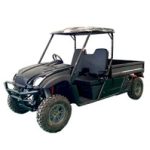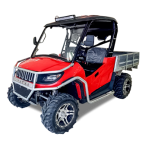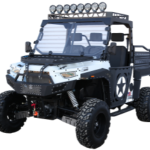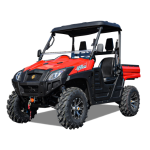
The electric UTV (utility off-road vehicle) market is expanding at a phenomenal rate as the global green energy transition accelerates. According to market research firms, the global electric UTV market size has reached approximately USD 978 million by 2024 and is expected to exceed USD 1,878 million by 2030, growing at a CAGR of 13.9%. As one of the most influential green travel pioneer countries in Europe, the Netherlands is becoming an important market for global electric UTV brands to compete with each other by virtue of its perfect electric vehicle policy system, leading demand for agricultural mechanization, and a market culture that attaches great importance to sustainable development.
Against this backdrop, it is important to understand the strengths and product features of the world’s leading electric UTV manufacturers, whether you are a professional buyer who specializes in agriculture, construction and industrial scenarios, or an outdoor sports enthusiast. In this article, we will list the world’s top 10 representative or influential electric UTV manufacturers in the Dutch market, from company background, product advantages to potential limitations, to provide you with a comprehensive reference.
Polaris is one of the world’s largest manufacturers of powersports equipment, headquartered in Minnesota, U.S.A. It was founded in 1954. Its product line covers motorcycles, all-terrain vehicles (ATVs), utility vehicles (UTVs), snowmobiles and electric vehicles, and it has a dealer network in more than 100 countries around the world.
In the electric UTV segment, Polaris introduced its iconic Ranger XP Kinetic series, the world’s first full-size electric workhorse UTV to be mass-produced by a mainstream original equipment manufacturer (OEM), developed in conjunction with Zero Motorcycles, a leading brand in motorcycle electric technology, and powered by a permanent magnet AC motor of up to 110 horsepower. maximum torque of 190 Nm, a range of up to approximately 129 kilometers (80 miles) on a single charge, and a towing capacity of 2,500 pounds (approximately 1,134 kilograms).
In 2024, Polaris also establishes North America’s first off-road EV charging network in Michigan, further solidifying its industry leadership in electric UTVs.
– Product Performance Leadership: With 110 horsepower and 140 pound-feet of torque, the Ranger XP Kinetic Ultimate accelerates from 0 to 64 km/h in less than four seconds, with a motor burst that far exceeds that of fuel-efficient models in its class, for outstanding off-road performance.
– Largest dealer network in the world: Polaris has the largest dealer and after-sales service system in this market segment, and Dutch customers can enjoy comprehensive localized service support.
– Low Maintenance Costs: According to official data, the Ranger XP Kinetic’s regular maintenance costs are about 70% lower than those of similar fuel vehicles, and there is no need to change oil, filter, spark plugs and clutches, which dramatically reduces the cost of using the vehicle over its entire life cycle.
– Forward-looking charging infrastructure layout: Polaris takes the lead in building off-road charging networks, laying the infrastructure support for the mass popularization of electric UTVs in the future.
– Higher pricing: The Ranger XP Kinetic starts at about $24,999 (up to $29,999 for the Ultimate version), which is on the high side of the UTV market and poses an obstacle to price-sensitive buyers.
– European market certification still needs to be perfected: some models still have some limitations in terms of EU road regulations certification, and users in the Netherlands need to confirm the compliance status of specific models.
– Dependence on charging infrastructure: In remote rural areas where charging ports are not widely available, range anxiety remains a potential bottleneck in actual use.
John Deere (Deere & Company) is a century-old giant in the field of global agricultural and construction machinery, headquartered in Moline, Illinois, U.S.A. Founded in 1837, it operates in more than 160 countries around the world. Its UTV product line, known as the Gator series, has long been deeply engaged in agricultural, horticultural and industrial scenes.
In recent years, John Deere has continued to increase its investment in electrification, and its Gator EV series (including the Gator TE4x2 Electric and Gator EX series) has been widely used in daily operations on golf courses, park management and large farms.
In January 2025, Deere even unveiled a series of autonomous driving and battery-powered off-road equipment at CES, demonstrating its strategic determination to move forward on both the intelligent and electrified tracks.John Deere has a high brand recognition in the Dutch agricultural market, with a well-established network of dealers, and is an important partner for domestic farmers and landscape enterprises.
– Deeply adapted to agricultural scenarios: The Gator series is designed for heavy-duty work scenarios such as farms, greenhouses, and horticulture, with a maximum towing capacity of 4,000 lbs (on some models) and superb load specifications that make it highly competitive in the Dutch agricultural market.
– High brand trust: In the Netherlands and throughout the European agricultural community, John Deere’s brand reputation and equipment reliability have been proven over decades, resulting in high user loyalty.
– Forward-looking automation technology: Autonomous driving technology and AI vision suite released at CES 2025 show John Deere’s clear direction of transitioning to smart agricultural tools.
– Perfect spare parts supply system: a worldwide spare parts network ensures that users can quickly obtain repair support when equipment failure occurs, reducing downtime losses.
– Relatively limited range of electric models: Some lightweight electric Gator models do not have the range to perform well under heavy work conditions, making them unsuitable for all-weather, high-intensity use scenarios.
– Significant price premiums: John Deere equipment is generally more expensive to purchase and to maintain than the market average, with large ranchers reporting “unbelievably high” spare parts prices.
– Off-road sports performance is not outstanding: the Gator series emphasizes the attributes of utility tools, and there is an obvious gap between its off-road performance and Polaris, Can-Am and other brands, which is not suitable for consumers who pursue driving fun.
Lvcci & Kingwoo is made up of two closely collaborating electric vehicle enterprises in Henan Province–HENAN LVCCI ELECTRIC VEHICLE MANUFACTURING CO. HENAN KINGWOO ELECTRIC VEHICLE MANUFACTURING CO., LTD) – a joint brand of electric UTVs, the industrial park is located in Zhumadian City, Henan Province, China, founded in 2014, with more than 10 years of professional manufacturing experience in electric UTVs. With more than 10 years of professional manufacturing experience in electric UTVs, the technical team of Lvcci & Kingwoo has more than 100 people and the factory area is more than 200,000 square meters.
Lvcci & Kingwoo specializes in the R&D and production of electric side-mounted UTVs for agriculture, ranching, forestry, industrial transportation, construction and hunting, and its products are exported to more than 50 countries and regions around the world. Its core electric models include RUE725 (4×2, 7.5KW), RUE725X (4×4), RUE725DX (4-seater), and RUE725DX-B (large bucket version), etc., with power ranging from 5KW to 25KW, flexible configurations from 2-seater to 6-seater, and support for high customization.
All the main electric models have passed the EU EEC/COC certification and hold the independent WMI/VIN World Manufacturer Identification Number, which allows them to be registered as road-legal vehicles in the Netherlands and all European countries. Currently, Lvcci & Kingwoo has authorized dealers in the Netherlands, Spain, Poland, Germany, Italy, Australia and the United States, with the Netherlands being one of its core markets in Europe.
– EU EEC/COC dual certification, no obstacles on the road in the Netherlands: All main electric UTVs have passed the EU EEC/COC type certification and hold independent WMI/VIN codes, which allow them to be legally registered as road vehicles in the Netherlands, which is a significant compliance advantage over many Asian competitors that have not been certified by the European Union, and is highly favored by the Dutch municipal, agricultural and industrial customers.
– Local distribution and after-sales service in the Netherlands: Lvcci & Kingwoo has established authorized distribution and service points in the Netherlands, eliminating the need for users to seek support across the border. The standard 12-month warranty for the entire vehicle (motor, controller, and batteries are included in the warranty) and the provision of rapid parts replacement services significantly reduce the risk of local operations.
– Full power band product matrix, highly customizable: from 5KW entry model to 25KW flagship EV-25-01, the product line covers the whole scenario from light-duty leisure to heavy-duty industrial, and supports hundreds of customization options such as 2 to 6-seat configurations, enclosed cockpits, air conditioning/heating, and electric lifting and lowering of cargo platforms, which can accurately match the diversified needs of agriculture, horticulture, logistics, and municipalities in Holland.
– The EV-25-01 flagship model has outstanding performance: the 25KW high-power flagship model has the leading power specification among Chinese brands in the same price range, has been tested and proven on a 25° climbing platform, and is equipped with lithium-ion battery option, traction control and high-performance suspension system, which is adaptable to the variable outdoor terrain in Holland.
– Competitive price and delivery efficiency: compared with the mainstream brands in Europe and the United States, Lvcci & Kingwoo has a lower procurement cost under the same functional configuration, and promises to complete the delivery within 20 working days after the contract is signed, with a stable and controllable delivery cycle.
– Global brand awareness is still in the growth stage: despite having established distribution channels in the Netherlands, Lvcci & Kingwoo’s overall brand awareness in the European market is still far from that of centuries-old brands such as Polaris and John Deere, and end-consumers’ active cognition is on the low side, so market education requires continuous investment.
– Limited competitiveness of high-end performance models: Although the 25KW power of the flagship EV-25-01 is at a higher level among Chinese brands, there is still a significant gap in terms of extreme performance, high-speed off-road and adaptability to complex terrain when compared to the Polaris Ranger XP Kinetic (110HP/approx. 82KW) and other North American flagship electric UTVs.
– Insufficient accumulation of long-term reliability data: Compared with European and American brands that have decades of large-scale commercial validation data, the long-term durability record of Lvcci & Kingwoo’s electric UTVs in the European market is still shallow, and some heavy industrial users are still holding a wait-and-see attitude when making purchasing decisions.
– Weak charging infrastructure and ecology: Unlike Polaris and other brands that have already started to lay out off-road charging networks in Europe, Lvcci & Kingwoo is still in the early stages of constructing charging infrastructure and smart connectivity ecosystems, which has limited attraction to commercial fleet users relying on complete charging solutions.
Textron Specialized Vehicles is a business segment of Textron Group that focuses on specialized vehicles, integrating several well-known sub-brands such as Arctic Cat, Cushman, E-Z-GO, etc., and building up the widest commercial product portfolio in the field of electric UTVs to date.
Arctic Cat Prowler EV focuses on the off-road recreational market, Cushman series specializes in commercial fleet such as industrial parks, airport ground handling and municipal services, and E-Z-GO dominates the golf fleet market, while Textron Stampede EV is the main electric vehicle model for the outdoor off-road recreational market. Through its multi-brand synergy strategy, Textron Specialized Vehicles has established a solid market presence in the four segments of golf, industrial, municipal and off-road recreation, and in the European market (including the Netherlands), it has a certain influence in the industrial and logistics segments with the Cushman brand.
– Most comprehensive market segment coverage: The multi-brand matrix strategy enables Textron to cover multiple vertical markets such as golf, business parks, industrial logistics and off-road recreation simultaneously, providing exclusive solutions for different types of customers.
– Deep accumulation of Cushman in industrial scenarios: Cushman brand has decades of experience in industrial scenarios such as warehousing and logistics, airport ground handling, etc., and the reliability and adaptability of its products have been verified by a large number of commercial enterprises.
– Supported by group resources: Relying on Textron Group’s R&D, manufacturing and global supply chain resources, each sub-brand has the advantage of scaling up in terms of cost control and technology reserves.
– Spillover of E-Z-GO leadership in North American market: Strong position in golf course fleet provides brand endorsement for Textron in the Dutch golf course market.
– Positioning ambiguity due to coexistence of multiple brands: With many brands under its umbrella, there is a certain degree of positioning overlap among brands, which creates problems for consumers’ purchasing decisions and makes the management of sales channels more complicated.
– Limited recognition of independent brands in Europe: the brand awareness of Arctic Cat and Cushman in the Netherlands and the European market as a whole is far less than that of the North American domestic market, and the cost of market education is higher.
– Iteration of electric product line needs to be accelerated: Compared with flagship electric models such as the Polaris Ranger XP Kinetic, there is still a gap in the technical specifications and product definition of Textron’s electric UTVs.
Kawasaki Heavy Industries (Kawasaki) is a renowned Japanese integrated manufacturing company with deep expertise in motorcycles, construction machinery, aerospace and heavy industry, headquartered in Kobe, Japan, and founded in 1878. Its UTV products, known as the Mule series, are widely used in agriculture, construction and heavy industry scenarios around the world, and have earned a high market reputation for their superb durability and work reliability.
In recent years, Kawasaki has continued to expand its electric UTV product layout, and the electric variants of its Mule series have gradually entered the market, providing low-noise, low-emission work tools for users in farms, construction sites and industrial parks. Notably, Kawasaki also announced that the 2026 Teryx H2 will introduce supercharged performance technology from its street motorcycle platform, demonstrating its ability to integrate technology development across platforms. In the Netherlands, the Kawasaki Mule is widely recognized by users in the farm and gardening business for its leather and durability.
– Extreme durability for heavy duty work: The Kawasaki Mule series is known for being “more durable than most competitors” and has been recognized by many farm and construction companies as the preferred choice for heavy duty work due to its outstanding reliability in high intensity work scenarios.
– Deeply adapted to agricultural and construction scenarios: The chassis design is optimized for complex working conditions and is capable of performing a wide range of heavy-duty tasks such as towing, lifting and driving on rough terrain, and is well known in the Dutch agricultural market.
– Globalized parts and service network: Relying on Kawasaki’s motorcycle and machinery dealer network around the world, users have convenient access to spare parts and technical support.
– Advantage of cross-category technology sharing: Technology accumulation from motorcycle, aviation and other fields provides differentiated support for its products in terms of engine performance and material technology.
– Relative lag in electrification: Compared with brands such as Polaris and John Deere, Kawasaki’s product line in the field of pure electric UTVs is still incomplete, and the pace of electrification transition is slow.
– Driving comfort needs to be improved: Some users report that the riding comfort and ergonomic design of the Mule series are not as good as those of competitors in the same price range, and that the driving experience for a long time is average.
– Recreational performance is weak: Kawasaki Mule is positioned as a purely tool-type UTV, and there is an obvious gap between the off-road recreational brand and the sports and leisure driving experience, making it difficult to attract the consumer recreational market.
CFMOTO (Chunfeng Power, Zhejiang Chunfeng Power Co., Ltd.) is China’s most representative globalized power sports equipment manufacturer, headquartered in Hangzhou, Zhejiang Province, founded in 1989, initially started as an engine manufacturer, and has developed into a full range of manufacturers of motorcycles, ATVs, UTVs, and electric vehicles. In 2007, CFMOTO opened its North American headquarters (CFMOTO USA) in Plymouth, Minnesota, USA.
In the electric UTV segment, CFMOTO launched its flagship electric side-mounted UTV in 2025, the UFORCE U6 EV, which is powered by a 300V Li-ion ternary battery (lithium manganese cobalt phosphate) with a usable capacity of 15.29 kWh, equipped with automotive-grade charging ports, Bluetooth connectivity, a high-quality audio system and a wide range of interior options. The U6 EV is directly competitive with Can-Am and John Deere in terms of capacity and towing specifications, and is already available for sale globally, with an expected entry into the U.S. market in 2026. In the Netherlands, CFMOTO is already active in the European market through local dealers.
– Cost-effective: CFMOTO is usually sold at a lower price than mainstream competitors in Europe and the US with the same performance specifications, which makes it significantly attractive to small and medium-sized farmers and budget-sensitive commercial users in the Netherlands.
– Continuous improvement in technology: The UFORCE U6 EV is equipped with a 300V Li-ion ternary battery and an automotive-grade charging solution, demonstrating CFMOTO’s rapid catch-up in the field of electric technology, and a significant increase in the maturity of the product’s technology.
– Strong momentum of globalization expansion: CFMOTO’s sales layout in more than 100 countries and continuously improving European dealer system provide Dutch customers with continuously improving localized service guarantee.
– Rich configuration options: The U6 EV supports a wide range of optional accessories and functional upgrades, including door panels, rear windows, windshield wipers and opening and closing front windshield, to meet users’ individual needs.
– Brand awareness still needs to be cultivated: In the Dutch and European markets, CFMOTO has not yet established brand trust comparable to that of Polaris and John Deere, and consumer acceptance needs time to accumulate.
– Inadequate after-sales service network: In the Netherlands and other European countries, the density of CFMOTO’s authorized dealers and service outlets is still limited, making it difficult to respond quickly to after-sales demand.
– Insufficient long-term reliability data: Compared with European and American brands that have decades of field-proven data, the long-term reliability record of CFMOTO’s electric UTVs still needs to be tested by the market.
Headquartered in Osaka, Japan, and founded in 1890, Kubota is a prestigious Japanese manufacturer of agricultural and construction machinery with operations in more than 100 countries around the world, known for its tractors, excavators, harvesters, and utility vehicles.
Kubota’s UTV products are centered on the RTV (Rough Terrain Vehicle) series, which offers a wide range of gasoline, diesel, and electric power forms, and is designed for high-intensity work scenarios such as agriculture, animal husbandry, and grounds management. the Kubota RTV-X series utilizes a hydrostatic drivetrain system, which provides easy operation and stable performance in complex ground conditions such as mud, rain, and snow. Stability.
In the Netherlands, a country with highly mechanized agriculture, Kubota has long been one of the most trusted brands of construction machinery for farmers, and its electric and hybrid UTVs are gradually entering the Dutch market to meet the demand for low-noise, low-emission work tools.
– Seamless integration in agricultural scenarios: The Kubota RTV series can be used in conjunction with tractors, harvesters and other agricultural machinery, providing a natural system compatibility advantage in the operation of large farms in the Netherlands, a large agricultural country.
– Excellent environmental adaptability: The hydrostatic transmission system allows the RTV to maneuver smoothly through mud, slopes, and other rough terrain, making it ideal for the Dutch lowland plains and coastal mud flats.
– Excellent brand reliability: In the Dutch agricultural community, Kubota equipment is well known for its high reliability, “buy it and don’t worry about it”, and the used equipment has a high value retention rate.
– Global after-sales service support: A comprehensive global spare parts system and dealer service network ensures that users have timely access to repair and maintenance support.
– Relatively weak electrification product line: Kubota’s core competitiveness is mainly focused on fuel and diesel-powered models, and the richness and technological leadership of its pure electric UTV product line is not as good as that of Polaris and other electrification pioneers.
– Slower speeds and weak sportiness: The RTV series is designed to prioritize work efficiency, and the top speed is generally low, making it unsuitable for user scenarios that require speed and maneuverability.
– Lagging behind in exterior design and intelligent configuration: Compared to emerging electric UTV brands that focus on interior and digital experience, Kubota products are more basic in terms of human-machine interface and intelligent connectivity features.
Alke’ is an Italian manufacturer specializing in pure electric industrial vehicles, headquartered in the Veneto region of Italy, with 100% Made in Italy as its core competence.
Since its establishment, Alke’ has focused on providing high-performance electric work vehicles for professional scenarios such as airports, parks, tourist resorts, industrial parks and municipal management, and its core product, the ATX series, has accumulated a large number of business cases in the European market. With a rated power of 8kW (14kW peak) and a standard operating range of up to 150km, the ATX has a load capacity of up to 1,630kg and a towing capacity of up to 4,500kg, and can easily cope with gradients of up to 35%. 2025 will see the launch of the new ATX 4 series, which will be equipped with a lithium-ion battery pack with a capacity of up to 24kWh, increasing the range to 200km.
All Alke’ models are EU Roadworthiness Approved for use in restricted urban areas and indoor industrial premises, making them one of the most representative local brands in the European electric UTV market, with applications in Dutch airports, ports and municipalities.
– EU compliance and roadworthiness: Alke’s products are EU roadworthiness certified for use on emission-restricted roads and indoor premises in urban areas in the Netherlands, which is a clear compliance advantage over some competitors that are not EU-certified.
– Industry-leading heavy-duty capacity: With a load capacity of up to 1,630 kg and a towing capacity of 4,500 kg (private site), Alke’s products are at the top of their class, making them ideally suited to heavy-duty industrial scenarios such as harbors and warehouses.
– Highly customizable: Alke’ offers hundreds of body configurations and functional attachments, including side panel bodies, vans, tarp bodies, and refuse collection bodies, to precisely match the needs of any commercial operation.
– European Local Manufacturing Quality Assurance: Made in Italy craftsmanship standards and strict quality control provide European commercial users with a higher sense of quality trust.
– Limited global awareness: Despite its reputation in the European professional market, Alke”s global brand influence is far less than that of international giants such as Polaris and John Deere, and end-consumer awareness in the Dutch market is still on the low side.
– Higher price: The high quality of Alke’s products and the Italian manufacturing process means higher purchasing costs, which puts pressure on the budgets of small and medium-sized businesses.
– Not suitable for recreational off-road scenarios: Alke’ products are positioned for purely industrial and commercial use, and the product design does not have off-road sports performance to meet the recreational off-road needs of individual consumers.
– Narrow sales channel coverage: The dealer network is mainly concentrated in the European market, with limited channel layout worldwide and a weak international after-sales support system.
Founded in 1988 and headquartered in Chongqing, Hisun Motors is a leading Chinese manufacturer of ATVs and UTVs, and has established a high level of market awareness in the global market, especially in North America.
Hisun’s product portfolio includes gasoline, electric and hybrid UTVs, with the electric lineup including the Strike EV and Sector E1 models, which focus on the entry-to-mid-range market and meet the demand for work and recreational UTVs in North America and Asia with cost-effective and diverse configuration options.
Through its U.S. subsidiary, Hisun Motors USA, Hisun is actively developing distribution channels in North America, and its products have entered mainstream retail terminals such as Tractor Supply. In the European market, Hisun has gradually increased its market coverage through cooperative importers, and some of its products have entered major European sales channels through the Netherlands, accumulating a certain base of price-sensitive agricultural and recreational users.
– Competitive entry price: The starting price of Hisun’s electric UTVs is usually 30% to 50% lower than that of European and American brands, making them an ideal choice for small and medium-sized Dutch farmers and first-time buyers with limited budgets.
– Wide coverage of product lines: From lightweight recreational models to heavy-duty work-type UTVs, Hisun offers a rich product matrix to meet different usage scenarios and load requirements.
– Advantage of manufacturing scale: Large-scale factory production brings cost-effectiveness, enabling Hisun to consistently provide low-priced products and maintain a certain profit margin.
– Rapid channel expansion in North America: The successful experience of building distribution network in North America provides a template for Hisun to further penetrate the European market in the future.
– Low brand reputation: In the European market, which emphasizes quality and brand endorsement, especially among the Dutch commercial users, Hisun’s brand image is still significantly different from that of Polaris, Kawasaki and other mature brands.
– Weak after-sales service network in Europe: the number of authorized Hisun service providers in the Netherlands is limited, and the supply of spare parts and after-sales response speed can hardly be compared with those of mainstream brands.
– Doubtful long-term durability: there are some users in the market who question the long-term reliability of Hisun products, and the service life under heavy working scenarios still needs to be further verified.
– Obstacles to EU compliance and certification: The EU type approval and roadworthiness authorization of some Hisun models are still incomplete, and the scope of legal use in the Netherlands is somewhat limited.
Landmaster is a U.S.-based manufacturer of workhorse UTVs, headquartered and manufactured in Columbia City, Indiana, with a core brand proposition of “Purely Made in the USA,” dedicated to providing durable and affordable workhorse UTVs for farmers, hunters, agricultural workers, and outdoor workers. Landmaster’s electric product line, the AMP series (including models such as the AMP HD 2025), focuses on cost-effective workhorse applications, with a towing capacity of 1,500 pounds, a top speed of approximately 38 mph, and a 4-year vehicle warranty and 5-year belt warranty, a commitment to quality that is high in its price range.
In 2024, Landmaster participated in Electrify Expo in Austin, USA, to showcase its electric UTV strategic layout, and in 2025, the company further enriched its electric product lineup with the introduction of a new reconditioning package and factory upgrade options. Although Landmaster does not yet have direct sales channels in the Dutch market, its products are gaining traction in niche agricultural and industrial markets outside of North America due to their price advantage and workhorse positioning.
– Made in USA quality endorsement: Insisting on completing all manufacturing processes in the Indiana factory, the “Made in USA” label provides a certain degree of quality trust for industrial users in the Netherlands and other European countries.
– Extra-long warranty policy: 4-year vehicle warranty + 5-year belt warranty is a leading level in the market at the same price level, effectively reducing the risk of long-term use by users.
– Pure work-type design, outstanding cost-effectiveness: AMP series pricing is reasonable, functional configuration is pragmatic, suitable for price-sensitive but basic requirements for the work performance of the user group.
– Continuous electrification product layout: 2025 product upgrade shows Landmaster’s strategic intention to accelerate the electrification layout, and future product competitiveness is expected to be improved.
– Almost no channel layout in the European market: Landmaster currently focuses on the North American market and has almost no authorized dealers in the Netherlands and Europe, resulting in a lack of purchasing channels and after-sales support.
– Electric model performance is relatively basic: Compared with flagship electric UTVs such as the Polaris Ranger XP Kinetic, the AMP series is relatively conservative in terms of top speed (~38km/h) and power performance, making it unsuitable for users seeking high performance.
– Extremely low brand awareness: Landmaster has virtually no brand recognition in the European market and is at a significant disadvantage in competition with other established brands.
– Lagging charging infrastructure: Compared to Polaris and other brands that have already started to lay out off-road charging networks, Landmaster is still relatively new in terms of electric infrastructure.


-150x150.png)