There is still room for the 1 UTV and the trailer is within the rated range. Why can’t this truck still fit? Because the weight of the two occupants, the accessories on the car and the trailer on the hitch point may occupy the payload capacity of the vehicle. Assessment UTV hauling capacity first, check the 4 figures with the same task: vehicle payload, cargo bed capacity, tongue weight limit and the towing capacity of the fully loaded trailer. Then put the actual slope, road surface and shift in to judge whether the car can complete the transportation according to your operation rhythm.
Payload capacity is the total weight a UTV is rated to carry. The UTV operation training of the Vermont of the University includes the driver, equipment and cargo into the vehicle load accounting. When actually purchasing, the vertical load applied by the accessories and trailer shall be included according to the corresponding model manual. The Cargo bed capacity limits the weight that can be loaded in the body. Even if the body is rated to hold 300kg, you may actually be able to hold less when the occupants and accessories have taken up most of the vehicle’s quota.
If the supplier uses gross vehicle weight rating (GVWR) explain the load capacity, please also ask for the corresponding configuration of the curb weight caliber. Confirm that the battery, roof, door and winch are included in the reference vehicle weight. Parts that have been included are counted only once, and the weight added to the delivery configuration and not included is still deducted. When only “Load Capacity” is written in the specification sheet, please ask the supplier to indicate which item it refers.
When purchasing multi-seat vehicles, the supplier can be asked to give the available bucket quota according to “driver only” and “seat according to daily personnel arrangement” respectively. Take the maintenance of the park as an example, there may be only one person for daily inspection, and colleagues, spare parts boxes and tools should be brought with them during centralized maintenance. If the selection is only substituted into the inspection work order, it is found that 1 more times are needed for centralized replacement and repair after the vehicle arrives.
Towing capacity is the maximum loaded trailer weight the UTV is rated to tow under specified conditions. When comparing UTV towing capacity, weigh the empty trailer and the cargo on the trailer together. Tongue weight is the vertical load applied by the trailer at the hitch point. It must not only meet the applicable limits of the hitch and the vehicle, but also be included in the vehicle load of the UTV.
| Rating | What to Check |
| Vehicle payload capacity | Occupants, cargo, accessories outside the baseline vehicle weight, and applicable tongue weight |
| Cargo bed capacity | Weight carried in the cargo bed and any applicable loading restrictions |
| Tongue weight limit | Measured vertical load at the hitch and the applicable vehicle and hitch limits |
| Towing capacity | Empty trailer plus trailer cargo, checked against the rating for the route and trailer setup |
Record the heaviest routine tasks first. Estimates are based on actual occupant, tool and cargo weights, not just the number of packages. The loading of wet soil and wet cover is particularly suitable for determination by weighing. Put the personnel, truck cargo and optional parts that appear at the same time in the traction operation in the same line. If seasonal heavy loads only occur a few times, you can count these 1 trips separately before deciding whether to dismantle or transfer another vehicle.
Required Payload = Occupant Weight + Added Accessory Weight + Onboard Cargo Weight + Tongue Weight
Loaded Trailer Weight = Empty Trailer Weight + Trailer Cargo Weight
Weigh the trailer according to the actual loading method, and use the method that meets the requirements of the vehicle and trailer to measure the tongue weight. After moving the cargo on the trailer, the weight of the hitch point may also change and need to be re-checked. If the model manual contains separate limits for the total body and tongue weight, axle limits or other combined limits, these must also be met.
If you use a weighbridge to record the weight of the trailer, first find out whether the reading is the weight of the entire loaded trailer or the weight supported only by the trailer wheels in the hitched state. The latter has less share of the hanging points. The purchase table shall record the total weight and tongue weight separately, and indicate the loading status at the time of measurement. In this way, the supplier can check both ratings and the acceptance personnel can reproduce the weighing.
Suppose the farm takes two employees and feed on the same trip, and tows a 1 trailer with fence material. The total number of employees is 155kg, which is not included in the attachment 45kg of the benchmark vehicle weight, the cargo in the vehicle body is 230kg, and the measured tongue weight is 45kg. The empty trailer weighs 190kg and the fencing material on board weighs 310kg. The following table shows the assumed ratings for the calculation, and the towing ratings are applicable to the route conditions set for this task.
| Limit | Job Load | Example Rating | Result |
| Vehicle payload capacity | 475kg | 450kg | Exceeds by 25kg |
| Cargo bed capacity | 230kg | 270kg | 40kg available |
| Tongue weight limit | 45kg | 60kg | 15kg available |
| Towing capacity for the route | 500kg | 600kg | 100kg available |
The bottleneck of this mission is the whole vehicle. After retaining employees, accessories and trailers, the available amount of the truck is min(270 kg, 450kg − 155kg − 45kg − 45 kg) = 205kg therefore, 230kg of feed needs to be reduced by at least 25kg to just reach the vehicle rating of the example. If this task is to be completed once a day, the delivery configuration with the vehicle quota higher than 475kg and the other applicable limits meeting the requirements can be selected during procurement. If part of the feed is moved to the trailer, the loaded trailer weight and tongue weight shall be recalculated, and then the vehicle payload shall be recalculated.
First mark the ramps, sharp bends and soft sections of the route that must be passed when fully loaded. In particular, pay attention to whether the load is different between the journey and the return journey. When transporting materials every day, the uphill that empty cars can pass and the downhill that they have to pass when returning with full load affect two different operating conditions.
The USDA Natural Resources Conservation Service off-road vehicle operating guidelines state that the towing capacity given by the manufacturer may vary with the slope of the route. At the time of inquiry, the supplier is requested to indicate the clauses in the manual that correspond to the actual grade, trailer brake configuration and speed. The empty car climbing ability and flat towing rating in the manual have applicable conditions. Both data should be checked, and the ramp towing limit must still be confirmed by the manufacturer’s documents of the corresponding configuration.
Site routes are best written in slope units. Percentages commonly used in engineering drawings, angles may be used in vehicle manuals. The slope percentage is the elevation change divided by the horizontal distance multiplied by 100. For example, an increase of 1 m per 10 m horizontal distance is 10% grade, which is about 5.7. Send the measured value together with the unit to the supplier, especially mark the short steep slope, so as to avoid covering the steep section that must be passed with the average value of the whole route.
Evaluate traction, steering and braking with the conditions allowed in the manual. 4WD can help the vehicle obtain traction on low-adhesion roads, and the ratings of the entire vehicle, cargo hopper and hitch are still implemented according to the configuration file. The heavy objects in the vehicle body shall be placed as low as possible, reasonably distributed and fixed according to the requirements of the manual. For slippery ramps or sharp turns, it is also necessary to determine whether alternative routes can be set up, transported in separate trips, or completed by another 1 of equipment.
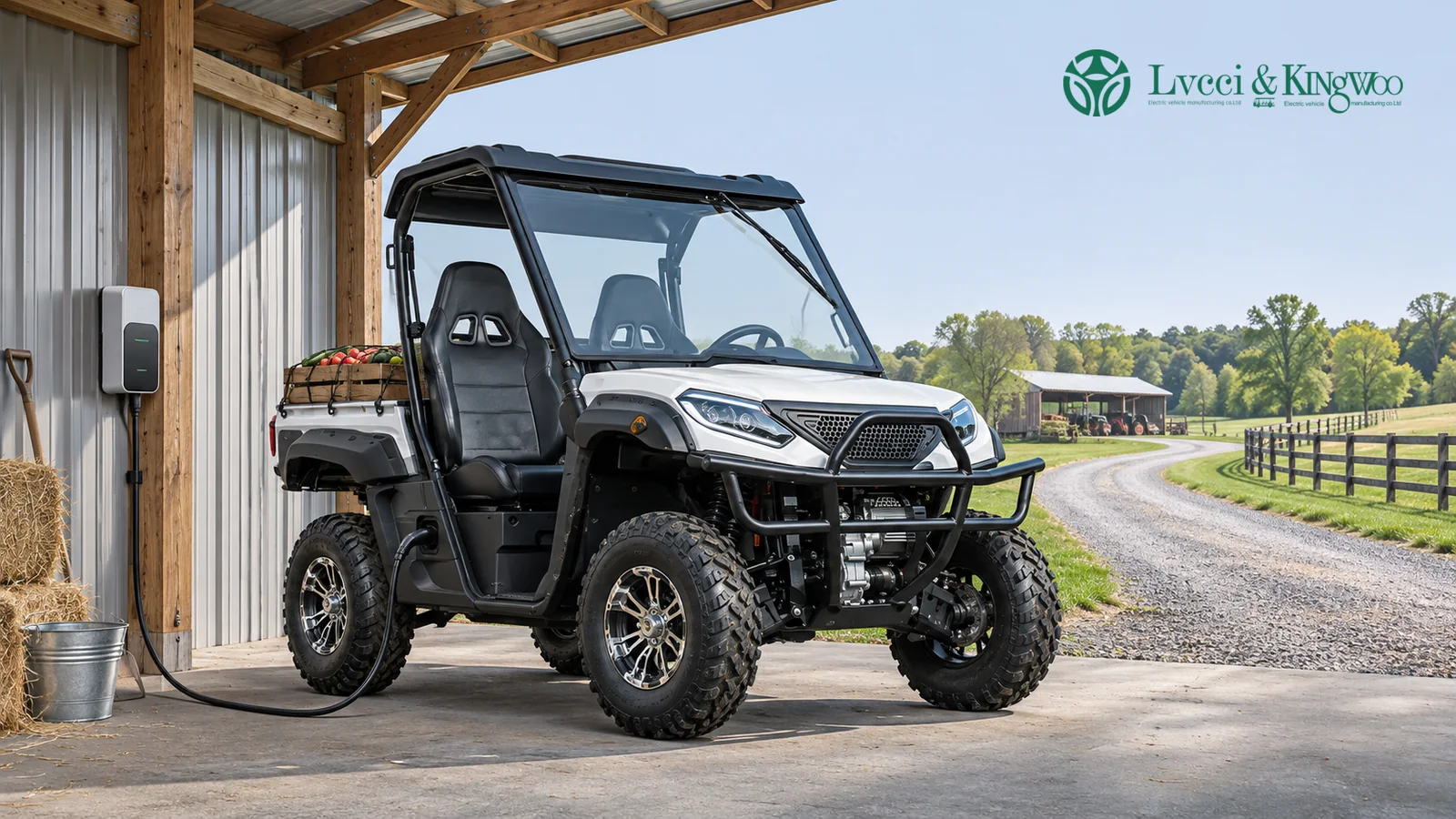
When purchasing farm UTV, two common tasks can be disassembled: daily feed transportation and centralized fence repair. Feed is multiplied by the actual number of bags per 1 trip by the weight of a single bag, plus the bucket or tools you often bring. The fence work order measures long materials, tools and fellow employees separately, and checks the effective internal size, fixing points and working passages of the truck body. If the fence material makes it necessary to add a trailer, use the simultaneous tasks of carrying people, loading and towing to screen the model.
Bulk material transportation to check the weight and volume at the same time. The restrictions encountered first may be different when loading wet soil and branches on the same bucket. Before purchasing, the loading tool can be used to weigh once to determine the actual weight of each shovel or barrel of commonly used materials, and then convert how many shovels are loaded in each truck. For a team that dumps frequently every day, electric UTV with a powered dump bed candidates can be included. Make a trial run of the sample car at the approved loading and unloading point, confirm the size of the car body, dumping clearance and whether manual cleaning is still needed after unloading, and check with the supplier the load allowed to be transported and dumped in this configuration.
If the purchase task is mainly bulk materials, you can also convert the single-trip volume into the number of trips required per day. For example, the work order needs to carry 780kg of wet covering. After accounting according to the actual personnel, accessories, car body and route limits, each trip can carry 195kg, theoretically at least 4 trips. If the volume of each trip is limited to 160kg, 5 trips are required. Confirm the loading, round-trip and dumping time of each trip and compare it with the available working hours of the fleet.
Property and park teams often put tools directly in the truck and use trailers to transport equipment. First confirm the trailer empty weight, total weight after installation, hitch size and trailer brake requirements that the purchaser plans to use. Also check the narrowest channel and the U-turn point. Some vehicles meet the weight requirements and cannot be turned around in front of the equipment warehouse after connecting to the planned trailer. When the prototype is tested, it is easier to find this problem with the actual trailer.
Explore our high-performance electric utility vehicles designed for tough terrains, off-road adventures, and sustainable utility tasks. Direct factory pricing.
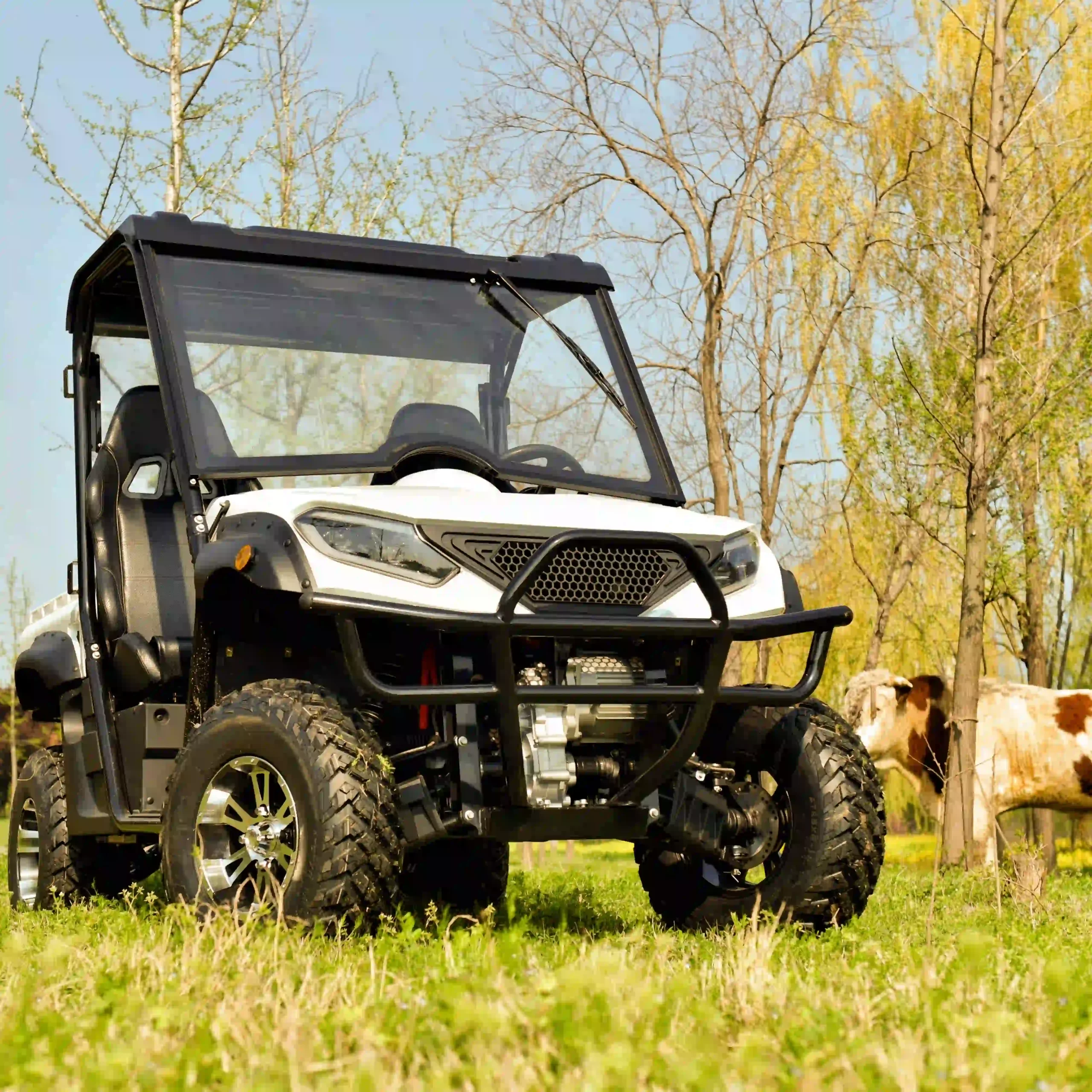
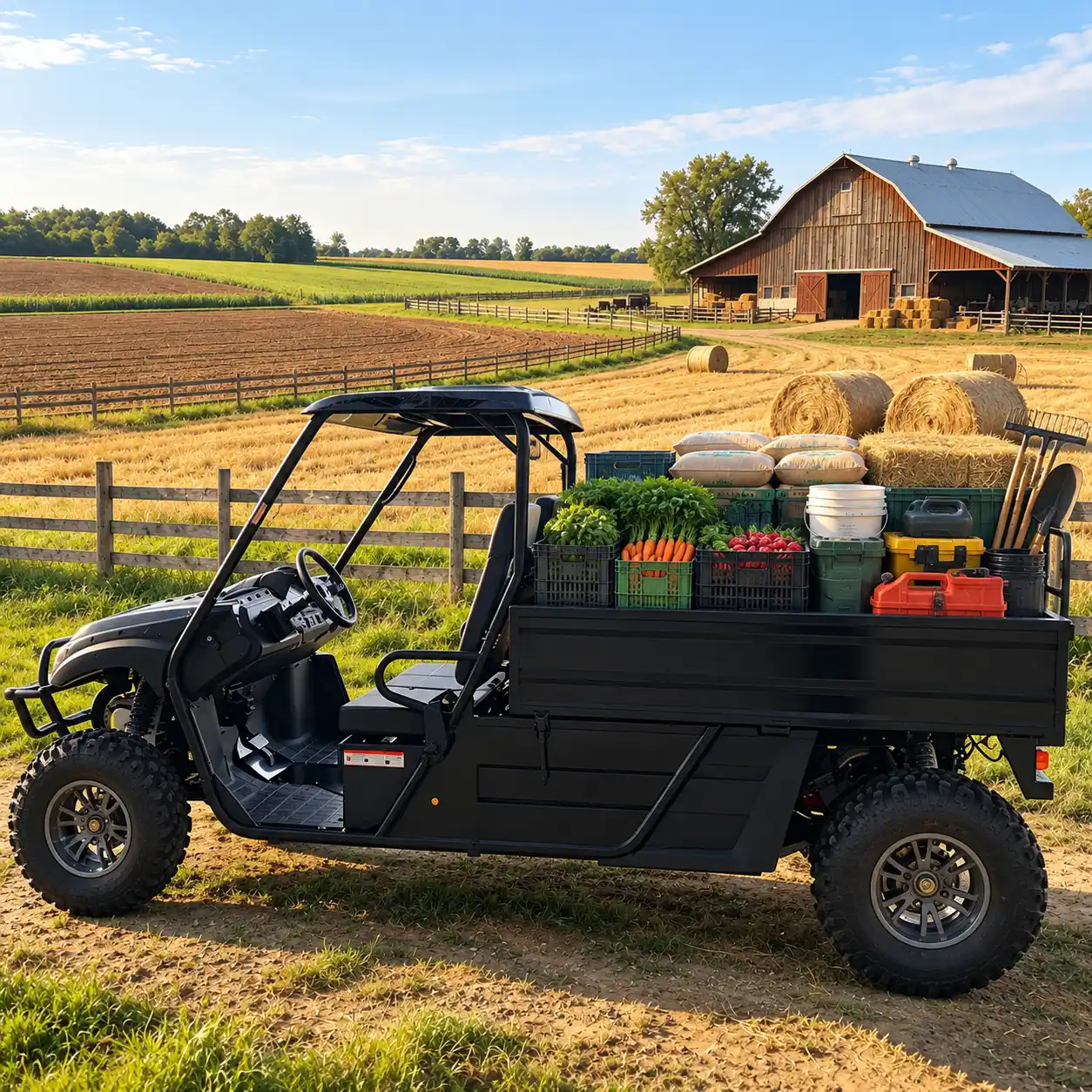
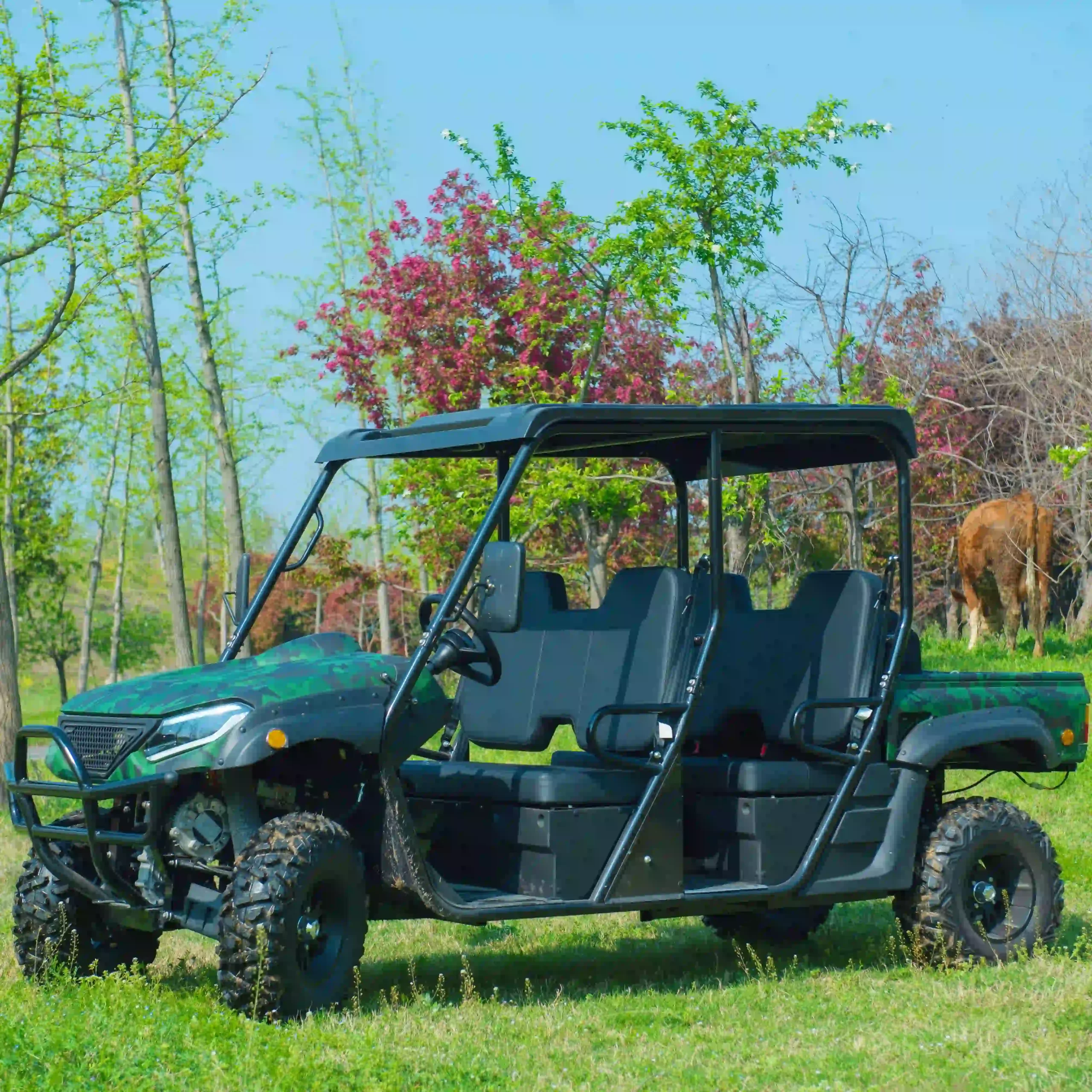
Electric UTV is worth being included in the purchase list for multiple short-distance transportation every day and recharging at a fixed place after work. Write down the daily round trip times, single trip distance, load direction and stop time as a duty cycle. For cars that return to the warehouse many times during the 1 shift, you can check whether there is an available charging window during the rest period. If multiple vehicles return to the warehouse at the same time, check whether the charging position and power supply can meet the departure time of the next 1 shift.
If it is a multi-shift homework, you can first draw the busiest day into a schedule for dispatching cars. Label when the vehicle must be on site, when it can return to the warehouse, and which vehicle will occupy the charging space at the same time. In this way, the spare time of ANA on the book can be replaced by the time that can really be used for power supply. For example, when two short stops occur at the location away from the library, these two periods cannot be used for charging under the original site configuration.
If the route is mainly flat and stable, 2WD can be evaluated first. If routine tasks pass through mud, wet grass or loose gravel, 4WD can be compared under the same route and load as approved by the manufacturer. During the inquiry, ask the supplier to list the vehicle weight reference, payload and towing capacity for each drive configuration. In this way, the field traction performance and paper load can be compared to the actual delivery configuration.
The unit of comparison is how many trips can be completed per shift. The endurance of electric UTV will vary with load, terrain, temperature, start-stop and accessory power consumption. When comparing lithium battery and lead-acid gel battery, ask the supplier to provide data according to the same duty cycle, and list the test load, environmental conditions, start-stop state of charge (SOC) and recharging time of the on-board charger. If there is only light load endurance at present, the on-load test can be listed as an acceptance item. For fleets operating in cold or rainy seasons, representative seasonal conditions should be included in the validation plan.
Let the quotation indicate the number of seats, drive, battery, body, tires, hitch and main accessories, and require manuals, vehicle nameplates or manufacturer’s written information to correspond to the delivery configuration of the same market and model year. After replacing the battery, installing the cab or changing to a larger body in the same series, check the actual load limit again.
When reviewing a quote, row the 4 item data for the same configuration horizontally. Get the supplier to provide the manual chapter or nameplate field for each number. If there are discrepancies between the marketing materials and the delivery documents, the other party is required to confirm in writing the corresponding configuration and applicable conditions. The fleet can also use this table to identify items that need to be recalculated when adding toolboxes, replacing batteries, or adjusting the use of trailers in the future.
The RFQ table sent to the supplier can retain only a few items of field data: maximum number of passengers at the same time, the heaviest conventional truck cargo, the weight of the fully loaded trailer, the measured tongue weight, and the most stringent slope and road conditions of the route. Ask the supplier to match each requirement to the configuration limit. For numbers without load definitions or applicable conditions, a complete file is required first. Whenever there is an overrun, adjust the configuration, route or load plan, and then schedule the test.
The purchase form can be written like a 1 work order, for example, two employees will be on board every day, the early shift will deliver feed first, and then the designated trailer will be taken to patrol the fence. Attach the route record and load weighing sheet, and indicate which tasks need to be completed in the 1 trip. If the supplier confirms that a certain limit is only established under flat ground, specified speed or specific trailer configuration, the corresponding conditions shall be written into the purchase record together to facilitate on-site acceptance review.
Trained operators run a representative shift with the proposed vehicle configuration at the route and load allowed by the manufacturer’s documentation. Before the test run, the acceptable end-of-shift power and the departure time of the next 1 shift shall be written into the acceptance conditions. Record the actual weight, number of round trips, start and stop charge, available charge time and any vehicle alarms during the test. The following inspection items can be directly put into the purchase acceptance form.
| Check | Acceptance Criterion | Follow-Up if Unmet |
| Documented limits | All applicable limits cover the actual load, route, and trailer configuration | Obtain written limits or revise the work plan before testing |
| Shift completion | The vehicle completes the agreed number of loaded trips on the approved route | Review the route, loading plan, or vehicle configuration |
| End-of-shift charge | Ending charge meets the agreed reserve with no unresolved vehicle alerts | Review battery configuration and investigate alerts |
| Recharge window | The quoted charger and site supply restore the required starting charge before the next shift | Review charger setup, site power, or dispatch schedule |
| Loading and unloading | The vehicle and trailer fit the work area, and the agreed unloading task can be completed | Review bed dimensions, unloading clearance, or trailer choice |
If you are comparing models, first fill in the RFQ with the heaviest routine tasks and ask the supplier to issue configuration limits according to this task. Once you have the written data, you can use the same route to schedule a test run with a load.