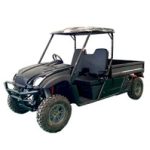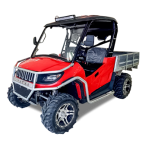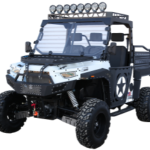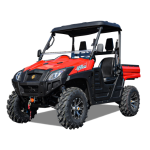
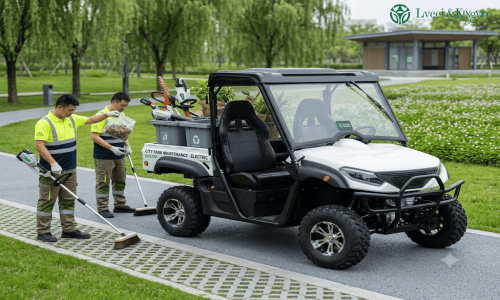
In farm operation and maintenance, park management, scenic spot operation, construction site short-distance transportation and other types of light-medium-heavy-duty operation scenarios, the drawbacks of traditional fuel UTVs and small cargo equipment are constantly highlighting. The high fuel consumption, ear-splitting engine noise, continuous tailpipe pollution, and limited cargo capacity can no longer meet the current green, efficient and low-cost operational needs.
As the global trend of electrification and low-carbonization of equipment continues to advance, electric UTVs (electric utility vehicles) with cargo buckets have gradually become the mainstream choice for various industries. It perfectly balances the advantages of off-road capability, cargo loading and transportation, and zero-emission electric power, and is suitable for most outdoor, park, and indoor work scenarios.
Many enterprises, growers, and municipal operation and maintenance teams are gradually replacing traditional fuel equipment with electric UTVs with cargo buckets as their core short-distance transportation tools. Compared with ordinary electric scooters, golf carts and fuel engineering vehicles, the practicality, economy and adaptability of this equipment are more prominent.
In this article, we will explain the core value of electric UTV with cargo hopper, technical advantages, applicable scenarios, comparison between fuel and electric models, key points of purchase and FAQs, which will help you understand this energy-efficient equipment and accurately determine whether it is suitable for your own needs.
Electric UTV with cargo hopper, also known as electric utility vehicle, electric side-by-side off-road vehicle, is a purely electric-driven multi-terrain professional work equipment. It is between a small electric mobility scooter and a large pickup truck, taking into account flexible mobility, cross-country passability and stable cargo capacity, and it is a special vehicle designed for short-distance material transportation, site operation and maintenance work.
Unlike ordinary electric UTVs that focus on recreation and entertainment, electric UTVs with cargo buckets are centered on practical operational functions. The vehicle is equipped with an exclusive rear-mounted cargo hopper, including flatbed, hydraulic tipper, side-opening type and other styles, which can easily complete all kinds of material loading, handling and unloading work.
Meanwhile, it is different from conventional golf carts and NEV low-speed mobility scooters, with stronger chassis structure, larger load limit and professional cross-country configurations, which can be adapted to complex outdoor terrains and is not limited to driving on smooth roads, making the operation scenarios more extensive.
In terms of power system, these models are equipped with brushless DC or AC high-torque motors, matched with lead-acid or lithium battery packs, and the battery capacity of mainstream models covers 14.9kWh-29.8kWh, with stable and abundant power output. The whole vehicle supports two-wheel drive/four-wheel drive switching, and is equipped with differential lock, which greatly improves the grip ability in complex terrain.
The cargo system is the core highlight of the model, and the mainstream models can carry a load of 400kg-1630kg, with a maximum hauling weight of 4,500 pounds. The cargo bucket is made of steel, composite materials and other wear-resistant materials, equipped with straps to fix the points, and some high-end models support electric and hydraulic self-unloading functions, bidding farewell to the tedious operation of manual unloading.
The body chassis is made of sturdy steel and aluminum frame, with independent double A-arm suspension system, ground clearance up to 10-14 inches. Even under full load, the body remains stable, effectively avoiding the body tilt and cargo shaking problems brought by bumpy roads.
In addition, the models are equipped with hydraulic disc brakes, energy recovery braking system, LED lighting, intelligent instrument panel and other configurations as standard, and some models can be retrofitted with accessories such as roof, windshield, 12V/110V power interface, winch, etc., which can be adapted to different operational needs in an all-round way.
At present, there are many brands of mature electric UTVs with cargo buckets on the market, covering high-end commercial and civilian operations. Among them, Alke’ focuses on heavy-duty models, with a maximum load of up to 1,630kg, equipped with a multi-door hopper, which is suitable for high-intensity commercial operations.
Club Car, GEM and other brands focus on parks, scenic spots, campus operation and maintenance scenarios, the model compliance is strong, part of the record on the road. John Deere electric Gator, Polaris Polaris Pro XD Kinetic and other professional off-road operation models are widely used in farms, construction sites and complex scenarios with strong torque and stability. At the same time, cost-effective domestic models can also meet the daily operational needs of ordinary users.
The electric UTV with cargo hopper adopts pure electric drive, no exhaust gas and no emission, which is fully in line with the global low-carbon environmental protection policy requirements. This is the core advantage that cannot be replaced by fuel UTVs, and it is also the key reason why many enterprises, scenic spots and parks prioritize it.
It can be safely used in indoor factories, closed warehouses, hospital compounds, ecological scenic spots, organic farms, and other scenarios where the operation of fuel equipment is prohibited. Long-term use can also help enterprises reduce carbon emissions data, easily reach the assessment goals of green operation and maintenance, low-carbon production, a single vehicle can reduce 3-5 tons of carbon dioxide emissions per year.
In terms of operating costs, electric UTVs have a crushing advantage over fuel models. The cost of electric power consumption is only $0.02-0.05 per mile, while the cost of fuel consumption of fuel UTVs is as high as $0.08-0.15 per mile, which significantly reduces the energy consumption expenditure in daily operation.
The advantages of maintenance level are even more prominent. The electric model has a simple structure, with no engine, spark plugs, oil filter, exhaust system and other wear and tear parts. There is no need to regularly change the oil, clean the oil circuit, overhaul the exhaust equipment, and the routine maintenance program is greatly reduced.
Data show that the annual maintenance cost of electric UTVs is 40%-70% lower than that of fuel models. For long-term high-frequency operation users, a single vehicle can save 1,500-3,000 U.S. dollars per year, and the difference in purchase price can be recovered in 2-4 years, so the cost-effectiveness of long-term use far exceeds that of fuel models.
The noise of the electric motor is extremely low, compared with the fuel UTV noise reduction of 10-15 decibels, the operation process is almost no roar. Completely solve the problem of fuel equipment noise nuisance, disturbing livestock and poultry, and destroying the quiet environment of the scenic area.
Whether it’s a densely populated area such as neighborhoods, campuses and hospitals, or early morning and night farm operations, or wildlife reserves and ecological scenic spots, electric UTVs are able to operate normally. At the same time, the low noise environment can effectively reduce the operator’s fatigue and improve working comfort.
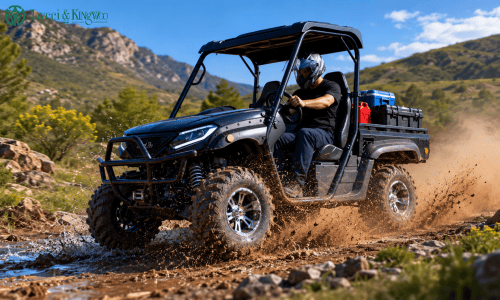
The electric model has the power characteristics that the fuel model does not have, the maximum torque can be output at 0 rpm, and the starting power is abundant and responsive. When fully loaded with cargo, it is still easy to climb slopes and traverse complex terrain such as mud, gravel and steep slopes.
Fuel UTVs need to increase the speed to release power, and are prone to lack of power and obvious stuttering when starting and climbing a slope under heavy load. The power output of electric UTV with cargo hopper is smooth and linear, which makes it more stable and passable in the face of heavy-duty transportation and complex road conditions.
Exclusive customized rear cargo bucket is the core highlight of this model, which supports a variety of functions such as flatbed fixing, side-opening unloading, hydraulic tipping, etc. It is suitable for the transportation of gravel, grass, seedlings, tools, garbage, building materials and other types of materials.
The hydraulic dumping model can complete the unloading of materials with one key, without manual shoveling and carrying, which greatly saves labor costs and operating time. At the same time, the body size is small and flexible, and it can shuttle in the narrow lanes, field ridges and park paths where trucks can not enter, so the operation covers a wider range.
Electric UTVs run without vibration and exhaust gas, so operators do not need to inhale exhaust gas for a long time, which greatly reduces the risk of occupational health. The whole vehicle is equipped with anti-rollover structure, safety belt, explosion-proof cross-country tires and multiple brake protection devices, which makes full-load operation safer.
The modernized intelligent instrument panel can display power, range and fault data in real time, and with LED lighting, reversing assistance and other configurations, day and night operations can guarantee safety. Some high end models are equipped with closed cabs and air conditioning systems, which can be adapted to all-weather operation throughout the year.
At present, all regions of the world have introduced strict exhaust control policies for non-road mobile machinery, and fuel UTVs are very likely to face problems such as restricted transportation, production restrictions and strict annual inspection. Pure electric equipment is green and compliant, and is not subject to the exhaust gas restriction policy.
At the same time, most of the regions for green electric equipment procurement to provide tax relief, subsidies, rebates, special support and other policies, enterprises and individuals can further reduce the input cost of procurement, easily meet the environmental verification, green operation and maintenance assessment requirements.
| Comparison Dimension | Electric UTV with Cargo Bed | Fuel-Powered UTV | Selection Reference |
| Upfront Purchase Cost | Relatively high, USD 12,000-25,000 | Relatively low, USD 8,000-18,000 | Fuel-powered is optional for short-term low-frequency use; electric is preferred for long-term high-frequency use |
| Cost Per Mile of Use | USD 0.02-0.09 | USD 0.08-0.15 | Electric models save more than 40% on energy consumption |
| Annual Maintenance Cost | Extremely low, no complex wearing parts | Relatively high, requires regular replacement of engine oil, filters, etc. | Electric models reduce maintenance costs by 40%-70% |
| Total 10-Year Operating Cost | USD 4,500-8,000 | USD 15,000-22,000 | Electric models can save more than USD 7,000 in the long term |
| Torque and Low-Speed Performance | Sufficient starting torque, stable heavy-load hill climbing | Torque increases with engine speed, weak heavy-load starting performance | Electric is better for short-distance heavy-load operations |
| Range and Refueling/Recharging | Range 20-80 miles, recharging time 4-12 hours | Range 100-300 miles, refueling time 5-10 minutes | Fuel-powered is preferred for ultra-long-time field operations |
| Noise and Emissions | Zero emissions, low noise | Exhaust emissions, high noise | Electric is mandatory for enclosed and low-noise scenarios |
| Adaptability to Complex Weather | Slight reduction in range at low temperatures | Better cold start performance | Electric has no obvious shortcomings in conventional working conditions |
After more than a decade of market iteration, electric UTV technology with cargo hopper has been fully mature. The stability of lithium battery, electronic control system and motor power system has been greatly improved, and the service life of the battery can reach 5-10 years, and the cycle life is over 5000 times.
Under the trend of comprehensive electrification in the industry, the market value retention rate of electric operating equipment continues to rise. Compared with the phasing out of restricted fuel equipment, electric UTVs are more in line with the future development trend of the industry, and belong to the forward-looking, anti-elimination investment options.
Many users will be entangled in the purchase of electric and fuel models, there are no absolute advantages and disadvantages of the two, only different adaptable scenes. The following all-round comparison to help users combine their own working conditions and accurate selection.
Comparison dimension with cargo bucket electric UTV fuel UTV selection reference
Front-end purchase cost is on the high side, $12,000-25,000 is on the low side, $8,000-18,000 short-term low-frequency use of fuel, long-term high-frequency use of electric preferred.
Cost per mile $0.02-$0.09 $0.08-$0.15 Energy savings of 40% or more for electric models.
Annual maintenance cost is very low, no complex wear parts higher, need to regularly replace the oil, filters, etc. Electric model maintenance costs reduced by 40% -70%.
Ten years of total cost of use 4500-8000 dollars 15000-22000 dollars electric models can save more than 7000 dollars in the long term
Torque and low-speed performance starting torque is sufficient, heavy-duty climbing stable torque with the speed increase, heavy-duty start weak short-distance heavy-duty operation electric better
Range & Refueling20-80 miles range, 100-300 miles range with 4-12 hours of charging, refueling in 5-10 minutes, fuel is preferred for long term field operations.
Noise and EmissionZero emission, low noise and exhaust, noisy confined, quiet scene must choose electric
Complex weather adaptability low-temperature range declined slightly cold start performance is better in regular working conditions electric no obvious shortcomings
All in all, electric UTVs are more suitable for scenarios with daily operating mileage of 60 miles or less, frequent starts and stops, fixed sites, and quiet and environmental requirements. Fuel UTVs are more suitable for remote and non-electric supply, all-day long hours, and long-distance field operation scenarios. Most of the professional teams will use “electric-based, fuel-based” mixed fleet model, taking into account the cost and practicality.
In large-scale farms, orchards, vineyards, nurseries and greenhouses, electric UTVs are indispensable operational equipment. The body is small and flexible, and can shuttle between narrow lanes in the field and rows of fruit trees without crushing crops and soil.
It is mainly used for transportation of feed, agricultural materials, agricultural tools, fruits and vegetables, and can also be used to transfer breeding waste, garden waste, gravel mulch and other materials. The quiet and non-disturbing characteristics will not disturb livestock and poultry breeding, suitable for daily operation and maintenance of pastures and farms, and the hydraulic hopper can quickly complete the unloading of materials, which greatly improves the efficiency of farming.
Municipal sanitation, parks, scenic spots, campuses, large communities, daily operation and maintenance, the equipment noise, emissions, flexibility requirements are extremely high. Electric UTVs with cargo buckets are perfectly suited for these scenarios, and can be used for road sweeping, garbage transfer, green plant maintenance, and transportation of equipment and tools.
Many urban municipalities, high-end parks and scenic spots have already replaced fuel equipment in bulk, utilizing electric UTVs to complete early-morning and nighttime operation and maintenance work. No noise, no exhaust, will not affect the tourists and residents, and at the same time can meet the demand for refined operation and maintenance.
Construction sites, industrial parks, warehouses and factories have a large number of narrow passages, indoor work areas, large trucks can not pass, fuel equipment exhaust there are security risks. Electric UTVs can easily solve this kind of pain point, and are used for short-distance transportation of building materials, hardware tools, construction waste, and storage materials.
The zero-emission feature is suitable for indoor factories and closed workshops, without additional ventilation equipment. Strong off-road performance can cope with the concave and convex road surface of construction sites and temporary dirt roads, ensuring the efficiency of material transportation in complex sites.
High-end scenarios such as golf courses, vacation villas, private estates, camping bases, and so on, have very high requirements for environmental quality. Electric UTVs can be used as material transportation vehicles to transfer lodging materials, maintenance tools, landscape materials, and can also take into account the transfer of small guests’ luggage.
The equipment runs quietly, without odor, without destroying the natural ecology, and can maintain the high-end quiet environment of the scenic area, which is the standard equipment for green operation and maintenance in the culture and tourism industry.
Electric UTVs also play an important role in outdoor hunting, mountain operation, movie and TV shooting, and stadium operation and maintenance. The quiet driving will not disturb wild animals, which is suitable for wild material transportation and prey recovery.
Film and TV studios, event venues need to frequently transfer equipment, materials, garbage, electric equipment, no exhaust, low noise, will not interfere with the shooting and events to carry out, is a niche special scene of the preferred operating equipment.
Selection of electric UTV with cargo bucket, can not just look at the price, need to combine their own load demand, operating terrain, the use of time, focusing on the verification of the core hardware configuration, in order to buy durable, efficient, adaptable models. The following are the core parameters and configurations that must be seen.
Priority is given to lithium iron phosphate (LFP) or high-end lithium battery packs, which have a longer lifespan, more stable charging and discharging, high-temperature resistance, and lower loss than traditional lead-acid batteries. Battery capacity is recommended to be more than 14.9kWh, and more than 20kWh is recommended for high-frequency heavy-duty operation.
The real range should reach 30-80 miles, and support the energy recovery function, which can effectively extend the range. At the same time, it should be equipped with on-board fast and slow charging interfaces to meet the needs of slow charging at night and fast charging during the day, and it is preferred to choose a brand with a battery warranty of more than 5 years to ensure the stability of long-term use.
Heavy duty operation must pay attention to the motor torque, and it is recommended to choose the model with torque above 100lb-ft to ensure sufficient power for full-load climbing and cross-country operation. The power is suitable for daily operation, taking into account the balance between power and energy consumption.
For complex terrain operation, it is preferred to choose the model that can switch 2WD/4WD modes and has differential lock, which can automatically distribute power in muddy, snowy and gravelly roads to avoid skidding and trapping, and greatly improve the terrain adaptability.
According to the weight of daily materials to choose the corresponding load model, regular operation and maintenance choose more than 1000 pounds of load, construction sites, farms, heavy-duty operation is recommended more than 1500 pounds of load. The size of the hopper should be adapted to their own material specifications, with priority given to wide-bodied hoppers that can be adapted to pallets and bulky materials.
Material preferred high-strength steel, anti-corrosion composite materials, wear-resistant and rust-resistant, suitable for wet, outdoor, agricultural corrosion scene. High-frequency unloading operations, must choose electric or hydraulic self-unloading configuration, save a lot of labor costs.
Outdoor complex operation scene, ground clearance is recommended to be more than 10 inches, with independent suspension system, better shock absorption when driving with full load, more stable body. Tires preferred 8-ply off-road explosion-proof tires, wear-resistant and anti-stabbing, suitable for all kinds of complex road surfaces.
The chassis is equipped with protective baffles, which can effectively block the impact of debris and mud from damaging the core body parts, prolonging the service life of the equipment and reducing the probability of malfunction and downtime.
The basic safety configuration must be complete, including anti-rollover protection structure, safety belt, hydraulic disc brake, energy recovery brake, LED lighting, intelligent fault diagnosis instrument panel.
Long-term high-frequency operation can be added according to the need for closed cab, air conditioning, windshield, reversing camera, winch, external power supply and other accessories, to enhance the comfort of the year-round operation and the practicality of the equipment.
Many users feel that electric vehicles have a higher upfront investment, but this is a typical case of “only looking at the down payment, not the total cost”. Although the purchase price of an electric UTV is $4,000-$10,000 higher, the energy consumption and maintenance costs are extremely low.
Under normal high-frequency operation scenarios, the difference in purchase price can be recovered in 2-4 years, and the total cost of ownership for 5-10 years of equipment use is much lower than that of fuel models. Superimposed on the green procurement subsidies, tax incentives, the actual input gap will be further reduced, the long-term cost-effective advantage is significant.
Mainstream electric UTVs have a range of 20-80 miles, which fully covers the majority of farms, parks and construction sites for daily short-distance cycling operations. For users who work long hours throughout the day, they can use the full charge at night and replenish the battery during the day to ensure the range.
High-end commercial models support fast battery exchange and fast charging, eliminating the need for long waiting times. Industry users generally adopt mixed fleet mode, with electric equipment responsible for daily high-frequency operations and fuel equipment for emergency backup, which is a perfect solution to range concerns.
Electric UTVs do not require frequent refueling and only need to be plugged in at night for charging after work stops, which does not take up the daytime operation time and is suitable for the work and rest patterns of most enterprises.
Professional commercial models support Level 2 fast charging, which can charge up to 80% in 1-3 hours, meeting the demand for replenishment during the day. Compared with fuel equipment that frequently runs to gas stations and stores fuel, electric models are more convenient and safer to charge. 4.
This is a popular cognitive misunderstanding, the instantaneous torque output characteristics of electric motors, more suitable for heavy-duty, hill climbing, low-speed off-road scenarios. Under full load condition, the starting and climbing ability of electric UTV is better than fuel models in the same class.
With four-wheel drive, differential lock and high ground clearance, it can easily cope with mud, steep slopes, gravel and other complex terrain, fully meeting the needs of all kinds of outdoor heavy-duty operations, and its performance has been verified by a large number of market tests.
On the contrary, the structure of electric UTV is very simple, no engine, transmission, oil circuit, exhaust system and other complex wearing parts, almost no regular maintenance program. You only need to check the tires, brakes and circuit system on a daily basis.
Mainstream brands have perfect after-sales network, electronic control, motor, battery is mostly modular design, troubleshooting and maintenance is simple and efficient, long-term maintenance difficulty and cost is much lower than fuel equipment.
The electric UTV with cargo bucket is a high-quality equipment that meets the needs of green, efficient and low-cost operation in the new era. It breaks through the pain points of traditional fuel UTVs, such as high energy consumption, high pollution, high noise, and high maintenance cost, and at the same time takes into account flexible maneuverability, strong cross-country performance, and high efficient cargo capacity.
Whether for agricultural planting, municipal operation and maintenance, scenic spot management, site construction, or private estates and outdoor operation scenarios, this equipment can accurately meet the needs and help users reduce operating costs, improve operational efficiency, and meet environmental compliance requirements.
From a long-term investment perspective, electric UTVs’ lower total cost of ownership, stronger policy adaptability, and more comfortable operating experience make them a mainstream choice for the industry, gradually replacing traditional fuel equipment. As battery technology continues to be upgraded, equipment range, charging speed, and durability will continue to improve, and the value will be further emphasized in the future.
First, sort out your own operational needs, clarify the daily load, terrain, and operational mileage, and determine the appropriate battery capacity, power, and cargo bucket configuration.
Second, prioritize the field test drive test, experience the vehicle climbing, cross-country, braking performance under full load condition, to confirm that the equipment is suitable for the site working conditions.
Third, take the initiative to query the local electric equipment procurement subsidies, tax policy, maximize the reduction of procurement costs.
Fourth, novice users can first purchase a small-scale trial, experience the advantages of electric equipment, and then gradually replace and upgrade the full range of operating equipment.
If you are looking for cost-effective, durable and stable electric UTVs with cargo buckets, you can refer to Polaris Ranger XP Kinetic, John Deere Electric Gator, Alke’ Heavy Duty Series, Club Car Commercial Series and other mainstream models, and customize your own scenario with exclusive configurations, so as to easily realize the electrified upgrading of operations.


-150x150.png)