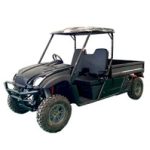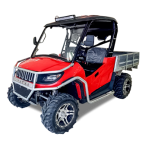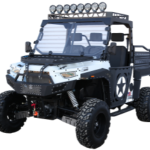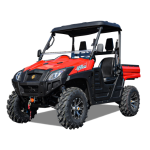
In industrial factories, municipal operation and maintenance, agricultural planting, construction sites, parks and scenic spots, traditional fuel UTVs and small pickup trucks have long been responsible for short-distance material transfer work, but there are generally high fuel consumption, maintenance is cumbersome, exhaust noise pollution, heavy body, narrow space passage difficulties and other pain points, greatly restricting the efficiency of the operation.
In this context, electric cargo bucket multifunctional work trucks came into being, with pure electric zero emission, low energy consumption, high flexibility, strong load advantage, become a substitute for traditional fuel equipment, green and efficient work equipment. This article comprehensively analyzes the core advantages of this type of work truck, bucket type, industry applications, purchase parameters and maintenance skills, to help users of various scenarios to accurately select, reduce costs and increase efficiency.
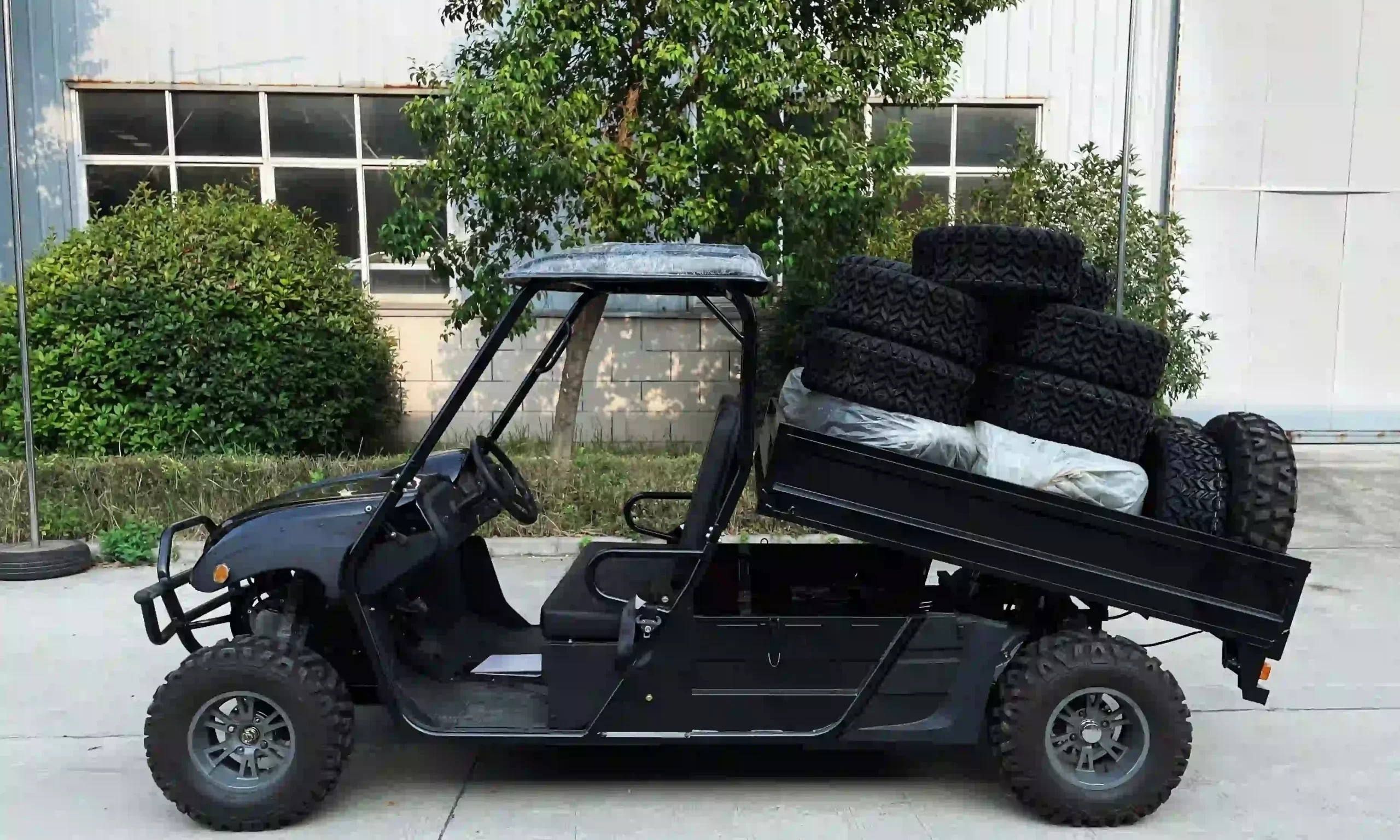
Electric Loading Bucket Multifunctional Operation Vehicle is a lithium batteries, lead-acid batteries as a power source, pure electric drive, zero tailpipe emissions of the special engineering vehicles, the core positioning of all kinds of scenarios of materials, equipment, tools, short-distance transit, to fill the small transit carts and large trucks and trucks between the equipment gap. Distinguished from ordinary electric sightseeing vehicles and UTVs, it abandons the design logic centered on passenger comfort, focuses on the practicality of cargo operations, and becomes the “electric work model” in various industries by virtue of its exclusive cargo hopper structure, strong loading performance and flexible body design.
These vehicles integrate the cargo-carrying function of small trucks with the environmental protection and energy-saving characteristics of electric vehicles. Equipped with mature electric power systems, these vehicles can realize all-weather indoor and outdoor operation, and at the same time, they support a variety of customized versions such as street-legal, outdoor cross-country, and industrial heavy-duty, which are suitable for the compliance and operational needs of different scenarios.
Mainstream models are equipped with 48V and above high-voltage power supply systems, with lithium batteries as the core power (some entry-level models use lead-acid batteries) and high-performance silent motors. Compared with the fuel engine, the electric power structure has no exhaust emission, low noise, no need for complex fuel supply and exhaust system, reducing the failure points from the root, while supporting the indoor closed workshop, storage plant, underground space and other fuel-prohibited areas, to meet the stringent environmental protection standards.
The rear-mounted special cargo hopper is the core logo of the vehicle, and the manufacturer provides diversified customized solutions, including flatbed, tipping, dumping, closed cargo box and other structures. The size of the bucket covers 130×123cm to 250×140cm and above specifications, and most models are equipped with open and close railing and quick-disassembly structure, while some high-grade models are equipped with hydraulic dumping device, which greatly reduces the cost of material loading and unloading manpower and meets the needs of gravel, seedling, tools, parcels and other different cargo transfer.
The load capacity of the vehicle is fully suitable for commercial operation, and the payload of the conventional model can reach 1000-1600 lbs (maximum about 1630kg), and the towing capacity covers 1000-4500kg, which can easily carry heavy tools, engineering materials, and agricultural materials, and at the same time, it can support the trailer trailer, expanding the capacity of transferring large and bulk materials, and meeting most of the light-weight materials. At the same time, it supports trailer mounting, expanding the capacity of large and bulk materials transfer, meeting most of the lightweight engineering, operation and maintenance, and agricultural operation scenarios.
The vehicle adopts a compact chassis structure, with a small turning radius and strong passability, which can easily shuttle through the narrow aisles of warehouses, park paths, field ridges, old urban neighborhoods and other areas where large vehicles cannot pass. Meanwhile, there are a wide range of models, including roadworthy low-speed compliant models (LSV, maximum speed 25 mph), cross-country heavy-duty models, and industrial-specific models, some of which are equipped with anti-roll bars, high ground clearance, and multiple seat layouts, which take into account the safety of the operation and the adaptability of the scenarios.
Currently, the mainstream mature brands and models in the market include: Alke’ high-load industrial-grade electric cargo trucks, GEM eL XD road-compliant electric cargo trucks, Club Car Urban self-loading utility trucks, as well as industrial special-purpose models such as Taylor-Dunn, Motrec, etc., which cover the full range of scenarios such as light-loading, heavy-loading, municipal, industrial, and agricultural needs, The company covers light-duty, heavy-duty, municipal, industrial, agricultural and other scenarios.
Compared with traditional fuel UTVs, minivans and manual transfer equipment, electric hopper utility vehicles have all-round advantages in cost control, environmental compliance, operational performance, long-term operation and maintenance, etc., which is the core model for enterprises to reduce costs and increase efficiency, and practice green operation and maintenance.
Cost advantage is the core competitiveness of electric cargo trucks, which is mainly reflected in the two dimensions of energy consumption and maintenance. In terms of energy consumption, the cost of electric energy is much lower than gasoline, diesel, and electric power system energy conversion efficiency of up to 77% or so, while the traditional fuel engine is only 12% -30%, the energy utilization rate is greatly improved, a single car can save thousands of dollars in energy costs each year, the scale of fleet operation cost advantage is more significant.
At the maintenance level, the electric motor has a simple structure and very few moving parts, completely eliminating the need for oil replacement, spark plug replacement, fuel filter cleaning, exhaust system maintenance and other routine maintenance projects, significantly reducing maintenance supplies and labor costs. At the same time, lithium batteries, motors, controllers, core components of long service life, low failure rate, long-term use of virtually no large maintenance expenditures, the vehicle life cycle cost is much lower than fuel models. In addition, the subsidies and tax exemption policies introduced for new energy vehicles can further reduce the initial procurement investment.
The vehicle adopts pure electric drive, no exhaust gas and no exhaust emission, which fully meets the air quality standards of industrial workshops, warehousing plants, food processing parks, indoor venues and other confined spaces, and at the same time, it is suitable for urban environmental protection control, ecological scenic spots, nature reserves and other no-emission zones, so it is easy to cope with the stringent environmental regulations and carbon emission requirements in various places.
At the same time, the electric power operates with extremely low noise, and does not produce the roaring noise of fuel engines, so it can operate normally in campuses, hospitals, residential areas, and nighttime municipal operation and maintenance scenarios without noise nuisance, and is perfectly adapted to high-end scenarios with stringent requirements on environmental noise and air quality.
In terms of operational performance, the electric motor has the characteristic of maximum torque at the beginning, stable performance in heavy-duty starting, climbing and traction, and smooth power output under full-load condition, without the problem of power decay and stuttering of fuel vehicles, which makes it suitable for sloping ground, concave-convex road surface, dirt road in the field and other complex terrains.
The compact body design gives the vehicle strong maneuverability, and it can freely pass through the narrow area where large pickup trucks and fuel trucks can not enter, greatly expanding the scope of operation. At the same time, the cargo bucket supports modular customization, with guardrails, toolboxes, closed cargo boxes, traction devices and other accessories, can be quickly adapted to material transfer, site maintenance, garbage removal, equipment transport and other different work, a vehicle multi-purpose, greatly enhancing the utilization rate of equipment.
A number of models have LSV low-speed vehicle compliance qualification, and can legally drive on park roads, municipal side roads and scenic roads without complicated licensing process, avoiding the risk of non-compliant operations. Meanwhile, the zero-emission and low-noise characteristics can help enterprises and municipal units meet the assessment requirements of green operation and maintenance and low-carbon production, and help build an energy-saving and emission reduction system.
Compared with ordinary fuel operation vehicles, electric vehicles have a slightly higher unit price in the early stage of procurement, and the operating range is affected by the battery capacity, load, and temperature, and the charging program needs to be planned in advance for ultra-long time and ultra-long-distance continuous operation. However, from the perspective of 3-5 years full life cycle, very low energy consumption and maintenance costs can quickly cover the difference in price in the early stage, the comprehensive cost-effective far more than fuel models.
The core practicality of electric cargo bucket trucks stems from the diversified modular design of cargo buckets. Different structure of the bucket corresponds to different operational needs, accurate selection can directly enhance operational efficiency, to avoid waste of equipment. At present, the mainstream cargo bucket in the industry is divided into five types, all supporting aluminum alloy, steel material selection, taking into account the lightweight and anti-corrosion, anti-wear performance.
| Comparison Dimension | Electric Cargo Bed Utility Vehicle | Fuel-Powered Cargo Bed Utility Vehicle |
| Power & Energy Efficiency | The motor energy conversion efficiency reaches approximately 77%, featuring sufficient starting torque and smooth power output. It maintains stable power without attenuation under heavy-load and climbing conditions, perfectly adapting to short-distance, high-frequency repetitive operations with extremely high energy utilization rate. | Internal combustion engines provide abundant power reserve and stable continuous output, suitable for long-time uninterrupted heavy-duty operations. However, they suffer large energy loss with a low conversion efficiency of only 12%–30%, resulting in poor overall energy utilization. |
| Operation & Maintenance Cost | Extremely low energy consumption cost, with overall operating electricity cost less than one-third of fuel vehicles. Featuring a simple structure and few moving parts, it eliminates regular maintenance such as engine oil replacement, spark plug and fuel filter replacement. It delivers low maintenance fees and significant long-term cost savings with high full-life-cycle cost performance for high-frequency operation scenarios. | High daily fuel consumption leads to expensive energy costs. It requires complicated routine maintenance and frequent replacement of wearing parts, resulting in high long-term operation and maintenance expenses. It only has a lower initial purchase price and is more suitable for low-frequency and occasional light-duty scenarios. |
| Environmental Protection & Noise Performance | Zero exhaust emissions and ultra-low operating noise with no scenario restrictions. It can be safely used in strict environmental scenarios including indoor workshops, residential areas, campuses and scenic closed spaces, achieving superior environmental compliance. | Continuous exhaust gas discharge causes air pollution. The engine produces loud operating noise, which easily disturbs residents. It faces strict usage restrictions in urban core areas, closed spaces and ecological protection zones with poor environmental compliance. |
| Range & Refueling Convenience | The single-charging range covers 25–85 miles, fully meeting daily short-distance operation and fixed-route transport demands. It supports off-peak electricity charging for lower operating costs. The driving range will slightly decrease under heavy load or low-temperature conditions, making it insufficient for high-intensity continuous operation without fast charging support. | Refuels within minutes with no range anxiety and supports long-hour continuous operation. It is highly adaptable to remote sites without power supply and all-day outdoor heavy-duty working scenarios with strong environmental flexibility. |
| Load & Towing Capacity | Mainstream models feature a payload capacity of 1000–1600 lbs and a maximum towing capacity of 4500kg. With strong starting torque, it delivers stable performance during heavy-load starting, climbing and towing, fully satisfying light engineering, municipal and agricultural cargo transportation demands. | It features basically the same load and towing parameters as electric models with excellent heavy-load stability. It has lower power attenuation under long-term continuous heavy-duty working conditions, more suitable for high-intensity heavy-load operations. |
The side-turning cargo hopper is equipped with three foldable and removable rails, with an opening and closing tailgate, which can take into account the storage and convenient loading and unloading of goods. The rails can effectively fix gravel, soil, seedlings and granular materials during driving, preventing the hidden danger of scattering; when loading and unloading, one side or all rails can be quickly lowered, realizing quick loading and unloading on the side, no need to back up the vehicle to the right position, greatly saving the operation time. This type of hopper has a wide selection of sizes (130×123cm to 250×140cm), which is a cost-effective choice for agricultural planting, landscaping, and daily material transfer, represented by the Alke’ series of models.
Equipped with manual or electric hydraulic lifting system, it can realize automatic tilting and unloading of the hopper without manual shoveling and carrying, which is the most necessary configuration for heavy-duty bulk material operation. Mainly suitable for soil, gravel, construction waste, snow, crop residue, organic fertilizer and other bulk material transfer, a single operation can save a lot of manpower, significantly improve the efficiency of transportation. Widely used in construction sites, garden soil cleaning, farm material transportation, municipal snow clearing and other scenes, Club Car Urban dump models, Kubota engineering UTVs are used in this type of hopper design.
Adopting fully or semi-closed box structure, equipped with waterproof top cover and anti-theft door lock, it can protect the goods inside the box from rain, dust and sunlight, and at the same time eliminate the risk of material loss. Designed for precision tools, maintenance parts, express parcels, fresh materials, classified materials and other goods that require protection, confidentiality, moisture-proof design, suitable for park operation and maintenance, express terminal distribution, airport material transfer, precision equipment maintenance and other scenarios, is the core of the operation and maintenance operations of the core selection.
To meet the special needs of industry segments, the manufacturer provides modular customized cargo buckets, including elongated super-long cargo buckets (suitable for pipe, wood and other long materials), traction integrated cargo buckets (taking into account the cargo and trailer traction), gardening special high-bar cargo buckets, multifunctional cargo buckets with lifting brackets, personnel work platform cargo buckets. According to the operation scenario, it can be freely matched with toolbox, guardrail, lifting device, spraying equipment and other accessories to realize the multi-functionality of one vehicle to meet the needs of refined and specialized operations.
With the core advantages of environmental protection, flexibility, low cost and high adaptability, the electric cargo bucket multifunctional operation vehicle accurately solves the pain point problem of short-distance cargo, site operation and maintenance in many industries, and has been widely used in many fields such as industry, municipal government, agriculture, culture and tourism, construction, etc., and has become the core equipment for green operation and maintenance and cost reduction in various industries.
Industrial plants, large warehouses, logistics sorting centers require high-frequency, short-distance transfer of parts and components, warehousing materials, tooling equipment, sorting goods, and the workshop interior is closed, narrow passages, prohibit the entry of fuel equipment. Electric cargo trucks have zero emission, no exhaust, compact size, flexible turning, can easily shuttle through narrow shelves, and are suitable for indoor all-weather operation. Meanwhile, the characteristics of low failure rate and low maintenance cost can guarantee the stability of material transfer in the assembly line, and greatly enhance the efficiency of internal logistics in the factory.
Municipal road maintenance, park operation and maintenance, urban greening, garbage removal, transformation of old districts and other public operations, mostly concentrated in residential areas, urban trunk roads, ecological parks, the noise of the vehicle, emissions, compliance requirements are extremely high. Electric cargo bucket trucks can legally go on the road, run quietly, zero pollution, will not disturb the people, do not damage the urban ecological environment, and at the same time can be equipped with self-unloading buckets, garbage containers, and efficiently complete the municipal work of soil removal, green plant maintenance, facility maintenance, snow clearing and other municipal work, perfectly adapted to the city’s refined operation and maintenance needs.
Farms, orchards, nurseries, planting bases, open space, complex terrain, narrow and rugged field roads, large agricultural machinery, trucks can not go deep into the operation area. Electric cargo trucks have good cross-country passability and climbing ability, high ground clearance can be adapted to the field dirt roads, slopes, while the body is lightweight, low soil compaction, will not damage the soil of crop planting. Efficient transfer of crops, fodder, agricultural equipment, irrigation equipment, dump models can quickly complete the soil, organic fertilizer, straw removal, is a modern ecological agriculture, fine field operation and maintenance of the necessary equipment.
Resorts, golf courses, city parks, university campuses, hospital parks, high-end communities, the main ecological environment and quiet comfort, strictly prohibit high-noise, high-pollution operating equipment. Electric cargo bucket trucks are quiet and environmentally friendly, with neat appearance, and can take into account material transfer, site greening, facility maintenance, luggage handling, garbage removal, etc. The operation process does not affect tourists, teachers, students and residents, and it is suitable for the operation and maintenance standards of high-end parks, and assists in the construction of green eco-parks.
Landscaping projects require frequent transfer of seedlings, soil, gravel, garden tools, construction site renovation, small infrastructure needs to remove construction waste, construction materials, such work scenes narrow space, scattered materials, high frequency of operation. Electric cargo trucks are flexible and portable, convenient loading and unloading, self-unloading, side-turning hopper can greatly reduce the cost of manual loading and unloading, and at the same time, it can enter the closed space of indoor renovation, building construction, and so on, which is an efficient transfer equipment for small-scale projects and garden construction.
Airport apron, terminal, large industrial parks, materials, baggage, small cargo transfer, as well as urban short-distance end distribution, need high frequency, small batch, high efficiency short-distance transportation tools. With strong compliance, flexible transit and low energy consumption, electric cargo bucket trucks can pass freely in closed parks and controlled areas to efficiently complete the collection and distribution of small materials and short-distance distribution work, making up for the shortcomings of large logistics vehicles.
Outdoor camps, country parks, stadiums and other venues can be used for security patrols, site maintenance, material supply, taking into account the inspection and cargo functions, one vehicle for two purposes, significantly reducing the cost of site operation and maintenance equipment investment, to adapt to the lightweight, normalized site management needs.
Many users are confused between electric and gas utility vehicles when choosing a model, and each of the two types of vehicles is suitable for different scenarios. In order to facilitate intuitive comparison, fast and accurate selection, the following multi-dimensional comparison table, a clear understanding of the core differences between the two types of models, advantages and disadvantages, as well as suitable for the work conditions, to help users avoid the waste of selection, to match their own actual operational needs.
Comparison of dimensions electric cargo bucket trucks fuel cargo bucket trucks.
Power and energy efficiency motor energy conversion efficiency of up to 77% or so, starting torque is sufficient, smooth power output, heavy loads, climbing conditions, power without attenuation, the whole operation is stable, suitable for short-distance, high-frequency repetitive operation scenarios, energy utilization is very high. The internal combustion engine has sufficient power reserve and stable continuous output, which is suitable for uninterrupted continuous heavy-duty operation for a long period of time, but the energy loss is large, and the conversion efficiency is only 12%-30%, so the overall energy utilization rate is low.
The operation and maintenance cost is very low, the equivalent fuel cost is less than 1/3 of that of a fuel vehicle; simple structure, few moving parts, no need to replace oil, spark plugs, fuel filters and other consumables, the maintenance process is simple and inexpensive, and the long-term high-frequency use of the vehicle can significantly save operating expenses, and the whole life cycle is highly cost-effective. Fuel consumption is large, daily energy costs are high; maintenance items are complicated, wearing parts are replaced frequently, long-term operation and maintenance costs remain high; only the preliminary procurement unit price is lower, suitable for low-frequency, occasional use of lightweight scenarios.
Environmental protection and noise performance zero tailpipe, zero exhaust pollution, running noise is extremely low, no work scene restrictions, can be adapted to industrial indoor workshop, residential areas, campuses, ecological scenic spots, confined space and other harsh environmental protection scenes, compliance is very strong. The operation process continuously generates tail gas exhaust, causing air pollution; the engine is noisy and prone to noise nuisance, and there are operation restrictions in urban core areas, confined spaces, ecological control areas, and environmental compliance is poor.
Range and replenishment convenience single charge range of 25-85 miles, fully meet the daily short-distance operation and maintenance, fixed-route operation needs, can be used at night to charge the low valley tariffs, replenishment of economic and convenient; loaded with too much weight, low-temperature environment will be a small reduction in the range, no fast-charging conditions are difficult to adapt to the high-intensity continuous operation. Fast replenishment speed, refueling can be completed in a few minutes, no range anxiety, can be a long time continuous operation, adapted to remote non-electricity supporting sites, the field of ultra-long hours of operation scenarios, the environment to adapt to a stronger flexibility.
Load and traction capacity of mainstream models can be up to 1000-1600 pounds of payload, the maximum traction capacity of 4500kg, starting torque is strong, heavy-duty starting, climbing, traction performance is stable, to fully meet the needs of various types of lightweight engineering, municipal, and agricultural cargo demand. The load and traction parameters are basically the same as those of electric vehicles, with excellent heavy-duty stability and less power degradation under long-term continuous heavy-duty working conditions, which is suitable for high-intensity heavy-duty operations.
Comprehensive comparison of the above, the two types of models have their own advantages, suitable for different operating conditions: short-distance high-frequency operations, indoor and outdoor general purpose, pay attention to environmental compliance, the pursuit of long-term cost-effective industrial, municipal, parks, agricultural scenarios, give priority to electric bucket trucks; remote field operations, ultra-long continuous working hours, no power support, low-frequency use and budgetary constraints in the scenarios, suitable for the choice of fuel bucket trucks. At present, most large-scale enterprises and municipal operation and maintenance units adopt the hybrid fleet model of “electric-based and fuel-based”, which takes into account the cost-effectiveness of daily operation and maintenance and the flexibility of special scenarios to maximize the benefits.
How to Choose the Right Electric Utility Vehicle with a Loading Bed can not only look at the price, need to combine their own operating scenarios, working conditions, site conditions comprehensive matching, and follow the standardized selection process, in order to choose a high fit, cost-effective models.
First of all, sort out the core working conditions: define the type of daily load (bulk materials/bulky equipment/precision materials), single load weight, average daily mileage, operating site (indoor/outdoor/slope/narrow passage), whether it needs to be qualified for roadside compliance, noise and emission requirements of the operating environment, and at the same time, determine the number of seats required and the type of hopper structure, so as to define the standard for the subsequent selection of the model.
Priority matching core performance parameters: load and traction capacity should be reserved for redundancy, it is recommended to select load higher than the daily maximum load of 20%, to avoid long-term full load damage to the vehicle, reducing range; priority to lithium battery models, compared with the lead-acid batteries have a longer lifespan, faster charging, better cold resistance, and slower attenuation; combined with the daily mileage of the selection of range specifications, reserved for the loss of range caused by loads, low temperatures, and climbing; based on Select 2WD/4WD drive mode according to the terrain of the site, and prioritize the 4WD version for complex terrain, and pay attention to the ground clearance and vibration damping performance to guarantee the passability.
According to the type of cargo selected hopper: bulk sand, gravel, slag, hydraulic tipping models; large equipment, pipe selection of basic flatbed models; scattered materials selection of side-turning railing models; precision materials, parcel transportation selection of closed cargo hopper. At the same time, according to the need to match the traction hook, protective frame, tool box, lighting system and other accessories, to enhance the adaptability of the operation.
For industrial heavy-duty and municipal compliance scenarios, first-tier brands such as Alke’, GEM and Club Car are preferred for their strong product stability, complete compliance qualifications and high degree of modularization; for general agriculture and light-weight operations in parks, cost-effective general-purpose models are preferred. Focus on comparing the battery warranty (preferably 5-7 years long warranty), vehicle after-sales service, local service outlets and parts supply capacity, to avoid unprotected maintenance.
If conditions permit, give priority to field test driving, simulate real loads and real operation routes, and test vehicle power, range, turning flexibility, and cargo bucket practicality. At the same time, account for the whole life cycle cost, compare the subsidy policy, energy consumption, maintenance expenses, rather than only focusing on the purchase price, to ensure long-term cost-effective.
Avoid only looking at the low price and ignoring the core parameters, ignoring the load range loss, ignoring the charging conditions, blindly pursuing a large range of waste of resources, do not pay attention to the after-sales maintenance system and other issues, to eliminate the “affordable, not good enough, can not afford to repair” selection of the misunderstanding.
Electric truck structure is simple, low failure rate, but reasonable daily maintenance can greatly extend the battery, bucket, chassis service life, to protect the stability of the operation and reduce the loss of downtime. Compared with fuel trucks, its maintenance focuses on battery, bucket structure and electrical system.
Before daily operation, check whether the hopper railing, hinges, locks and hydraulic devices are intact, and whether the bolts are loose or deformed to ensure the safety and reliability of the loading and unloading structure; clean up the mud, sand, sundries and corrosive materials in the hopper to avoid long-term accumulation and corrosion of the board surface; check the tire pressure, brake sensitivity, battery power and wiring terminals to prevent sick operation and avoid potential safety hazards.
Regularly clean the cargo hopper with water and neutral detergent to avoid strong acid and alkali corrosion of aluminum alloy and steel plate surface; dump trucks regularly add special grease for hydraulic cylinders, rotating shafts and hinges to ensure smooth lifting, opening and closing; fully tighten the connecting bolts between the cargo hopper and the chassis, check whether the electrical lines and connectors are damp and damaged, and clean up the debris around the lines in a timely manner to prevent short-circuiting and aging faults; after agriculture and winter operations Timely rinse the body of residual fertilizer, snow-melting salt, to prevent rust and corrosion of the body.
Carry out in-depth maintenance every 3-6 months, test the hydraulic dumping system for oil leakage and jamming, and check the chassis shock absorption and load-bearing structure for deformation and wear; focus on the maintenance of the battery system to avoid deep power loss storage, clean the battery terminals on a regular basis, and do a good job of battery heat preservation in the low temperature season, and avoid overloading by exposure to the sun in the high temperature season; check the protection level of the whole vehicle to ensure the safety of outdoor rainy and snowy weather operation. Check the protection level of the whole vehicle to ensure the safety of outdoor operation in rainy and snowy weather.
Long-term out-of-service vehicles need to be charged to 50% -70% of the power storage, once a month to replenish the power, to avoid permanent battery degradation; stored in a dry and ventilated indoor environment, to avoid open-air rain and sun exposure; strictly comply with the rated load operation, prohibit overloading, partial loads, even distribution of cargo weight, reduce the chassis and hopper load-bearing loss.
Preventive measures are formulated for common failures: regular cleaning and protection to prevent rust and corrosion of the vehicle body; installing protective mats for the cargo bucket to reduce wear and tear of the cargo; standardizing charging, avoiding overloading and preventing range degradation; and checking the level of hydraulic oil and seals regularly to prevent oil leakage of the oil cylinder, so as to ensure the stable operation of the vehicle in an all-around way.
As a new generation of green short-distance cargo equipment, electric cargo hopper multifunctional trucks, with the core advantages of zero emission, low noise, low cost, high flexibility, and multi-adaptability, have perfectly solved the industry pain points of traditional fuel trucks, such as high pollution, high energy consumption, high maintenance, and poor flexibility. Diversified hopper configurations and a wide range of models can be fully adapted to industrial, municipal, agricultural, cultural and tourism, construction, logistics and other full-scene operational needs, which not only meets the requirements of environmental protection compliance, but also continues to reduce the cost of operation and maintenance of the enterprise and improve operational efficiency.
For enterprises and organizations pursuing long-term cost-effective, green compliance and efficient operation and maintenance, replacing traditional fuel trucks and choosing suitable electric cargo bucket trucks is the optimal solution for cost reduction and efficiency enhancement, and realizing green transformation. Combined with the accurate selection of their own working conditions, standardized maintenance, can maximize the value of the equipment to achieve long-term stability and efficient operation.
Some of the compliant LSV versions have low-speed road qualification, meet the requirements of national standards for lighting, brakes, safety protection, etc., and can legally drive on city side roads, park roads, township roads, but not on highways and city trunk roads, fully meeting the needs of daily site operation and maintenance and short-distance municipal operations.
Mainstream models in the market cover an effective load of 500-1600 pounds, and the maximum load of middle and high-end industrial-grade models can reach 1630kg, with a maximum hauling capacity of 4500kg, which can meet most of the lightweight engineering, agriculture, municipal, and warehousing operations of the load demand.
Under the premise of normal maintenance and standardized use, the service life of mainstream lithium battery models can reach 5-8 years, and the official warranty of manufacturers is generally 5-7 years; the service life of lead-acid batteries is relatively shorter, and it is suitable for low-frequency and light-loading introductory use scenarios.
Garden seedlings, scattered material transfer priority side-turning railing bucket; soil, gravel, weeds, organic fertilizer and other bulk material removal, priority for hydraulic self-unloading bucket, labor-saving and efficient, suitable for field, garden high-frequency operation scenarios.
Long-term high-frequency use of scenarios, electric models of energy consumption and maintenance costs significantly lower than fuel vehicles, about 3 years to recover the difference in the upfront price, the full life cycle cost-effective far more than the fuel models; only low-frequency occasional use, the fuel trucks upfront procurement costs are lower, you can choose according to the needs of the choice.


-150x150.png)