As the “heart” of the entire vehicle electrical system, the UTV battery is not only responsible for starting the vehicle, but also bears the power supply for the car’s lights, audio, GPS, heated seats, winches and other modified accessories. Many car enthusiasts often encounter these thorny problems: idle a winter battery direct loss of electricity waste, cross-country bumps after the battery cut off for no apparent reason, the addition of winches and high-power lights after frequent start-up difficulties, low-priced batteries less than a year on the damage. The vast majority of cases is not a vehicle failure, but the wrong choice, wrong use, wrong maintenance of the UTV battery.
Mainstream UTV batteries on the market are divided into three categories: traditional liquid-rich lead-acid batteries, AGM sealed lead-acid batteries, LiFePO4 lithium iron phosphate batteries. The three in the price, durability, resistance to build capacity, service life on the gap is huge.
UTV is mainly used in high-intensity cross-country scenarios, facing extreme environments such as bumps and vibrations, body tilting, dust and humidity, and high and low temperatures for a long time, and ordinary car batteries with poor shock resistance, sealing and tilting resistance are very prone to leakage, bulging, and early scrapping, so the special-purpose power sports batteries are the only suitable choices for UTVs. At present, all mainstream UTVs are equipped with 12V special batteries, and the core functions are divided into four categories:
The battery can release a large instantaneous current (CCA cold start current) to drive the starter motor to complete the engine ignition. In cold weather, after the vehicle is parked for a long time, the CCA performance of the battery directly determines whether the vehicle can be started successfully, which is the most core and basic function of the battery. 2.
Different from ordinary vehicles, UTVs are mostly equipped with various kinds of modified accessories, and the battery can independently supply power for lights, winch, car radio, GPS, fan, heated seats and other equipment after the engine is off, which can satisfy the power needs for outdoor work and cross-country recreation.
When the vehicle is running, the generator (stator) continuously supplies power and charges the battery, but off-road working conditions are complicated and the voltage is prone to fluctuations. The battery can act as a voltage stabilizer and buffer device to smooth out voltage fluctuations; when overloading the power supply due to the modification of high-power accessories, the battery can replenish the power in time to avoid circuit burnout and equipment malfunction.
Chemical energy is stored through electrochemical principles and converted into electrical energy when the vehicle is started and used. The differences in energy storage efficiency, discharge stability and self-discharge rate of different battery materials directly determine the service life and usage experience of the battery.
Under normal operating conditions, the overall service life of UTV batteries is 2-5 years, depending on the battery material, frequency of use, modification load and maintenance habits, selecting the right battery + scientific maintenance can significantly extend the life cycle.
At present, UTV general-purpose batteries are divided into liquid-rich lead-acid, AGM sealed lead-acid, lithium iron phosphate (LiFePO4) three categories, the rare gel battery on the market due to the performance of the short board, basically not used in modern UTV models, the following is only for the mainstream of the three batteries in detail to dismantle.
This is the most basic and cost-effective traditional battery, relying on the electrode plate immersed in liquid sulfuric acid electrolyte to work, and the charging process will produce gas volatilization.
Core advantages: lowest procurement cost, extremely high market penetration, stable basic starting performance, fully meets the basic starting needs of veggie cars, suitable for entry-level enthusiasts with limited budgets.
Core disadvantages: regular maintenance is required, manual checking and replenishment of distilled water; no sealing design, easy to leak and corrode the body when the body is tilted and bumpy; poor shock resistance, easy to be internally damaged under cross-country conditions; high self-discharge rate, easy to lose power when parked for a long period of time; short cycle life, worst overall durability.
Scenario: strictly limited budget, no modification, low frequency of use, only light recreational riding, and users who can accept regular maintenance, not suitable for heavy off-road and modified models.
AGM is a sealed lead-acid battery specially designed for power sports equipment, with electrolyte adsorbed in fiberglass cotton, sealed and non-volatile throughout the entire process, it is the battery with the most original UTVs and the highest overall cost performance.
Core advantages: maintenance-free, no need to replenish water for maintenance; excellent anti-vibration and anti-impact performance, perfectly adapted to off-road bumpy scenarios; fully sealed and leak-proof, can be installed at multiple angles without fear of body tilting; low self-discharge rate, more durable for idle storage; deep-cycle performance is far superior to traditional lead-acid batteries, which can support the electricity used for mildly modified accessories; compatible with ordinary car chargers, with very strong adaptability.
Core disadvantages: higher price than liquid-rich lead-acid batteries; large weight, unable to realize lightweight upgrading; excessive deep discharge will cause irreversible damage to the battery, need to regulate the habit of using the car.
Applicable scenarios: more than 90% of ordinary UTV enthusiasts, plain or lightly modified vehicles, daily leisure cross-country, high-frequency mobility operations, it is an all-round choice that takes into account performance, price and durability.
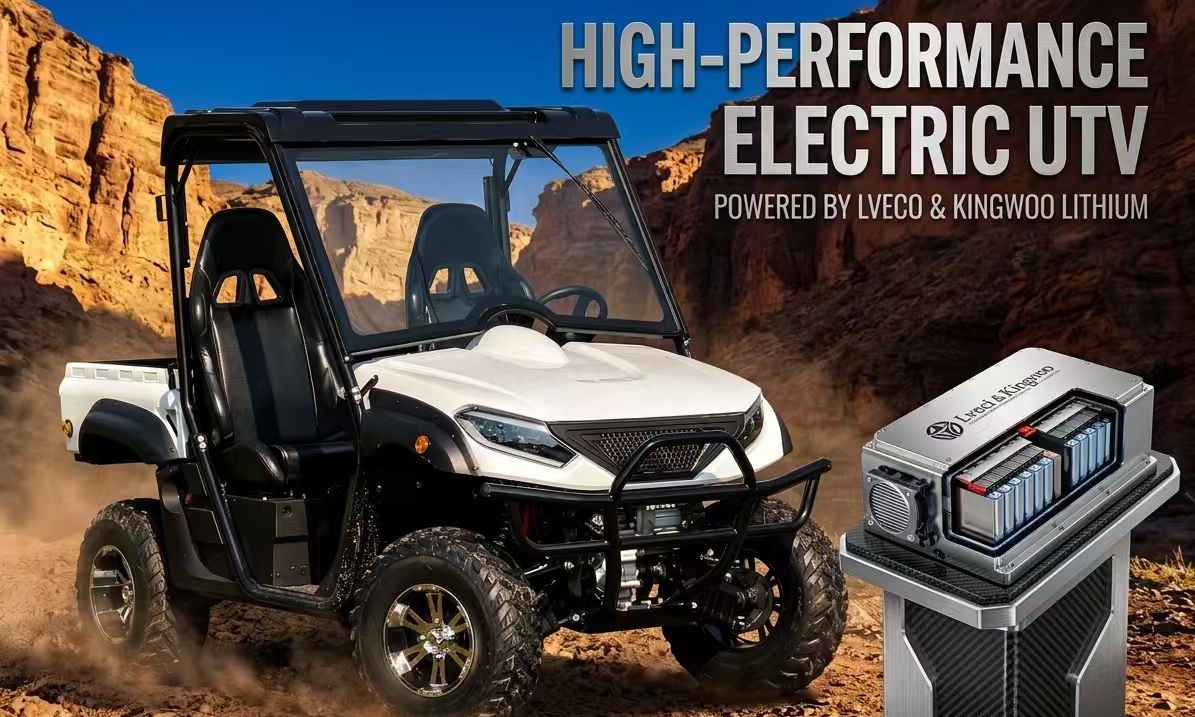
High-end upgraded UTV battery, adopting LiFePO4 chemical system, with energy density far exceeding that of lead-acid batteries, which is the first choice for high-performance and heavily-modified UTVs.
Core advantages: extreme lightweight, 50%-70% lighter than lead-acid batteries, which can optimize body handling and passability; long cycle life, up to 2,000-5,000 times, with an actual service life of 5-10 years, which is more than 3 times that of lead-acid batteries; fast charging speed, high efficiency, stable voltage and output; extremely high self-discharge rate. Stable output; extremely low self-discharge rate, not easy to lose power for long-term storage in winter; no electrolyte, no risk of liquid leakage, almost zero maintenance.
Core disadvantages: the highest initial purchase price; must be paired with a special lithium charger, ordinary lead-acid charger will damage the battery; no low-temperature heating function style, the cold environment will decline in starting performance; some of the old UTV circuit system needs to be adapted to debugging, can not be directly replaced without damage.
Applicable scenarios: Heavy modification models, addition of winch/high-power audio/LED lights and other heavy-duty accessories, cross-country races, high-frequency outdoor work, and the pursuit of long-term price-performance ratio and lightweight high-class car enthusiasts.
From the former cost, weight, actual service life, maintenance difficulty, anti-vibration and anti-bumping ability, leakage-proof security, deep-cycle loading ability, charging speed, eight core dimensions, one by one on liquid-rich lead-acid batteries, AGM sealed lead-acid batteries, lithium iron phosphate batteries, a side-by-side comparison, a clear distinction between the differences between the three:
Liquid-rich lead-acid batteries are the lowest-priced products in the three categories, with a very low entry threshold; AGM sealed batteries are medium-priced, and the price is only a slight upward fluctuation of the liquid-rich batteries; lithium iron phosphate batteries have the highest up-front investment, and the selling price is far more than the other two types of lead-acid batteries.
Liquid-rich lead-acid batteries are the heaviest, with the biggest weight burden on the whole vehicle; AGM batteries are also heavy, only slightly lighter than the liquid-rich models; Li-FePO4 batteries have outstanding advantages in lightweight, compared with lead-acid products, the weight is reduced by 50%-70%, which can effectively reduce the front-end load and optimize cross-country handling.
Liquid-rich lead-acid batteries have the shortest life span, only 1-3 years under standardized use; AGM batteries have the middle life span, and can be used stably for 3-5 years under normal maintenance; Li-FePO4 batteries have the leading life span, and the number of cycles can reach 2,000-5,000, with an actual life cycle of 5-10 years.
Liquid-enriched lead-acid battery has the highest maintenance demand, which requires regular inspection of electrolyte, replenishment of distilled water and cleaning of liquid level; AGM battery is maintenance-free, no need to replenish water, only need to clean up the terminals; Li-FePO4 battery has a very low threshold for maintenance, which only needs to be paired with a special charger, and there is almost no additional maintenance work.
Liquid-rich lead-acid batteries have poor anti-vibration performance, and long-term off-road bumps can easily cause internal plate fracture; AGM and Li-FePO4 batteries have the same excellent anti-vibration and anti-shock performance, which is fully compatible with UTV high-intensity off-road and continuous vibration conditions.
Liquid-enriched lead-acid batteries have no sealing structure, and there is a risk of electrolyte leakage and corrosion of the body when the body is tilted or when it is violently bumped; AGM batteries and Li-FePO4 batteries are fully sealed, which are completely leak-proof, and there will be no leakage hidden danger when they are mounted at multiple angles.
Liquid-enriched lead-acid battery deep cycle performance is general, frequent shutdown and use of high-power accessories will quickly attenuate the capacity; AGM battery deep cycle ability is good, can support light modification of electricity; LiFePO4 deep cycle performance is excellent, long time to drive the winch, high-power lights, car stereo will not be a rapid loss of power.
Liquid-rich lead-acid batteries have the slowest charging speed, and it takes 5-12 hours to be fully charged; AGM batteries have a medium charging speed, and the charging time is in between the other two; Li-FePO4 batteries have the highest charging efficiency, and it takes only 1-5 hours to be fully charged, and the replenishment speed is significantly ahead of the others.
If the pursuit of balanced cost-effective, AGM battery comprehensive performance is the most balanced; long-term high-frequency heavy vehicle, the pursuit of lightweight and long durability, the priority of lithium iron phosphate; only the extremely limited budget, low-frequency and short-distance travel, it is suitable for the choice of liquid-rich lead-acid batteries.
Selection of batteries can not only look at the price and material, the best battery is the one that fits the parameters of the vehicle and the scenario of using the vehicle. According to the following 5 steps, you can completely avoid malfunction and early damage problems.
All civilian UTVs are 12V, no need to change the voltage specification. Focus on checking three core parameters: battery pack size (adapted to battery tray), CCA cold start current (not lower than the original standard, and 20%-30% higher than the original recommended for cold areas), AH capacity (the more modified accessories, the larger the capacity needed), and confirm the direction of the electrode posts, to avoid misalignment of the installation.
Commuting, light off-road, seasonal use: priority AGM batteries, maintenance-free, durable enough, cost-effective and full; heavy modification, multi-accessory loads, high-frequency operation: priority lithium iron phosphate batteries, stable power supply, longer life; extreme budget, rarely used: optional high-quality liquid-rich lead-acid batteries.
Low-priced lead-acid batteries save money in the early stage, but they need to be replaced in 1-2 years, superimposed on the maintenance and replacement costs, and cost more in the long term; AGM batteries are stable for 3-5 years, with moderate overall costs; lithium batteries have high investment in the early stage, but they do not need to be replaced in 5-10 years, and have the best cost-effectiveness in the long term. Selection must look at the full life cycle cost, rather than simply look at the selling price.
Priority is given to power sports special battery brands, avoiding car batteries, miscellaneous brands of three products. Lithium-ion batteries need to confirm in advance whether the vehicle charging system is compatible, if necessary, with the BMS battery management system and special chargers; AGM batteries are compatible with most of the original charging system, without additional modifications.
For UTVs with long-term winch operation and multiple high-power accessories modification, dual-battery isolation kit can be added, with one battery dedicated to startup and one battery dedicated to accessories power supply, which can completely solve the problems of power loss and starting difficulties.
When many car enthusiasts select UTV batteries, they only compare the parameters and price, ignoring their own cross-country scenarios, modification range, frequency of use, and climate differences in their regions, which ultimately leads to the embarrassing problem of “high-matching waste of budget, low-matching insufficient durability”. As a matter of fact, there is no absolute good or bad UTV battery, only whether it is suitable. Combined with the real car habits of the vast majority of domestic car enthusiasts, high-frequency pain points and budget tiers, the following five mainstream user groups to do refinement of the split, to provide a direct application of the precise selection program, including real scenarios, the core pain points, selection logic, the best with the pits to avoid the key points to cover 99% of the civilian UTV use of scenarios.
Typical scenarios: the whole vehicle is the original plain car state, no high-power lights, winches, audio and other modification accessories; only weekends and holidays for short-distance mountain traversing, cross-country sites, campgrounds; low frequency, winter and summer off-season will be parked for a long time to be stored, the overall load of electricity is extremely low, the core demand is to start a stable, no need for frequent maintenance, not easy to be bad in the idle.
Core pain points: long-term idling vehicles are prone to self-discharge and power loss, and will be scrapped directly in spring; ordinary lead-acid batteries are weak in shock resistance, and are easy to be damaged internally in cross-country bumps; amateurs don’t have the time to maintain batteries on a regular basis; and they don’t want to invest in a high upgrading budget for low-frequency recreational use of the vehicle.
AGM is the cost-effective ceiling for leisure players. The fully sealed and maintenance-free design eliminates the need for regular electrolyte checks and distilled water replenishment, which is perfectly suited to the habits of lazy people. With excellent anti-vibration, anti-impact and anti-leakage performance, it is fearless of off-road bumps, body tilting and other working conditions, and will not have the problems of liquid leakage, corrosion of the body and internal broken poles of traditional wet batteries. Meanwhile, the self-discharge rate is extremely low, so it is not easy to lose power when parked for a long period of time in the fall and winter, and it can be used with an ordinary trickle charger to get through the winter safely. With moderate price and strong adaptability, it can fully meet the needs of veggie car starting and basic electricity consumption, without wasting budget and missing performance.
Suggestions for avoiding pit: low-frequency vegetarian car without blindly upgrading lithium batteries, high-end performance is completely idle, belonging to overconsumption; resolutely avoid miscellaneous cheap liquid-rich batteries, the idle state of the sulfurization rate is extremely fast, and often parked in a quarter of the capacity of the end of life, but to increase the cost of replacement.
Typical scenarios: novice entry-level UTV owners, vehicles to field practice, short-distance transportation, light recreational cross-country based; no heavy-duty modification of the entire vehicle, electricity only to meet the basic startup and conventional lights; limited budget, the pursuit of low-cost and stable use of the car, able to accept the simple basic maintenance, the priority of controlling the cost of the initial investment.
Core pain points: Compact budget, unwilling to spend a high price to buy high-end batteries; worried about the high premium of big brand batteries, low cost-effective; low-priced miscellaneous brands of batteries are not durable, frequent failures, repeated replacement is more expensive.
Under the premise of the ultimate budget, give priority to the regular brand of high-quality liquid-rich lead-acid batteries. Compared with miscellaneous products, the original plate process is more stable, the electrolyte is more pure, the start-up is more reliable, the service life is longer, and the upfront investment is the lowest, which is fully suitable for the basic needs of the entry-level mobility. If you can slightly increase the budget, directly into the entry model AGM battery, can completely get rid of the trouble of rehydration and maintenance, the battery life is directly doubled, the long-term comprehensive replacement cost is lower, save heart and cost-effective.
Pit avoidance advice: choose the battery do not just fight the lowest price! Ultra-low-priced miscellaneous batteries have poor craftsmanship, poor shock resistance, a single cross-country bumps may cause internal damage, but also prone to leakage, start-up failure and other safety hazards; low-frequency novice car without following the trend of upgrading the lithium-ion battery, excess performance, cost-effective and extremely low.
Typical scenarios: deep vehicle modification, adding high-power LED spotlights, cross-country winches, car stereos, radios, heated seats and other heavy-duty electrical equipment; high-frequency participation in extreme traversing, sandy slopes, high-intensity cross-country, and tournament competitions; the pursuit of lightweight body and the ultimate sense of control, the use of harsh conditions, high intensity, and demanding power supply stability and instantaneous output capability.
Core pain points: high power accessories consume a lot of power, and ordinary batteries are very easy to be vulcanized and scrapped after deep discharging; traditional batteries weigh a lot, dragging down the whole car’s handling and passability; high-frequency and high-intensity vehicle use leads to early battery failure and capacity decay; unstable power supply causes modification accessories to stall, malfunction, and can’t work properly.
For modification and performance players, lithium batteries are irreplaceable and essential upgrade accessories. Compared with traditional lead-acid batteries, the overall weight is reduced by 50%-70%, effectively reducing the front weight, significantly improving cross-country throughput, acceleration response and vehicle handling quality. At the same time, it has super deep cycle discharge capability, which can support winch towing, high-power audio, and multiple lights working at the same time for a long time, and the voltage output is stable throughout the whole process, so there will not be any power supply attenuation or equipment jamming and failure problems. With 2000-5000 times long cycle life, it can realize 3-5 years without battery replacement, suitable for high-frequency and high-intensity harsh working conditions, ultra-low self-discharge, high temperature resistance, no liquid leakage, and the long-term cost-effectiveness far exceeds that of lead-acid batteries.
Suggestions for avoiding pitfalls: Heavy modification, heavy-duty power scenarios, resolutely do not use ordinary lead-acid and conventional AGM batteries, frequent deep discharging will quickly cause plate sulfation, early battery scrapping; upgraded lithium-ion battery must be paired with a dedicated lithium-ion smart charger, ordinary lead-acid chargers do not match the charging logic, which will damage the battery management system and shorten the life of the battery.
Typical scenarios: UTVs, as professional operating equipment, are widely used in construction site transportation, farmland operation, outdoor rescue, forest inspection and other scenarios; daily high-frequency start-stop, long-time idling, frequent use of winches for dragging and power supply of external tools; long-term in the dusty, strong vibration, high load of harsh outdoor environments, the stability of the battery directly determines the operational efficiency, and the fault tolerance rate is extremely low.
Core pain points: high-frequency start-stop + heavy-duty electrodes are easy to cause battery loss of power, early capacity failure, start-up failure; poor quality battery failure rate is high, sudden power failure directly delay the construction and rescue progress; outdoor harsh environment to accelerate battery aging damage, frequent battery replacement to increase operating costs.
For regular light operation and medium electrical loads, large-capacity thickened AGM batteries are preferred. Anti-vibration, dust-proof, maintenance-free, strong durability, perfectly suited for long-term outdoor work conditions, stable performance, cost-effective and balanced, enough to meet the needs of daily operations. For high-frequency and heavy-duty, long-time winch operation, and professional vehicles powered by multiple devices at the same time, it is more suitable to upgrade industrial-grade LiFePO4 lithium batteries, which can withstand continuous high-intensity discharging with ultra-strong deep-cycle performance, stable and non-decreasing voltage, fearless of frequent starting and stopping, and the service life of which is more than 2 times of the ordinary AGM batteries. For UTVs with uninterrupted and high-intensity operations, the dual-battery isolation system is the ultimate solution: one battery is dedicated to starting and guaranteeing 100% ignition success, and one battery is dedicated to powering accessories, completely separating the load and solving the problem of heavy load power loss and starting failure from the root.
For UTVs with high-intensity uninterrupted operation, the dual-battery isolation system is the ultimate solution: one battery is dedicated to start the vehicle, guaranteeing 100% starting success; the other battery is dedicated to powering all the operating accessories, completely separating the starting load from the power load, solving the problem of heavy-duty power loss and starting failure from the root, and dramatically reducing the probability of failure.
Suggestions for avoiding the pit: It is strictly prohibited to use ordinary liquid-rich lead-acid batteries for operation vehicles, as the continuous vibration and deep discharge will make the batteries scrapped quickly, and the repeated replacements will raise the operation cost; and it is very easy to cause unstable voltage, overloaded circuit, equipment damage and other failures if the battery is forced to carry heavy loads with a small-capacity battery.
Typical scenarios: long-term sub-zero low-temperature environment in the north, focusing on winter snow cross-country, ice crossing, winter exploration in the mountains and forests; high-frequency use of vehicles in winter, rarely long-term storage, but the difficulty of low-temperature start-up has increased dramatically; some of the vehicles are parked in the open air without garage insulation, and the batteries are subjected to prolonged severe cold attack and harsh working conditions.
Core pain points of vehicle use: battery capacity decreases dramatically in extreme cold weather, starting current is insufficient, and ignition fails; ordinary batteries have poor weather resistance in winter, and are prone to power loss, freezing, and scrapping; deep discharge at low temperatures is likely to result in permanent damage to the battery, which is impossible to be repaired.
The majority of northern car enthusiasts prefer AGM batteries with 20%-30% higher CCA cold start current than the original standard AGM batteries, which have less degradation of low-temperature performance, strong starting stability, and can still be ignited and started stably at minus 20 to 30 degrees Celsius without any special modification or complicated maintenance. The fully sealed structure has no fear of ice, snow, humidity and low temperature dew, and there will be no leakage, corrosion, freezing and other problems, which is the most stable and worry-free general program for cold areas. For the northern heavy cross-country, winter races, high-frequency extreme car players, it is recommended to upgrade the special lithium-ion battery with low-temperature heating, BMS temperature control protection, to make up for the short board of the ordinary lithium-ion electrode cold start-up weak, low-temperature can be quickly preheat the electric core, restore the rated capacity and starting power, taking into account both the lightweight, long-life and low-temperature stability, to meet the harsh ice and snow cross-country working conditions.
No matter how good the battery is, neglecting to maintain it will also lead to rapid obsolescence. The exclusive maintenance program for three types of batteries is simple and easy to operate, and can significantly extend the battery life.
Visually check the appearance of the battery every month to check for bulging, leakage and loosening; clean the oxidized layer of the electrode posts regularly and apply insulating grease to prevent corrosion; tighten the battery fixing bracket to avoid internal damage caused by bumps and vibration; when the battery is idle for a long period of time, use an intelligent trickle charger to stabilize the voltage and replenish the power to avoid self-discharge and loss of power.
Liquid-rich lead-acid batteries: check the electrolyte level every month and replenish distilled water in time; deep discharge is prohibited, and the battery must be stored at full charge after long-term parking.
AGM battery: maintenance-free, no need to replenish water; focus on avoiding long-term power loss parking, every 1-2 months to replenish the power can be.
Lithium iron phosphate batteries: special lithium chargers must be used; long-term storage to maintain 50% -80% of the power, to avoid full or loss of power storage; regular inspection of the BMS system operating status.
Most UTV batteries are damaged in advance, not a quality problem, but caused by the wrong habits of the car, the following misunderstandings must be avoided:
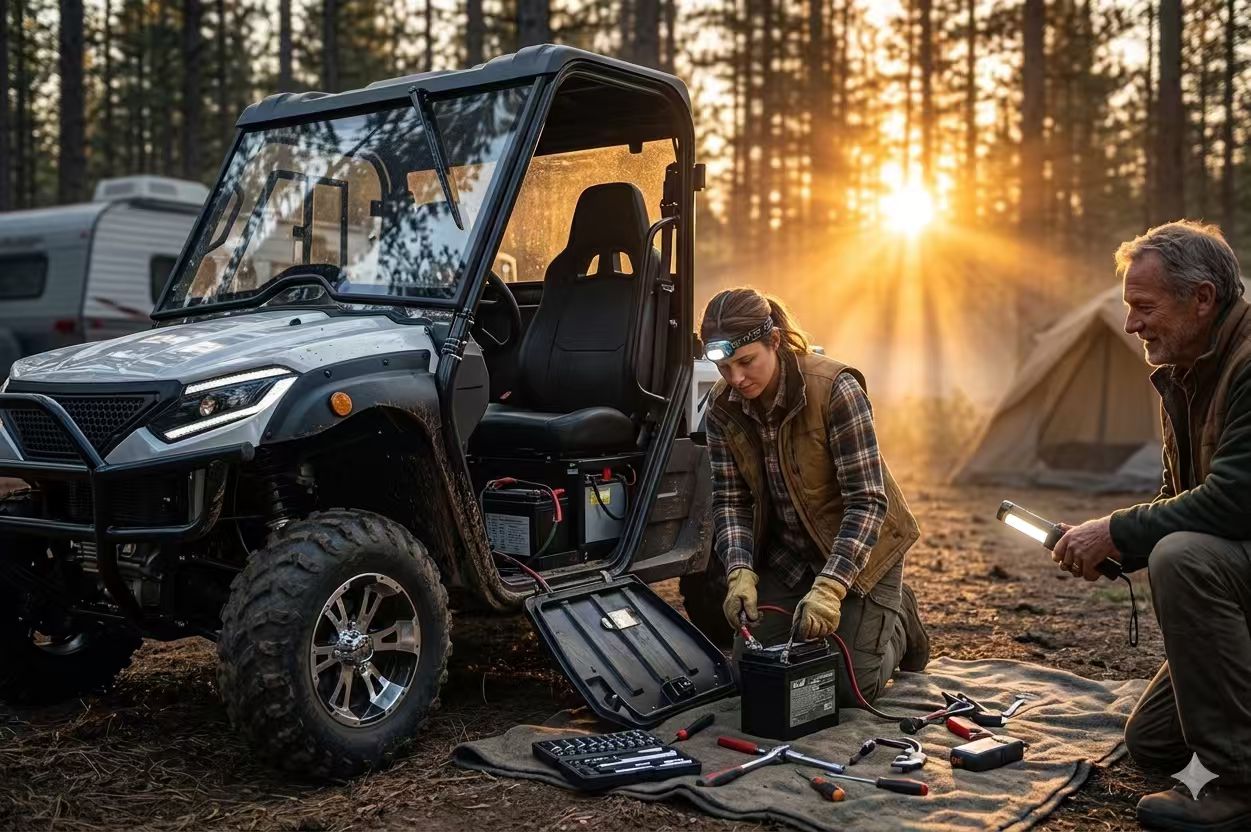
There is no absolute best style of UTV battery, only the most suitable for their own car scene selection. Ordinary leisure players choose AGM, saving durability and cost-effective pull full; performance modification, high-frequency operation players choose lithium, long-lasting stable experience upgrade; limited budget entry users can choose high-quality lead-acid battery transition.
Selecting the right battery is just the foundation, scientific installation and fixation, standardized charging, regular maintenance, in order to maximize the extension of battery life, to avoid cross-country halfway power loss, the vehicle can not start the embarrassing situation, so that every outdoor cross-country, homework trips are stable and reliable.


-150x150.png)