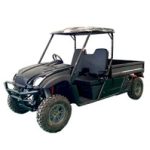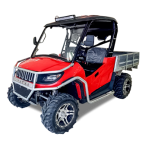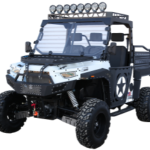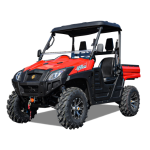
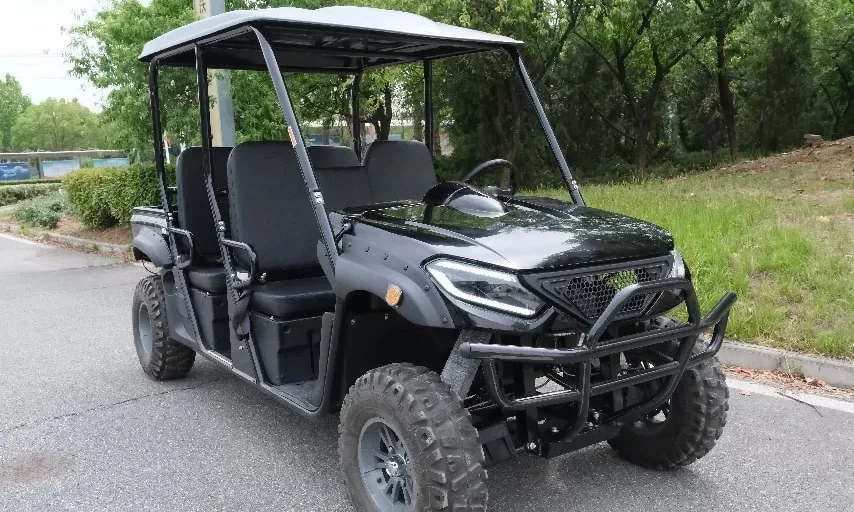
The vast majority of original UTV (side-by-side all-terrain vehicles) are pure off-road vehicles when they leave the factory, and are only allowed to drive in private venues, off-road trails, and designated OHV off-road areas. Many car owners will privately open UTV on public roads, but there is a great risk of such behavior.
UTV without compliance modification, formal registration and road insurance will not only face high traffic fines, but also may be temporarily detained and impounded. In the event of a traffic accident, the car owner still has to bear full responsibility, and the insurance will directly refuse compensation, causing huge economic losses.
Many UTV players want to realize road freedom, but they are troubled by various problems: the laws and regulations of different states and counties are very different, the specific modification standards are not clear, the registration process is complicated, and it is easy to buy non-compliant accessories and waste money.
This article is the latest full version of UTV road compliance strategy in 2026. It will clearly explain the legal definition, territorial regulations, necessary modification items, registration process, cost details and pit avoidance skills for everyone. At the same time, it will specially answer the compliance problems of electric UTV road, help you complete the compliance transformation in one stop, and rest assured that you will be on the road legally.
UTV full name Utility Terrain Vehicle, also known as side-by-side all-terrain vehicle, side off-road. The so-called road-legal UTV refers to UTV models that have been modified in accordance with regulations, completed official registration, purchased road-specific insurance, and drivers hold a valid driver’s license, which fully comply with local motor vehicle management regulations and can be used on public roads.
The original off-road UTV does not have the qualification to go on the road and can only be used in off-road scenes. The compliant UTV is no longer limited to off-road venues and can share public roads with ordinary cars and trucks, only subject to local exclusive driving restrictions.
All over the United States, where UTV is allowed on the road, 5 of the following core standards are basically required to be met.
First, a full set of compliant security lighting and peripherals. Must be equipped with high and low light headlights, tail lights, brake lights, front and rear turn signals, rearview mirrors, warning horns, reflectors, license plate lights and other basic equipment. Some areas require additional accessories such as windshield, wiper, seat belt, parking brake, speedometer, etc. At the same time, it is strictly prohibited to modify illegal exhaust, and a silencer with silent qualification shall be provided.
Second, formal vehicle registration and licensing. UTV needs to be registered with the state motor vehicle administration, classified as road legal ATV, special purpose vehicle or modified multi-purpose vehicle, and fixed with official license plate before it can be legally on the road.
Third, exclusive road insurance. General off-road UTV insurance, family car insurance are not effective. It is necessary to purchase liability insurance that specifically supports UTV road driving. Some scenarios also need to be matched with car damage insurance and triple insurance to meet the local minimum insurance standards.
Fourth, legal driving qualification. Drivers must hold a valid motor vehicle driver’s license, and abide by the local age limit and helmet wearing rules. Minor drivers and passengers must strictly follow the special control requirements.
Fifth, comply with road use restrictions. Even if all compliance procedures are completed, UTV cannot drive unrestricted like a private car. UTVs are prohibited from entering high-speed roads and expressways in most areas, and only low-speed roads are allowed.
The original UTV is a pure off-road OHV vehicle. It lacks the necessary lighting, warning, license plate installation and other equipment on the road. It cannot pass the road compliance audit and must not go on the road without permission.
At the same time, we should make clear a core misunderstanding: legal roads do not mean unlimited driving. Compliant UTV is still a special vehicle that only supports limited road access and cannot completely replace ordinary family cars.
In addition, compliance standards are not universal. UTV that is compliant in State A may still violate regulations when driving to State B and County B. The laws and regulations of each state, county and city are independent, and local rules must be verified in advance for cross-regional driving.
The core reason for the failure of many car owners to modify and register is that they only refer to common standards and ignore the rules of territorial differentiation. There is no unified national UTV road standard in the United States. The regulations at the state, county and city levels are different, and the rules will be updated year by year.
State-level regulations are the basic bottom line, mainly defining whether UTV can be registered on the road, necessary modification accessories, driver’s license age requirements, speed limit standards for passing roads, and types of prohibited road sections.
County and city regulations are the final implementation of standards, but also the most easily overlooked part. Many states allow UTV on the road, but some subordinate counties and cities will directly prohibit UTV from driving on the roads in their jurisdiction, or add additional equipment and traffic time restrictions.
Fully open state: with a clear UTV road legal registration process, clear equipment standards, car owners can directly in the state to complete the modification, testing, licensing, insurance, compliance is low.
Some restricted states allow UTV to be limited on the road, only low-speed county roads and township roads are opened, urban trunk roads and highways are prohibited, some areas are only accessible during the day, and the modification requirements are more stringent.
No admittance state: UTV road registration in the state is not supported, and even if the modification is completed, it cannot be legally licensed. Many car owners will choose Montana, South Dakota and other out-of-state registration methods, relying on reciprocal rules on the road, but still need to abide by local county and city control regulations.
It is slightly misleading to avoid being attacked by the past. First of all, check the latest regulations on UTV, side off-road, special vehicles and OHV on the road in the official website of DMV and DOT.
Secondly, consult the local county government, police station and public security department to confirm the prohibited roads and traffic restrictions within the jurisdiction. Many areas will publicize exclusive traffic maps. Finally confirm the insurance agency and verify the specific requirements of local UTV road insurance.
After verifying the territorial regulations, the second step is to complete the DOT compliance hardware modification. All UTV on the road must meet the safety standards of the Ministry of transport, which is the core premise of passing the annual inspection and road inspection. The following are the core modification items of General Motors in the United States, and the special requirements of the territory are marked at the same time.
Lighting is the top priority of road compliance inspection. Pure off-road lighting cannot meet the visual and warning standards of road driving, and a full set of upgraded compliance accessories must be provided.
Headlamps shall be equipped with high and low beam function, and the lighting distance shall be up to standard to meet the requirements of daytime and nighttime driving vision. The front and rear amber turn signals need to be responsive and clearly indicate the steering intention, which is the key to avoiding intersection accidents.
The red tail light and high-brightness brake light shall be normally lit, and the rear visual distance shall meet the standard to effectively warn the rear vehicles. At the same time, it must be equipped with a white license plate lamp to ensure that the license plate is clearly visible at night, and it must be matched with a compliant reflector (front yellow and rear red).
Note: modified accessories such as off-road spotlights, atmosphere lights and flash lights must be turned off or blocked on the road. In most areas, such lights are strictly prohibited from being turned on on public roads.
Vehicles must be equipped with at least the main driving side rearview mirror. Most states require double-sided rearview mirrors to eliminate blind spots in driving vision and ensure the safety of lane changing and reversing.
Some states require the installation of DOT-certified windshields and wipers to deal with rainy and dusty weather and ensure driving vision. All seats must be equipped with intact seat belts to ensure the safety of drivers and passengers.
The original roll cage (ROPS) is basically standard, no extra modification is required, but it is necessary to ensure that the structure is in good condition, no damage and deformation, and meet the anti-roll safety standards.
It must be equipped with an electric horn with clear sound and up-to-standard transmission distance for road condition warning and avoidance reminder, which is a mandatory item for road inspection.
Vehicles need to be equipped with accurate speedometer and odometer, real-time display of driving speed, strictly abide by the road speed limit rules. At the same time, it shall be equipped with a good parking brake to meet the safety requirements for parking on the ramp.
A key misconception is corrected here: there are currently no DOT road-approved tires specifically for UTV under federal regulations. UTV is an off-road vehicle, and there is no need to enforce DOT tires like private cars, but there are differences in territorial enforcement standards.
Pure mud and deep-toothed off-road tires are not suitable for long-term road driving, and are prone to problems such as overheating, rapid wear, insufficient grip, and longer braking distance, and there are great safety hazards.
For long-term road owners, it is recommended to replace the special UTV tires or light LT road tires for mixed roads, with adaptive wheels to ensure the matching of load and speed parameters, taking into account road safety and light off-road capability.
Must be equipped with a strong license plate bracket to prevent loosening, falling off, to ensure that the license plate vertical, clear display, no shelter, no skew. With a special LED license plate lamp, it is continuously lit at night to meet the requirements of law enforcement capture and road inspection.
According to local laws and regulations, some areas require the installation of double flashing warning lights, compliance speed limit devices and silent exhaust systems. Owners need to install them as required according to territorial rules to avoid passing the audit.
At present, UTV compliance modification is mainly divided into two ways: integrated road compliance package modification, independent DIY scattered modification, the two ways have their own advantages and disadvantages, adapt to the needs of different car owners.
The special UTV upper set is suitable for mainstream models such as Polaris, Bombardier, Kawasaki, etc., including turn signals, horns, license plate brackets, light harnesses, switches and other complete sets of accessories, which are plug-and-use, without complex modification.
Kit accessories are in line with DOT compliance standards and adapt to most state laws and regulations, which can avoid problems such as non-compliance of accessories and line failures to the greatest extent, greatly improve the annual inspection pass rate and save time and worry.
In order to save costs, many car owners purchase scattered parts and refit them on their own, which is prone to problems such as mismatching of parts, irregular wiring of lines, substandard lighting brightness, and unstable fixation.
UTV driving vibration, poor quality DIY modification line is easy to loose, short circuit, not only will lead to annual inspection failure, but also may cause circuit failure, there are security risks. At the same time, scattered accessories are difficult to fully conform to territorial laws and regulations, and are prone to missing items and non-compliance problems.
Priority should be given to large brand suits with compliance certification and special models, and no general accessories should be 3. Confirm that the package contains all necessary accessories for the territory to avoid secondary installation in the later period. The wiring harness and accessories with waterproof and shockproof design are preferred to adapt to complex driving environment.
It is only the first step to complete the hardware modification.
The first step is to verify the territorial latest regulations. Confirm the modification standards, testing requirements, access restrictions and registration channels of the state, county and city where the state, county and city is located, and specify whether the state registration is supported.
The second step is to complete a full set of DOT compliance modifications. Install all necessary accessories such as lights, horns, rearview mirrors, tires, license plate brackets, etc. according to the territorial requirements, and fully test all equipment functions after modification.
The third step is to complete vehicle safety inspection and VIN verification. Most regions require offline safety testing to verify the compliance of modified parts and vehicle conditions. At the same time, complete the frame number verification to confirm that the vehicle has no illegal record of theft, robbery and modification.
The fourth step is to acquire exclusive road insurance. Insure UTV-specific insurance that clearly includes road driving protection, confirm that the policy marks the road compliance use rights and interests, and avoid insurance rejection.
The fifth step is to organize the full set of registration information. Prepare the vehicle property right certificate, factory certificate, purchase certificate, test report, vehicle frame number information, insurance certificate, special compliance commitment and other official requirements.
The sixth step, submit DMV registration and pay. Submit registration applications offline or online, pay licensing fees, registration fees, taxes and other related fees, and complete vehicle filing and classification.
Step 7, install the license plate and complete the compliance closure. Fix the official license plate, debug the license plate lamp and all peripherals, retain the registration and insurance certificate, and you can legally drive on the specified road.
Many electric UTV players have this question, the answer is: electric UTV can be legally on the road. The core criteria for UTV road compliance are hardware, procedures, regulations, and fuel and electric power types.
The 1 category: modified electric UTV. The original electric UTV of brands such as Polaris and Bombardier is an off-road vehicle and has no road qualification. Just refer to the fuel UTV standard, install a full set of compliance accessories, complete testing, registration, insurance, can be legally on the road.
The second category: the original LSV low-speed electric vehicle. The original low-speed vehicle represented by GEM eX complies with the US LSV/NEV regulations and comes with a full set of on-road accessories without major modification. It can only be driven on low-speed roads of 35mph and below, and is suitable for short-distance traffic in communities, parks and construction sites.
Electric UTV does not require exhaust gas detection, does not require compliance exhaust modification, eliminates the need for emission-related audit items, and makes the compliance process simpler. Lower operating noise, perfect adaptation of residential areas, scenic noise control rules.
Some states charge higher annual registration fees for electric special vehicles and need to check territorial fees in advance. At the same time, the weight of the battery will affect the load of the vehicle and the tire load, so it is necessary to match the adapted tire and wheel hub when refitting.
Electric UTV still follow the territorial road restrictions, prohibit high-speed, fast road driving. The cruising range will limit long-distance road driving, and it is necessary to plan the charging and driving route before going on the road. The insurance and registration rules are completely consistent with the fuel UTV, and there is no special preferential treatment.
UTV road compliance costs are greatly affected by models, modification plans, registration methods, and territorial policies. The overall cost ranges from hundreds of dollars to more than 3,000 dollars. The following is a detailed breakdown.
Basic on-road regulatory kits (turn signals, horns, brackets, wire bundles, etc.): $150-500, which is the basic cost of all modifications.
LED light upgrades, high-brightness brake lights, license plate lights: $100-400, on-demand upgrades to improve compliance and safety.
Mixed road tire wheel hub set: 400-1000 US dollars, pure off-road tires must be replaced, long-term road driving is recommended to prefer compliant road tires.
Windshield, wiper, additional safety accessories: $200-800, only when required by the territory.
Professional installation labor cost: 100-500 US dollars, DIY installation can completely save this cost.
State registration, licensing, taxes: $10-200, state fees vary greatly.
Safety testing, vehicle frame number verification fee: $0-50, free testing in some areas.
Foreign registration service (Montana, South Dakota): $300-$800, suitable for car owners who cannot register in the state.
Basic road liability insurance: $200-600/year, meeting the minimum road requirements.
All-risk (car damage and three-plus health insurance): high-end UTV premiums are higher based on the value of the vehicle.
Economical DIY scheme: US $400-900, basic package + state registration + reuse of original accessories.
Mainstream mid-range solution: $800-$1800, high-quality suit + light tire upgrade + first-year insurance + regular testing.
High-end full set of plans: 1500-3000 + USD, professional installation + full set of accessories upgrade + foreign registration + full insurance protection.
Most car owners’ compliance problems stem from common cognitive misunderstandings. Avoiding these problems in advance can avoid all kinds of troubles such as annual inspection failure, fines, insurance refusal and so on.
Myth 1: One state compliance, national general.. There are no general compliance standards, county and city rules take precedence over state rules, and cross-county and cross-state travel must re-check local regulations.
Misunderstanding 2: low price miscellaneous brand accessories can pass. 3 no modified lights, loose brackets and non-standard lines are the primary reasons for the failure of annual inspection. It seems to save money, but in fact it wastes the modification cost.
Misunderstanding 3: keep pure off-road tires for a long time on the road. Not only is the wear extremely fast and the safety is poor, but some areas with strict law enforcement will directly determine non-compliance and require mandatory replacement.
Misunderstanding 4: ordinary off-road insurance can be on the road claims. Unmarked road use of insurance, on the road will be directly refused compensation, all losses, compensation costs are borne by the owner.
Misunderstanding 5: on the card can be unlimited driving. The license plate only represents vehicle compliance and does not represent freedom of passage. High-speed, expressway and restricted urban areas are still prohibited from passing.
Misunderstanding 6: privately turn on the off-road auxiliary lights on the road. Spotlights, color light atmosphere lights, flash lights and other accessories, public roads must be closed or blocked, illegal use will be punished.
This type of vehicle is dominated by LSV low-speed electric vehicles, with all on-road accessories delivered from the factory, without modification, simple registration and insurance procedures, and zero compliance risk.
The advantages are worry-free, stable compliance, self-warranty, suitable for low-speed commuting at construction sites, communities and parks. The disadvantage is that there are few car models, weak off-road performance, low speed, only suitable for low-speed roads, and higher car purchase thresholds.
The vast majority of fuel and electric off-road UTVs on the market can be modified independently, with a rich selection of models and strong off-road performance. After modification, it can take into account both off-road and road scenarios.
The advantages are high cost performance, strong playability, and free choice of performance. The disadvantage is that it takes longer to study regulations, complete modifications and procedures independently, and there is a certain threshold for compliance.
Pure commuting, low-speed short-distance use, the pursuit of worry-free compliance, priority choice of original LSV compliance UTV. Main off-road play, occasional road traffic, want high cost performance, give priority to the mainstream UTV independent compliance modification.
With the popularity of electric UTV, more and more car owners choose electric vehicles to refit on the road. When purchasing, you can focus on the following skills.
First of all, the use of the scene, pure short-distance commuting to choose the original LSV model, taking into account off-road and road selection of high-performance electric off-road UTV. Secondly, focus on checking the battery life, charging speed and load parameters, and give priority to vehicles with a real battery life of more than 50 miles and supporting fast charging.
Calculate the overall landing cost in advance, including the purchase price, modification fee, registered insurance premium, and compare the cost of using fuel models. Focus on the verification of battery warranty, after-sales system, electric UTV battery maintenance and replacement costs are high, perfect warranty is very important.
Finally, confirm the registration fees and control rules of the territory for electric special vehicles, so as to avoid being unable to comply with the license plate after purchase.
After UTV completes compliance on the road, routine maintenance is equally important to avoid the problems of compliance failure and annual inspection failure in the later period.
Regularly check the full set of lights, horns, rearview mirrors and license plate lights, and replace damaged parts in time to ensure the normal operation of all compliant equipment. Road driving will accelerate tire and brake wear, tire pressure and tire wear should be checked periodically, and timely maintenance and replacement should be made.
Complete the annual registration renewal and insurance renewal on time, and put an end to disinsurance and disapproval. Check the latest local rules in advance before interstate travel to avoid illegal driving. After long-term parking and before going on the road, be sure to complete the inspection of all vehicle compliance equipment.


-150x150.png)