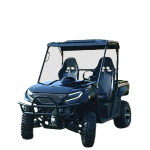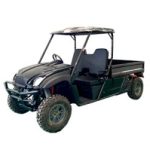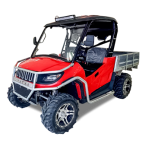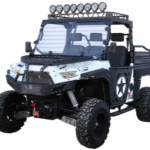
If your vehicle works along a fixed route every day and can return to the garage with power supply after work is finished, priority evaluation electric UTV. If the vehicle often runs long shifts across the plot, lacks charging points, and can reliably replenish fuel on site, hybrid UTV it deserves to be on the shortlist. Whether the two can complete the task depends on the energy consumption at full load, the continuous traction capacity under low power, and how much energy can be replenished before the next 1 shift.
This electric UTV vs hybrid UTV guide uses farm, ranch, park, and facility operations as an example to provide a set of methods that can be used to select batteries, compare shift costs, and arrange acceptance tests.
A battery electric UTV uses a traction battery and an electric motor to drive the wheels. Tires, drives and fans will still produce sound, so when there are noise requirements for campus, hotel or early morning breeding operations, it is appropriate to compare real vehicles under the same road surface, speed and load.
The U.S. Department of Energy Alternative Fuels Data Center distinguishes between two typical architectures by how power is transmitted to the wheels. Series hybrid the wheels are driven by the motor, and the engine drives the generator to supply power. The range-extended UTV with this architecture still consumes battery margin when the power generation is lower than the continuous power demand. Parallel hybrid both the engine and the motor can drive the wheels through the mechanical path, and the specific time to intervene is determined by the model design.
Plug-in hybrid electric vehicle (PHEV) description The vehicle can be charged externally. Whether it can be plugged in, whether it can maintain the engine-off mode, and whether the engine can directly drive the wheels are 3 issues that should be confirmed separately. When you see the “hybrid” tag, first ask the supplier for the power architecture diagram and the start conditions of each mode.
| Decision factor | Battery electric UTV | Hybrid UTV | What to verify |
| Energy supply | Grid charging at a compatible outlet or charger | Fuel, plus grid charging where supported | Plug type, charger rating, and reliable refueling access |
| Range planning | Usable battery energy and the charging window | Electric-only work window plus fuel-supported operation | Loaded route, engine-start behavior, and combined test conditions |
| Noise and exhaust | No tailpipe exhaust during operation | Engine adds noise and tailpipe exhaust when running | Engine-off behavior on the actual route |
| Sustained towing | Depends on battery, motor, controller, and cooling limits | Depends on architecture, sustained output, and cooling limits | Loaded uphill restart and repeat climbs at low SOC |
| Scheduled service | Battery and charger checks plus chassis service | Chassis and electrical service plus engine-related items | Service intervals, parts, warranty, and local support |
| Strong fit | Predictable routes with regular depot returns | Variable shifts away from charging with reliable fuel access | Longest routine shift and time before the next dispatch |
will be your duty cycle write a list of shifts, recording mileage, occupants, actual weight, gross weight of trailer, continuous slope, road surface and working hours. Under the same mileage, the amount of electricity required for empty running on hardened roads and full-load towing climbing can be significantly different. Winter procurement should also require the supplier to indicate the available power at low temperatures and the temperature range allowed for charging.
The battery-side energy recorded under the same route and load is preferred. If the individual driving energy consumption is obtained, plus the electricity consumption of accessories such as work lights that are not included in the measurement. The whole shift readings that already contain attachments can be used directly.
The following are calculus assumptions for you to replace with commissioning data. Assuming a shift of 36km, the driving energy consumption is 0.25 kWh/km, and the single-row accessories consume 0.8 kWh. vehicles from 90% state of charge (SOC) the plan is to return at least 20%, and the use window is 70 percentage points. When estimating the available power in the full window, it is assumed that the SOC in these 1 intervals is approximately proportional to the available energy.
| Item | Calculation | Result |
| Shift energy | 36km × 0.25 kWh/km +0.8 kWh | 9.8 kWh |
| Minimum usable pack energy under this plan | 9.8 kWh ÷ 0.70 | 14.0 kWh |
| Energy within the planned SOC window for a 16 kWh usable pack | 16 kWh × 0.70 | 11.2 kWh |
| Energy within the same window if usable energy falls to 13 kWh | 13 kWh × 0.70 | 9.1 kWh |
| Recharge time at 2.0 kW average wall draw and 85% wall-to-battery efficiency | 9.8 kWh ÷ (2.0 kW × 0.85) | About 5.8 h |
In this example, the 16 kWh configuration completes the shift with a planned margin of 1.4 kWh. If only 13 kWh of available electricity can be provided under the conditions to be accepted, there will be a shortage of 0.7 kWh according to the same rules. The supplier can be requested to directly provide the actual kWh that can be released from 90% to 20% under the target temperature and load, and then recheck the test run. The 20% here is the scheduling assumption, and the actual use of vehicles should follow the manufacturer’s requirements.
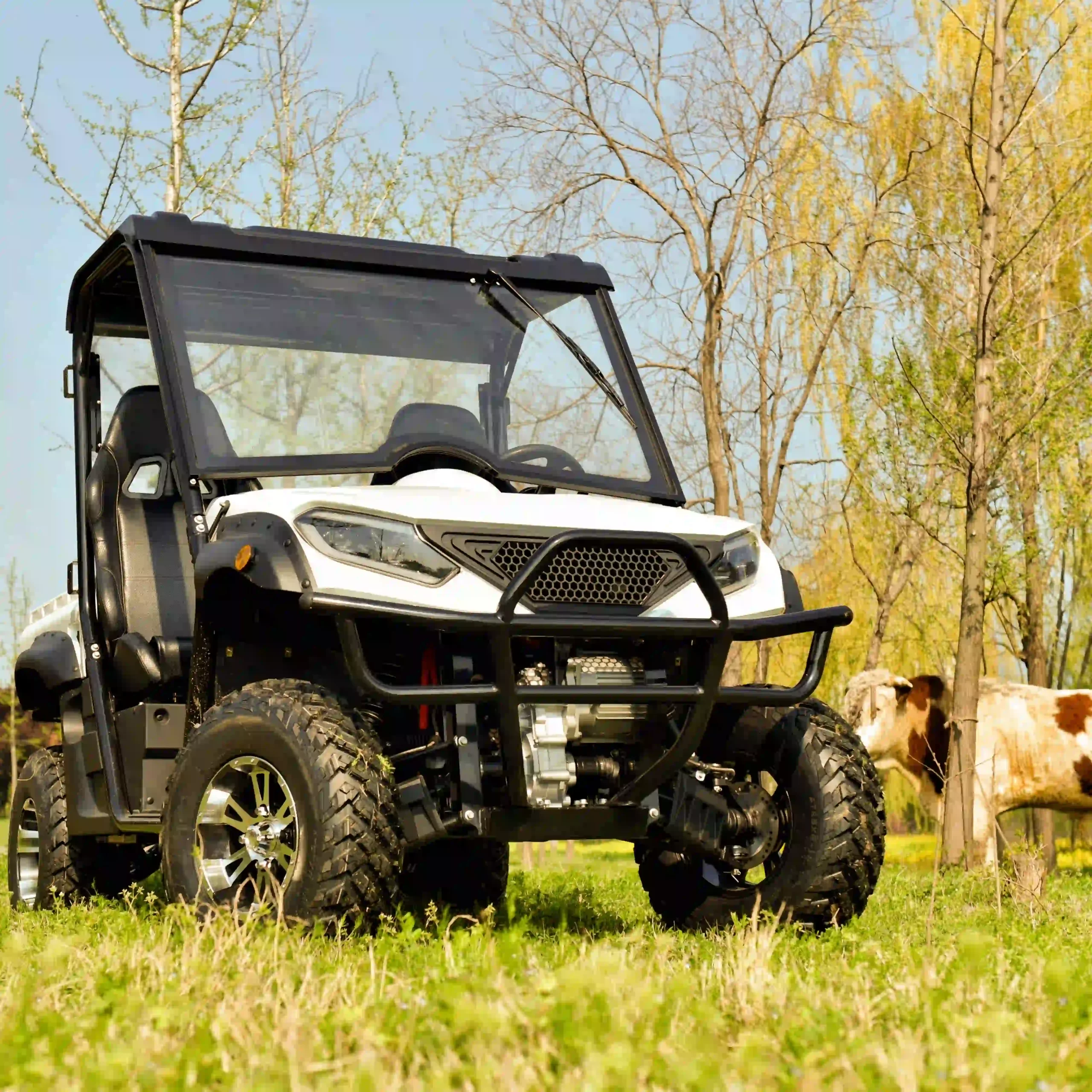
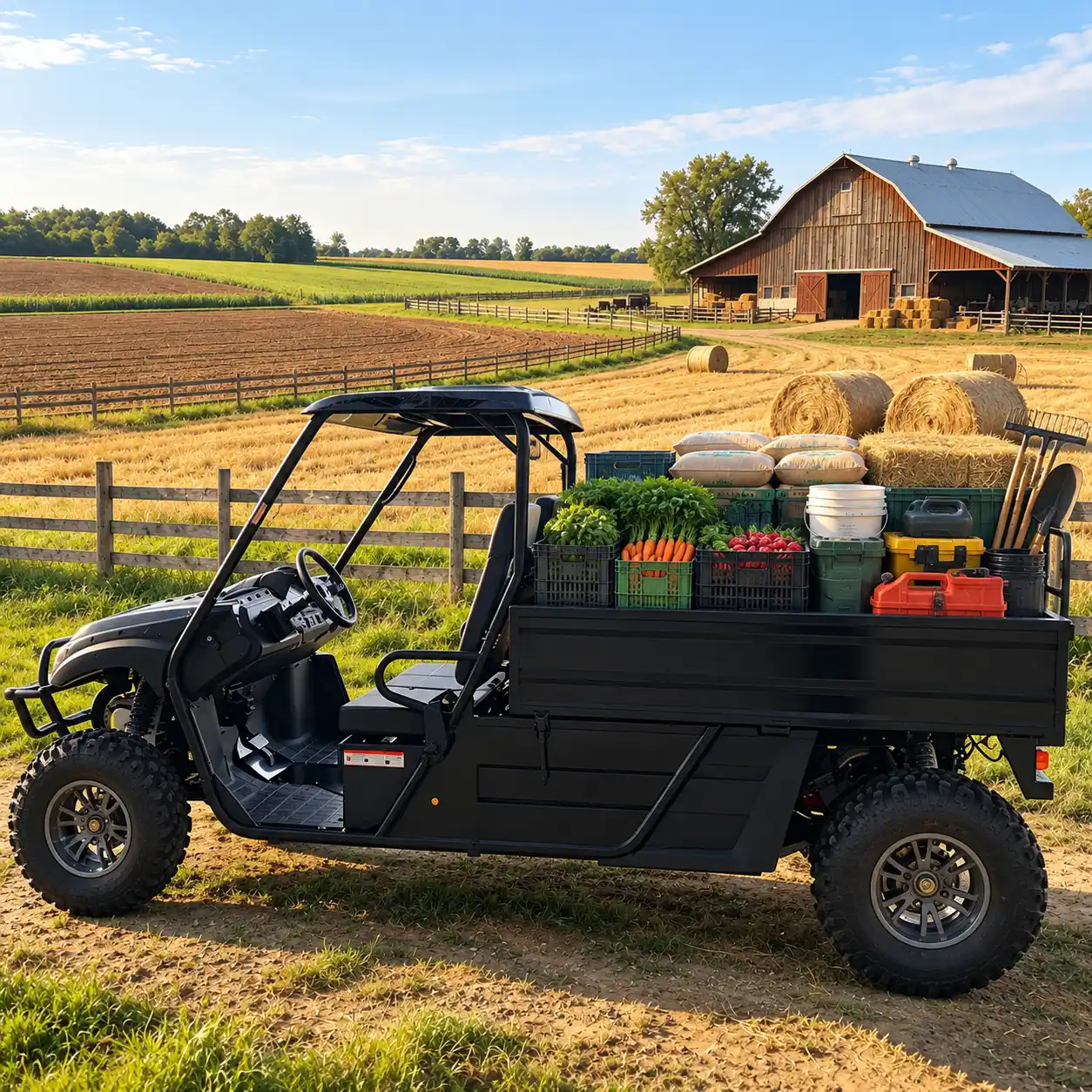
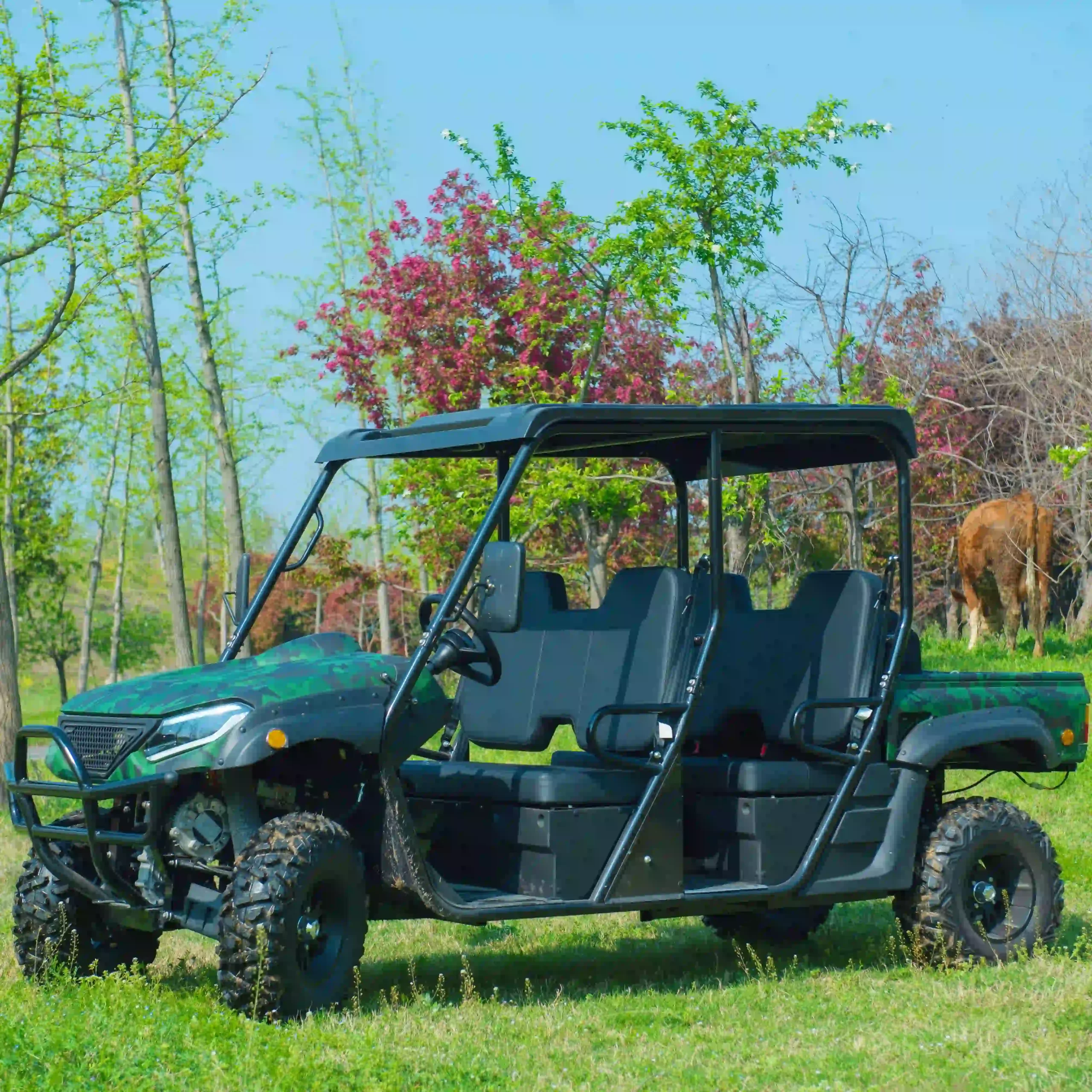
Explore our high-performance electric utility vehicles designed for tough terrains, off-road adventures, and sustainable utility tasks. Direct factory pricing.
First check how many hours are available between the two shifts, and then ask the supplier under which power supply condition the rated charging power is realized. In the above example, if the interval between the two shifts is only 4 hours, even if the average wall draw can reach 2.0 kW, only about 6.8 kWh can be made up according to the assumption, and the same amount of power cannot be maintained during continuous shift scheduling. When multiple vehicles return to the warehouse at the same time, the actual number of vehicles that can be charged at the same time and the time that each vehicle can occupy after wheel charging should be further confirmed.
The fuel replenishment value of hybrid vehicles is mainly reflected in the frequency away from the charging point. For series hybrid, you should ask how much continuous power the engine-driven power generation system can provide at low SOC, full load, and long slopes, and whether the power continues to drop. For parallel hybrid, confirm when the engine is engaged, the remaining traction capacity at low SOC, and whether the vehicle changes mode after shutdown and restart.
If the route passes through an area with restrictions on exhaust gas or noise, engine-off mode write as an acceptable condition. Verify that a low SOC or heavy load triggers an engine start within the normal operating range allowed for the vehicle type. If the engine will automatically intervene, the route will be arranged to evaluate the vehicle according to the actual requirements of the area.
Towing capacity and cargo bed capacity should be checked separately. The total weight of the trailer, the vertical load of the tow hook, the weight of the cargo hopper, the weight of the occupants and the weight of the accessories may jointly affect whether the vehicle is within the load range permitted by the manufacturer. Even if the peak power of the two models is similar, they may open the gap in performance after low-speed heavy load, continuous climbing or power drop.
The following commissioning can be agreed with the supplier prior to procurement. All operations shall be carried out within the rated load of the vehicle, the allowable gradient and the limits specified in the manual.
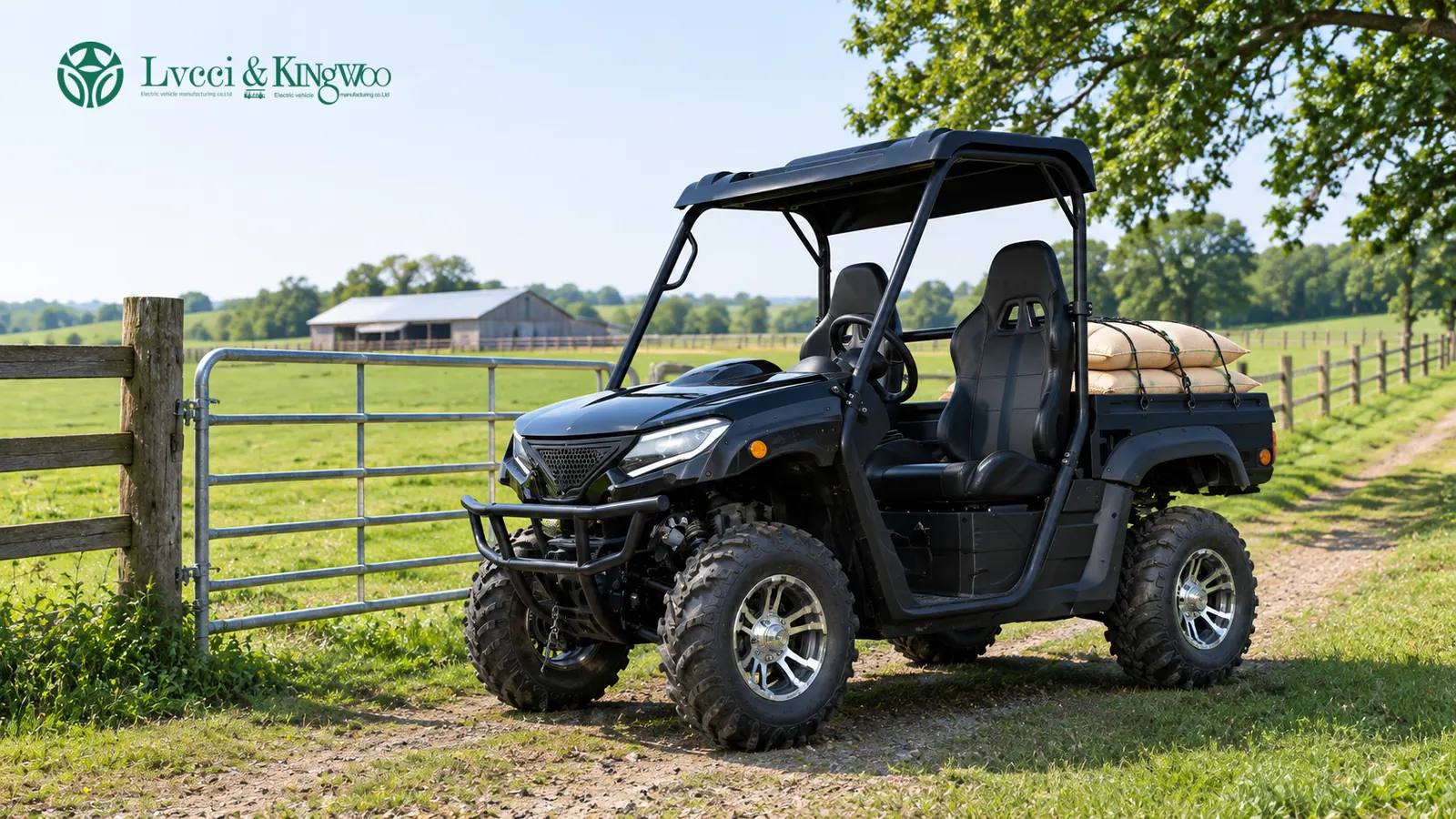
The U.S. Department of Energy Alternative Fuels Data Center pointed out that hybrid with internal combustion engines still has engine-related maintenance projects. When purchasing UTV, the oil, filter element and other consumables should be calculated according to the maintenance table of the specific model, and the tire, brake and chassis maintenance shared by the two types of vehicles should be included at the same time. The battery part is checked for warranty coverage and the estimated replacement costs and related labor are included separately in the Battery Replacement.
Use the meter to record the wall energy consumed by the vehicle to complete the shift and make up the same departure SOC. For hybrid, record the fuel used to complete the same task, and add back the electricity charge of the same departure SOC when there is external charging. If the battery is low at the end of the hybrid vehicle and the vehicle cannot be plugged in, the test can be started from a repeatable stable operating state, or the test can be extended to a similar SOC start and end point to avoid underestimating the fuel cost.
| Illustrative input | Battery electric UTV | Hybrid UTV in a fuel-only replenishment scenario |
| Energy per completed shift | 11.5 kWh at the wall | 3.5L of fuel |
| Unit price | USD 0.20/kWh | USD 1.20/L |
| Energy cost per shift | USD 2.30 | USD 4.20 |
| Annual energy cost at 240 shifts | USD 552 | USD 1,008 |
Under this set of assumptions, annual energy costs differ by USD 456. If purchasing more expensive vehicles can reduce waiting, cross-plot return or spare vehicles, it is recommended to multiply the avoidable downtime of each shift by the corresponding labor or operating costs and compare it with the energy difference.
Total Cost of Ownership (TCO) = Purchase Cost + Site Setup + Energy + Maintenance + Battery Replacement + Downtime − Residual Value
The same batch of candidate vehicles should be used for the same holding years and estimated number of shifts. For multi-vehicle fleets, the charging circuit and other shared inputs are shared according to the number of vehicles used according to the plan, and the normal shift and peak season long shift are simulated respectively. If the comparison results are reversed with downtime or battery replacement costs, check with the supplier as a priority.
Feed transportation, fence inspection and tool transfer can usually start with a fixed route. Vehicles that can return to the warehouse every day, fully loaded for testing and have a return margin can be evaluated electric UTV first. If vehicles frequently cross plots during the busy farming period, the frequency is unpredictable and there is no charging point, when comparing hybrid UTV, the remote refueling conditions and low SOC towing performance should be included in the test run.
Operating routes in parks, campuses, resorts and industrial parks are usually easily measured in sections. Low noise, no exhaust during operation and fixed return charging will make it easier for electric side-by-side to enter the primary selection of such projects. Where the route includes public roads or indoor areas, the applicable conditions for the specific vehicle type and site should be checked with the supplier and site management.
It is often difficult to determine the mileage in advance for forest land inspection, cross-plot maintenance and temporary repair. Validated hybrid UTV can be arranged for such routes when refueling is possible and engine intervention meets site requirements. If the fleet undertakes both short cycle and remote tasks in the park, it can allocate vehicles according to the route and use the same set of test conditions for acceptance.
to LVCCI & KINGWOO RUE725 Pro for example, the product data lists the lead-acid and lithium iron phosphate (LiFePO4) battery options. When comparing battery schemes, please write the same full load route, minimum operating temperature and available charging time into the RFQ sheet, and ask the supplier to provide the available power, charging parameters, payload, towing capacity and applicable warranty terms according to the reported configuration. If 4WD is required, the required drive configuration should also be included in the same quotation and acceptance requirements.
If you are purchasing electric UTV for a farm, ranch or campus, you can set single shift mileage, maximum actual load and rechargeable hours per day send to LVCCI & KINGWOO to match the battery and drive configuration of RUE725 Pro according to the working conditions, and get the corresponding specifications and quotation.
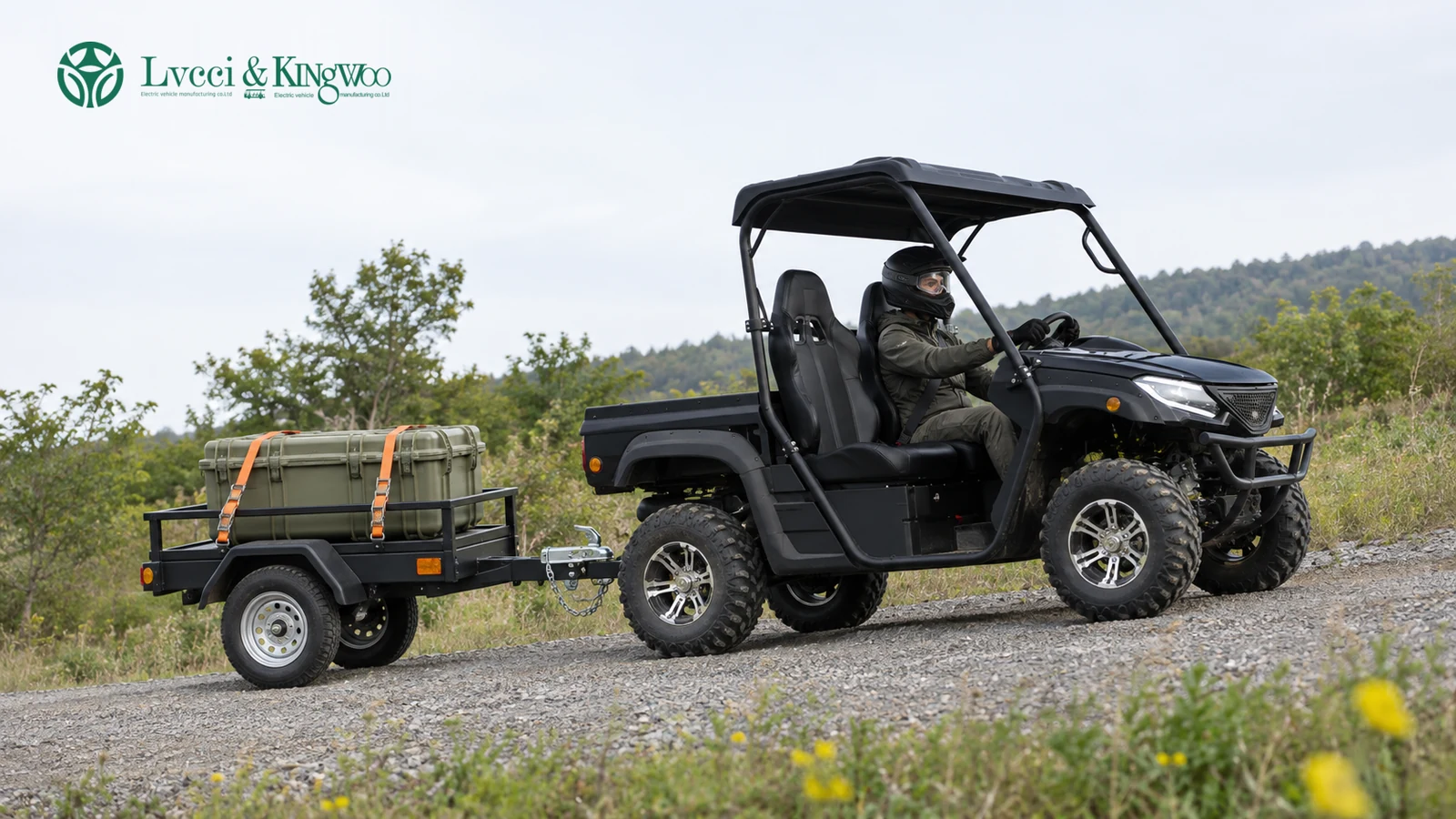
Fixed route, regular return to the warehouse for charging, priority assessment electric UTV. When the remote long shift lacks a charging point but can reliably replenish oil, it can be considered. hybrid UTV. Before purchasing, compare the endurance, energy replenishment time and cost of a single shift with the same full-load route, and retest the towing capacity at the end of the shift.