With the comprehensive iteration of new energy technology, electric UTV has gradually grown from a niche device to a mainstream choice for farm operations, outdoor hunting, leisure cross-country, and commercial park. Compared with the traditional fuel UTV, the 2026 new electric UTV relies on mature lithium battery technology, intelligent electronic control system and silent power design, which solves many pain points of high noise, complicated maintenance and high energy consumption cost of traditional fuel vehicles, and has become the first choice for more and more individual users and commercial fleets. But many consumers still have many doubts in the purchase: electric UTV life can meet the daily use? Is the high purchase price worth it? Is the performance sufficient under heavy load, climbing and extreme weather scenarios?
This article will combine the latest industry data in 2026, car owners’ measured feedback and professional evaluation results to comprehensively dismantle the core advantages and disadvantages of electric UTV, compare the performance differences of fuel UTV, accurately divide the suitable population, and provide professional purchasing skills and vehicle maintenance plans to help users with different needs make accurate decisions and avoid purchasing misunderstandings.
Electric UTV Core Definition
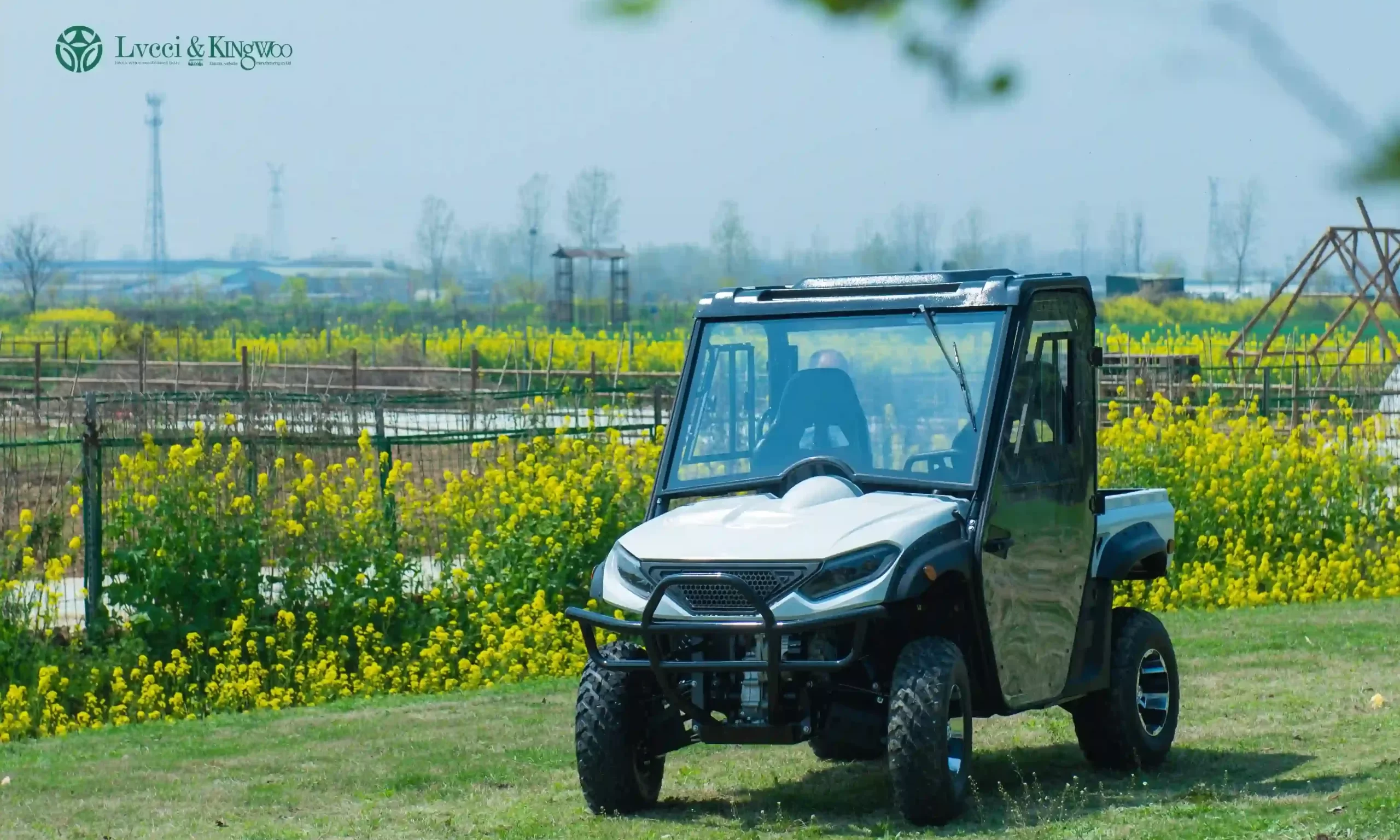
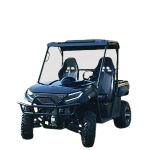
The full name of electric UTV is electric multi-function task vehicle (Electric Utility Task Vehicle), also known as electric side-by-side vehicle (Side-by-Side) in the industry. It is a new energy all-terrain operation and leisure vehicle specially designed for non-paved roads. Different from ATV all-terrain vehicles that ride alone, the electric UTV adopts a two-to six-person side-by-side seat layout, equipped with a car steering wheel, accelerator brake pedal, special cargo hopper and high-intensity off-road suspension system, taking into account the multiple attributes of commuting, operation and off-road, and is widely suitable for scenes such as farm pastures, construction sites, mountain hunting, scenic parks, courtyard operation and maintenance, etc.
The biggest difference from the traditional fuel UTV lies in the power system. The electric UTV abandons gasoline and diesel engines and relies on lithium battery packs and motor drives to achieve zero exhaust emission and low noise operation, while retaining the cross-country passability, load and towing ability of fuel vehicles. It is a new generation of cross-country operation equipment that takes into account both practicability and environmental protection.
Core Components And Working Principle
The power structure of the electric UTV is far simpler than that of the fuel model. The core consists of four major components, with lower failure rate and more stable operation:
First, the lithium battery pack: As the “energy fuel tank” of the vehicle, the current mainstream 2026 models are equipped with high-density lithium-ion batteries, replacing the old lead-acid batteries, with large capacity, long life, anti-attenuation, and lightweight Advantages, it can store electricity to supply power to the vehicle power system.
Second, the drive motor directly converts the electric energy stored in the battery into mechanical power. Most mid-to-high-end models are equipped with a four-wheel drive motor system. The power is directly output to the four wheels. It starts faster and has stronger climbing performance. It is perfectly suitable for muddy and steep slopes., Sand and gravel and other complex off-road terrain.
Third, the intelligent controller: the “brain system” of the whole vehicle, which accurately controls the power output, automatically adjusts the power according to the throttle strength, road conditions, and load, so as to achieve smooth acceleration and constant speed driving, avoid abrupt power, and greatly improve driving safety and comfort Sex.
Fourth, the energy recovery system: The mainstream new electric UTV comes standard with regenerative braking function. When the vehicle decelerates, brakes, or coasts downhill, the motor works in reverse to recover excess energy and charge it back to the battery, effectively extending the cruising range and improving energy utilization. rate.
In the past two years, the electric UTV market ushered in explosive growth, gradually replacing the traditional fuel UTV to become the mainstream, the core benefits from the technology upgrade, policy norms, user demand upgrade three dimensions, but also its adaptation to multi-scenario use of the core advantages.
Silent Stealth Operation
The roar noise of traditional fuel UTV engines can reach 90-110 decibels, which is not only easy to disturb wild animals and affect surrounding residents, but also unable to enter scenic spots, ecological reserves and residential areas with strict noise control.
However, the operating noise of electric UTV is only 60-70 decibels, which is almost silent and perfectly suitable for hunting scenes. It can be close to prey without causing disturbance. At the same time, it supports early morning and night non-interference operations and is suitable for noise-sensitive areas such as villas, residential areas and ecological forest farms. This is the core advantage that fuel vehicles cannot replace.
Instantaneous Torque Output
The fuel engine needs to increase the speed to release the peak power, and it is prone to insufficient power and obvious frustration when dragging at low speeds and climbing hills.
However, the electric motor can output 100 of the peak torque at the moment of starting, with strong low-speed traction and smooth and linear power output. In scenes such as steep slope climbing, muddy escape, heavy-duty dragging, precise low-speed operation, etc., the performance far exceeds the same level of fuel UTV. Whether it is farm dragging materials, site transfer equipment, or mountain forest cross-country crossing, it can achieve more stable control performance.
Ultra-Low Use And Maintenance Costs
At the energy consumption level, the cost of electricity is much lower than that of gasoline and diesel. The daily charging cost of electric UTV is only 30%-50% of the energy consumption cost of fuel vehicles. Long-term high-frequency use can save a lot of expenses.
At the maintenance level, the electric UTV has no vulnerable parts such as engine, spark plug, oil filter element, exhaust system, etc. It does not need to change oil regularly, clean oil circuit and maintain exhaust system. Conventional maintenance items are greatly reduced, the overall maintenance cost is reduced by more than 60% compared with fuel vehicles, and the equipment failure rate is lower and the downtime is shorter. It is especially suitable for high-frequency operation of commercial fleets.
Zero Exhaust Emissions
Electric UTV realizes real zero exhaust gas and zero exhaust gas emission without any pollutants in the operation process. It not only meets the requirements of current environmental protection policies, but also can be used in closed scenes such as confined spaces, warehouses, barn barns, indoor venues, etc., without exhaust gas accumulation and air pollution problems.
With the tightening of outdoor fuel equipment control policies around the world, many scenic spots, ecological parks, protected areas prohibit the passage of fuel UTV, zero-emission electric UTV has become the only compliance choice, with a strong future suitability.
Battery Technology Iteration
Compared with the short board of the early electric UTV with short endurance and slow charging, the new 2026 model is equipped with a newly upgraded high-density lithium battery, which is matched with an intelligent energy consumption management system and regenerative braking technology. The real endurance is greatly improved and fully meets the daily short-distance and high-frequency use. At the same time, the popularization of fast charging technology and the optimization of battery temperature control system have effectively improved the problem of endurance attenuation in extreme weather, greatly improved the comprehensive practicability of the models, and completely got rid of the “chicken ribs” dilemma of early new energy models.
Full Scene Adaptation
Electric UTV has both hard-core operation capability and comfortable cross-country experience, commercial scenarios can meet the farm ranch material transfer, site inspection, park operation and maintenance, municipal sanitation operations. At the same time, the whole vehicle is simple to control, comfortable to drive, and novice can get started quickly. It is suitable for diversified needs such as family leisure, personal operation and maintenance, and enterprise commercial use. The versatility far exceeds that of single-function fuel equipment.
Market Environment Upgrade
The global popularity of new energy equipment, outdoor equipment environmental protection policy tightening, new energy car purchase subsidies and financial programs to improve, so that the purchase threshold of electric UTV continues to lower. At the same time, young consumer groups prefer intelligent, environmental protection, low operation and maintenance of modern equipment, the major mainstream brands continue to increase the code electric UTV research and development and production, model selection, after-sales protection, accessories supply more and more perfect, to promote electric UTV from niche equipment to the mainstream of the public.
Nearly Silent Operation
The electric UTV is driven by a motor, has no engine roar, no exhaust noise, and has a quiet and stable operation process.
It can not only protect the ecology of wild animals and not disturb the residents, but also enable drivers and passengers to communicate clearly, greatly improving the experience of hunting, outdoor inspection and park operation and maintenance. It is the only preferred vehicle type for noise-sensitive scenes.
Instantaneous Full Torque Output
No need to accumulate speed, full strength at the start, strong ability to drag at low speed, climb on steep slopes, and get out of mud, smooth power output without frustration, higher control accuracy, suitable for refined operations and low-speed off-road in complex terrain, and completely solve the low-speed power of fuel UTV The problem of weak and obvious frustration.
Zero Tail Gas Zero Pollution
There is no waste gas, no carbon emission and no oil pollution in the whole process, which not only conforms to the concept of green outdoor and ecological operation, but also smoothly passes the environmental protection verification in various places. It can freely enter and leave closed spaces, ecological protection areas and controlled scenic spots, and its compliance far exceeds that of fuel vehicles.
Very Low Cost Of 4.4 Energy Consumption
Compared with UTV with the same level of fuel, the energy consumption cost per kilometer of electric vehicles can be saved by 50%-70%, and thousands of yuan can be saved every year under the condition of high-frequency operation and perennial use. For farms and commercial fleets, the long-term economic benefits are considerable.
Simple 4.5 Structure And Low Failure Rate
The electric power system has very few parts, no oil, spark plugs, fuel filter elements, exhaust systems and other conventional loss parts, no need for regular complex maintenance, the annual maintenance process is simple, the cost is low, the equipment downtime maintenance time is greatly reduced, and the operation efficiency is higher.
Lower 4.6 Lifecycle Costs
Although the purchase price of electric UTV is on the high side, but with very low energy consumption and maintenance costs, the difference can be recovered after 3-5 years of normal use, and the total cost of the whole life cycle of 5-7 years is much lower than that of fuel UTV, which is a cost-effective choice for long-term high-frequency users.
Kinetic Energy Recovery Battery Life Bonus
The whole system is equipped with a regenerative braking system as standard, which automatically recovers electric energy to supplement energy when going downhill, decelerating, and braking, effectively reducing power loss. Under frequent start-stop and mountainous road conditions, it can increase the cruising range by about 20% and greatly improve equipment utilization. rate.
Load Towing Capacity Up To Standard
In 2026, the mainstream electric UTV can have a load capacity of more than 1000 pounds and a towing capacity of 1500-2500 pounds. It is completely standardized with the same level of fuel UTV, and can easily complete heavy-duty operations such as material transfer, equipment towing, farm material transportation, etc. without worrying about practicability.
Better 4.9 Driving Experience
The power output is stable and soft, the vibration, roar and frustration of the fuel-free vehicle, and the driving comfort is greatly improved. At the same time, it is equipped with modern functions such as intelligent digital instruments, APP interconnection, precise power control, etc. The operation is simple and easy to understand, and the elderly and novice can quickly get started.
Policy Adaptability
With the upgrading of outdoor fuel equipment control, many areas gradually restrict the passage of fuel UTV, and electric UTV by virtue of the advantages of silence, zero emissions, can enter all kinds of restricted areas, not subject to policy control, with a strong future value preservation and versatility.
Electric UTV has outstanding advantages, but it is not a perfect model. Limited by battery technology and product characteristics, there are still many short boards that cannot be avoided. You must clearly understand them before purchasing and avoid blindly stepping on the pit.
With Limited Cruising Range, Unable To Adapt To Long Distance Operation
At present, the real endurance of mainstream electric UTV is only 45-80 miles, which will further shrink due to the influence of heavy load, high speed, steep slope and low temperature, while the endurance of fuel UTV can reach 100-200 miles per tank. For long-distance mountain forest crossing, all-day uninterrupted field operation and multi-terrain long-distance inspection scenes, the short board of electric UTV endurance is very obvious, which is prone to the problems of insufficient power and midway shutdown.
Charging Takes a Long Time, And The Energy Replenishment Efficiency Is Much Lower Than That Of Fuel Vehicles
Fuel UTV only takes a few minutes to complete the refueling and energy supplement and full blood recovery operation. However, it takes 4-8 hours for electric UTV to charge slowly at home, and 1-3 hours for high-power fast charging, which cannot be used as needed. In scenarios that require continuous operation throughout the day and high-frequency and high-intensity use, charging waiting time will seriously affect work efficiency.
New Car Purchase Threshold Is Higher, The Initial Investment Is Greater
Affected by the cost of high-density lithium batteries and intelligent electronic control systems, the selling price of electric UTV with the same configuration and level is generally higher than that of fuel models. The price difference of entry models can reach tens of thousands of yuan, and the price difference of high-end operating models is more obvious. For users with limited budget and low-frequency use, the pressure of early purchase is greater.
Extreme Weather Performance Attenuation, Low Temperature Endurance Shrink Seriously
Lithium batteries are extremely sensitive to ambient temperature. In low temperature and severe cold weather, the battery activity will drop significantly, the cruising range will shrink by 30%-50%, and the power output will also decrease. However, under high-temperature exposure environment, the battery has great heat dissipation pressure, continuous high-speed and heavy-duty use will accelerate power consumption, and the extreme environmental stability is far less than that of fuel UTV.
Reliance On Charging Infrastructure, Poor Practicality In Remote Scenarios
Electric UTV must rely on stable power resources to complete charging, in the absence of power grid coverage of deep mountains, wilderness, remote pastures, field sites, can not be normal replenishment. Although it can be used with portable generators to supplement energy, it will increase the cost of equipment and the complexity of use, and is completely unsuitable for long-term offline and remote scenarios.
Batteries Have Degradation Problems And High Replacement Costs
Lithium battery is a loss of parts, long-term charge and discharge, high and low temperature use will appear capacity attenuation, the use of 5-8 years after the battery life will be significantly reduced. Although mainstream brands provide a battery warranty of about 5 years, after the warranty period, if you need to replace a new battery pack, the cost is as high as thousands of yuan to tens of thousands of yuan, and the hidden cost of later maintenance is higher.
The Weight Of The Whole Vehicle Is Larger, And The Flexibility Of Some Off-Road Scenes Is Insufficient
The large-capacity battery pack significantly increases the weight of the vehicle, which is heavier than the same level of fuel UTV. When driving on soft terrain such as snow, mud, sand, etc., it is easier to get stuck in the car. The flexibility and relief efficiency of the car body are slightly inferior to those of lightweight fuel vehicles, and the adaptability to extreme off-road scenes is slightly weaker.
Short iteration time of 5.8 technology, long-term durability to be verified
Fuel UTV after decades of technology iteration, power system, vehicle structure, durability after the whole scene, extreme environment long-term verification, technology mature and stable. Electric UTV is a new product, large-scale popularization time is short, long-term high-intensity, extreme environment durability, stability still need time to verify.
Sustained High-Speed Power Is Weak, The Limit Performance Is Not As Good As Fuel Vehicles
Electric UTV focuses on low-speed and high-torque, suitable for heavy-duty, climbing, and low-speed operations, but when driving at high speed, the battery consumption speed increases sharply and the power output will be attenuated. Compared with large-displacement fuel UTV, there is a significant gap in high-speed continuous output capability and extreme off-road performance, which is not suitable for high-speed crossing and extreme off-road scenarios.
Less Choice Of 5.10 Models, Insufficient Coverage Of Professional After-Sales Outlets
At present, the UTV market is still dominated by fuel models, electric models of style, configuration, size selection is relatively limited, can not meet the needs of all sub-scene. At the same time, the maintenance, spare parts reserve and technical experience of most offline dealers are more suitable for fuel models, and the convenience of electric system failure maintenance and spare parts replacement is not as good as that of fuel models.
In order to facilitate users to visually compare the selection, this paper from the purchase cost, use cost, performance, scene adaptation, after-sales and other 15 core dimensions, the two models for all-round measurement comparison, accurate presentation of the advantages and disadvantages of the difference.
| Contrast dimension | Electric UTV | Fuel UTV | Preferred vehicle type |
| Pre-purchase price | High, more than $15000-45000 | Lower, more than $10,000-$30,000 | Fuel UTV |
| Energy usage cost | Extremely low, the cost of a single charge is only less than $1 | High, cost more than $3-5 per hour | Electric UTV |
| Routine maintenance costs | Very low, no conventional wearing parts, simple maintenance | Higher, need regular oil change, filter element, maintenance of oil circuit | Electric UTV |
| 5-7 year full cycle cost | High frequency use more cost-effective | Low frequency use is more cost-effective | Select on demand |
| Operating noise | Silent, 60-70 decibels | Noise, 90-110 decibels | Electric UTV |
| Exhaust emissions | Zero emissions, no pollution | Production of exhaust gas and carbon emissions | Electric UTV |
| dynamic characteristics | Instantaneous full torque, smooth and tough at low speed | Speed cumulative power, high-speed continuous output strong | Scene adaptation |
| Cruising mileage | 45-80 miles/charge | 100-200 miles/tank of oil | Fuel UTV |
| Energy replenishment time | 4-8 hours slow charge, 1-3 hours fast charge | Fast refueling in minutes | Fuel UTV |
| Extreme Environmental Performance | Low temperature endurance attenuation, suitable for mild environment | Strong high and low temperature stability, suitable for extreme working conditions | Fuel UTV |
| Load drag ability | 1000-2500 lb, against standard fuel models | Stable performance at the same level, some models are stronger | Basically flat |
| Driving experience | Smooth and quiet, novice friendly | Vibrating, strong mechanical sense | Electric UTV |
| Policy Passage Permission | Access to noise and emission restricted areas | Multiple ecological and residential areas are limited | Electric UTV |
| Model and after-sales coverage | Less models, after-sales system gradually improved | Rich models, full coverage of network accessories | Fuel UTV |
In 2026, electric UTV technology has matured, the comprehensive cost-effective greatly improved, is the daily short-distance, high-frequency operations, special scenarios of the optimal solution, but in long-distance, extreme, remote scenarios, the irreplaceability of fuel UTV is still significant.
Most senior users will adopt the “two-car matching” scheme: electric UTV is responsible for daily commuting, short-distance operations and silent scenes, while fuel UTV is responsible for long-distance cross-country, extreme working conditions and emergency use, covering all needs in all directions.
Farm, Ranch, Private Estate Owners
The usage scenarios of such users are mainly daily short-distance operation and maintenance, including inspection of fences, transfer of feed, removal of materials, site care, fixed routes and controllable mileage. The advantages of low noise, low maintenance and low cost of electric UTV can be perfectly adapted to daily high-frequency operations without frequent refueling and cumbersome maintenance, greatly reducing the pressure of operation and maintenance, and extremely worry-free long-term use.
Outdoor Hunting, Wildlife Observation Enthusiasts
Quiet operation is the core trump card advantage of electric UTV, which can realize silent proximity to prey without disturbing wild animals, and is perfectly suitable for early morning, night hunting and field observation scenes. At the same time, the low-speed torque is strong, the mountain forest steep slopes, rugged paths pass smoothly, and the control is accurate. It is an exclusive off-road tool for hunting enthusiasts.
Commercial, Municipal, Park Professional Fleet
Scenic spots, golf courses, campuses, warehouses, municipal sanitation, resorts and other commercial scenarios, equipment noise, emissions, stability, operation and maintenance costs are extremely high. Electric UTV zero emissions, low noise, low failure rate, short downtime, can be used indoors and outdoors, in line with the long-term operational needs of commercial scenarios, can effectively reduce the operating costs of enterprises.
Environmental Protection Concept Users and Family Leisure Players
For users who pay attention to green outdoor and low-carbon travel, as well as family leisure cross-country and parent-child outdoor play, electric UTV has no exhaust gas, no roar, comfortable driving, better safety and experience, and modern intelligent configuration is more suitable for the usage habits of young users.
Users In 7.5 Residential Areas Subject To Noise Control
Many residential areas, villas and HOA communities strictly control the noise of outdoor equipment. Traditional fuel UTV cannot be used normally, while electric UTV is silent and can normally operate, walk and relax in communities and around courtyards. It is the only compliant all-terrain equipment choice.
Short-Distance Users With Stable Charging Conditions
As long as the home, warehouse and farm can be charged at night, and the daily daily mileage is controlled within 50-70 miles, the advantages of electric UTV can be fully brought into play, with no endurance anxiety and far higher cost performance than fuel vehicles.
Long-Distance Wild, Multi-Day Crossing Adventure Enthusiasts
Users who often carry out long-distance crossing of deep mountains, multi-day camping off-road in the wild, and long-distance mountain forest inspections have extremely high requirements for endurance and energy replenishment efficiency. The advantages of fuel UTV’s long endurance and minute-level energy replenishment can completely avoid the dilemma of running out of power in the wild and adapt to long-distance adventure scenarios without replenishment.
Large-Scale Heavy-Duty High-Intensity Operation Users
Scenarios such as large-scale farms, large-scale construction sites, and mining operations require uninterrupted heavy-duty towing, high-speed transfer, and continuous high-intensity operations throughout the day. Fuel UTV has stable continuous power output, no battery power consumption attenuation, charging waiting problems, and stronger durability under extreme working conditions.
Budget Limited, Low Frequency Use Of The User
If only occasional outdoor cross-country, short-term use, equipment utilization rate is low, can not be through long-term energy consumption, maintenance and saving money to offset the price difference, then the fuel UTV lower pre-purchase price will be more cost-effective, more suitable for low-frequency use demand.
Remote Users Without Power Grid And Extreme Weather Operation
Long-term use in deep mountains, wilderness, Gobi without power coverage, or perennial cold, high temperature and other extreme climate areas, fuel UTV is not affected by charging conditions and temperature, stable start-up, balanced performance, reliability is much higher than electric UTV.
High-Speed Off-Road, Extreme Performance Enthusiasts
For players who pursue high-speed crossing, extreme cross-country and hard-core mechanical experience, fuel UTV has stronger continuous high-speed power and more prominent mechanical texture. The lightweight body brings better cross-country flexibility and escape ability, and is more suitable for extreme cross-country scenes.
First Clear Core Usage Scenarios
Operation and maintenance purposes: give priority to load, towing capacity, chassis suspension strength, low-speed torque, suitable for heavy-duty and rugged terrain operations; Hunting and leisure uses: focus on mute effect, endurance, passability and driving comfort; Commercial fleet uses: focus on full-cycle use cost, equipment stability, after-sales guarantee and failure rate; Mixed use: Select medium and high-end all-round models, taking into account power, endurance, comfort and durability.
Key Comparison of 9.2 Core Parameters
Endurance: It is recommended to choose models with real endurance of more than 50 miles for daily use, avoiding false standard endurance and low matching models; Battery: give priority to high-density lithium batteries, reject old lead-acid batteries, and pay attention to battery warranty period (preferably more than 5 years warranty); Charging: Priority is given to 240V fast charging + slow charging dual mode, which is suitable for different energy supplement scenarios; Power: Pay attention to equivalent horsepower, peak torque, four-wheel drive performance, ensure off-road and heavy-duty capacity; Load and drag: users who just need to operate are advised to load more than 1000 pounds and drag more than 1500 pounds. Chassis: Off-road scenes give priority to ground clearance of more than 10 inches, with professional off-road shock absorption suspension; Intelligent configuration: new models with intelligent instruments, APP interconnection and adjustable kinetic energy recovery are preferred.
Reasonable Division Of Budget Interval
Entry level (US $12,000-20,000): suitable for light leisure, light site operation and maintenance, endurance and power to meet basic use;
Mid-range (US $20,000-35,000): The most cost-effective, taking into account homework, off-road and leisure, suitable for most personal and small business scenarios;
High-end ($35000 +): Flagship power, long endurance, top configuration, suitable for heavy operations, professional off-road, large commercial fleets.
Field Test Drive and Landing Considerations
Before purchasing, be sure to test drive on the spot and feel the starting torque, ride comfort, brake feedback and control feel of the vehicle. Confirm your own charging conditions and start with caution if there is no fixed charging scenario; Priority should be given to mainstream brands with perfect local after-sales outlets to ensure maintenance and spare parts supply; In severe cold areas, priority should be given to vehicles with battery temperature control system to alleviate the problem of low temperature endurance attenuation. Priority should be given to vehicles that support firmware upgrade and battery maintenance, extend the service life of the vehicle.
Optimization Of Driving Habits
Avoid frequent rapid acceleration and braking, and driving smoothly and at a constant speed can greatly reduce power loss. Maintain an economic speed of 20-35 mph in daily driving, with the best endurance performance. Reduce the load on the vehicle when necessary, empty idle accessories and materials, and reduce the energy consumption of the vehicle body; In the low temperature season of autumn and winter, try to store and preheat the battery in the garage to reduce the attenuation of low temperature endurance.
Scientific Charging Maintenance
In daily use, try to keep the battery power in the range of 20%-80% to avoid long-term storage and parking with full power. 240V fast charging is preferred when conditions permit, with higher charging efficiency and smaller battery loss. When idle for a long time, keep 50%-60% of the electricity stored and regularly replenish electricity to prevent the battery from aging due to power loss. Outdoor can be matched with solar charging system to realize low-cost green energy supplement and further reduce the use cost.
Fine Daily Maintenance
Regularly check tire pressure. Standard tire pressure can reduce rolling resistance and improve endurance. Keep the chassis and suspension clean, clean up sediment and debris in time, and protect the transmission and shock absorption system; Regularly update the vehicle firmware, optimize the logic of the electronic control system, and improve the energy consumption utilization rate and power output stability; Focus on checking the brake system. The brake loss of electric vehicles is relatively higher, and regular maintenance ensures driving safety.
Adaptation Scene Use
Make full use of the advantages of electric UTV with low speed, large torque and mute, and focus on short-distance fixed route operation, fine dragging, hunting observation and other scenes. Avoid long-distance high-speed, continuous heavy-load extreme working conditions, and reduce high-load battery loss; The matching scheme of “electric-based and fuel-assisted” is adopted, and the daily short-distance electricity and long-distance cross-country oil are used, taking into account both cost performance and practicability.
Advanced Optimization
Using the intelligent recording function of the vehicle, it counts its own daily energy consumption and endurance data, and optimizes its car use habits in a targeted manner. Uniform vehicle usage specifications for all employees, avoid violent driving, improper charging, and unify maintenance standards; Add mute accessories and lightweight accessories as required, and do not blindly add heavy-duty accessories to affect endurance.
Summary
Based on the latest product performance, measured data and market feedback in 2026, electric UTV, with its five core advantages of quiet, environmental protection, ultra-low energy consumption, minimalist maintenance, smooth opening and strong compliance, is perfectly suitable for short-distance, high-frequency and special scenes such as farm operation and maintenance, outdoor hunting, park commercial use and residential use, and its long-term cost performance far exceeds that of traditional fuel UTV.
At the same time, we should also look at its short board objectively: limited endurance, time-consuming charging, high purchase price in the early stage, and attenuation of extreme environmental performance, which makes it unable to adapt to long-distance field crossing, remote operation without supply, and high-intensity heavy-duty working conditions all day long.
For the vast majority of individuals, small and medium-sized commercial users, as long as it fits the short-distance and charging conditions, electric UTV is definitely a cost-effective device worth starting with. However, for users who just need long-distance and extreme working conditions, fuel UTV is still a safer choice.


-150x150.png)