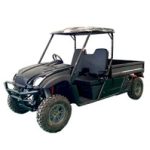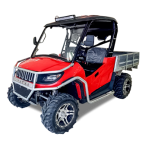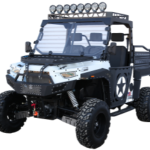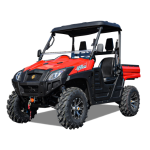
As global electrification accelerates, electric UTVs (Utility Utility Vehicles) are replacing traditional fuel models at an unprecedented rate, becoming the next generation of tools for agriculture, forestry, industry and outdoor recreation. Compared with fuel UTVs, electric models have significant advantages in terms of noise control, operating costs, zero-emission compliance and routine maintenance, and are profoundly changing the logic of purchasing decisions in the European market.
This article summarizes the top 15 electric UTV manufacturers currently active in the European market, providing a comprehensive reference guide for industry buyers, dealers and end-users, from technology routes, product matrices to market layouts.
Founded in 1954 and headquartered in Medina, Minnesota, Polaris is one of the world’s largest manufacturers of off-road vehicles. Polaris has pioneered the electric UTV segment with the introduction of its flagship electric model, the RANGER XP Kinetic, featuring a 110 hp permanent magnet AC motor, 140 lb-ft of torque, and a 29.8 kWh lithium-ion battery pack (Flagship) with an officially claimed range of up to 80 miles.
The company is deeply integrated into the European market with operations in several countries, including Norway, France, Sweden, Germany and the U.K. Polaris offers solutions for a wide range of scenarios, including agriculture, ranching, industry and recreation, and its commercial version, the Pro XD Kinetic, is specifically designed for jobsite operations, with maintenance costs reduced by approximately 60 percent compared to a comparable gasoline-powered vehicle.RANGER XP Kinetic The RANGER XP Kinetic is equipped with the RIDE COMMAND 7-inch infotainment system, which supports GPS navigation, vehicle diagnostics, and formation ride tracking, and is regarded as the “gold standard” for electric UTVs in the industry.
– Leading technology: electric drive system developed in cooperation with Zero Motorcycles, with three driving modes (Eco+, Standard, Sport), balanced range and performance.
– Low maintenance costs: planned maintenance costs are approximately 70% lower than for similar gasoline vehicles, with fewer parts and longer uptime.
– Mature European channels: well-established dealer network and after-sales system in Norway, France, Germany, UK, Sweden, etc.
– Complete product line: from consumer-grade RANGER to commercial-grade Pro XD Kinetic, covering a variety of application scenarios
– Higher price point (over $37,000 for the flagship version), high barrier to entry and expensive for European consumers.
– Large battery version adds 228 pounds to the vehicle’s overall mass, which affects maneuverability in some terrains
– Actual range in extreme off-road or hilly scenarios is much lower than the official nominal value.
Founded in 1942 and headquartered in Valcourt, Quebec, Canada, BRP (Bombardier Power Products) owns well-known brands such as Can-Am, Ski-Doo and Sea-Doo. In the field of electrification, BRP is currently the only powersports vehicle manufacturer that has completely developed its own electric drive system, covering full vertical integration of battery packs, inverters, motors, chargers and control software.
The 2026 Can-Am Outlander Electric is the brand’s first mass-produced electric ATV, featuring the Rotax E-Power modular powertrain (the same model used in electric motorcycles and snowmobiles), 47 hp, 72 Nm of torque, a towing capacity of up to 830 kg, an 8.9 kWh battery that supports an approximate 80 km range, and a Level 2 charging BRP has a strong brand presence and distribution network in Europe that continues to drive its cross-category electrification strategy.
– The only full-stack in-house electric drive: complete control of the powertrain technology path, product consistency and scalability.
– Leading traction: Outlander Electric’s traction capacity exceeds that of the highest-specification gasoline vehicles in its category, with outstanding performance in working conditions.
– Strong brand: Can-Am is widely recognized in the European racing and industrial markets and has a mature distribution network.
– Fast charging: 50-minute Level 2 fast charging (20% → 80%), practicality is strong
– The electric UTV (Defender electric version) has not been officially released for mass production, and the electric product line is still dominated by ATVs.
– The strategic layout of cross-category electric products is relatively decentralized, and there is confusion in consumers’ perception.
– After-sales support for Canadian brands in some European markets still needs to be improved.
Segway Powersports is an off-road sports vehicle brand under Segway-Ninebot, headquartered in Texas, USA, with R&D and manufacturing done in China. Segway Powersports takes “intelligent electric off-road” as its core positioning, focusing on the middle and high-end electric and hybrid UTV market, targeting young outdoor players in Europe and the United States, as well as purchasers of intelligent scenic spots and intelligent parks.
Segway’s Villain series is its most representative product line, which adopts the industry’s first hybrid UTV platform – equipped with a hybrid system of a 1000cc liquid-cooled parallel twin-cylinder engine and an electric motor, with a combined output of 196 hp, and a purely electric operating capability.
Segway has regional sales organizations in several European countries (UK, France, Germany, Austria, etc.) and will unveil a new generation of high-torque electric UTVs with a maximum torque of 2,100 Nm at the Milan Motor Show 2024, while its UT tool lineup focuses on park and scenic area commercial scenarios.
– Technological innovation: the first SSV hybrid platform, combining the advantages of electric quietness and fuel remoteness.
– Localized European operations: regional teams in the UK, France, Germany, Austria, etc. for efficient service response.
– Strong sense of technology: Intelligent connectivity, advanced suspension tuning, and exquisite interior, matching the aesthetics of young European consumers.
– Price competitiveness: compared with the mainstream brands in North America, Segway has a certain price advantage in the same performance range.
– Short history of the brand, after-sales parts system and long-term reputation for reliability are still being accumulated.
– Hybrid powertrain adds mass (over 2,200 lbs.), affecting agility in some light off-road scenarios
– Limited number of dealers in North America and some parts of Europe, lack of maintenance accessibility
Founded in 1837, John Deere is one of the world’s most influential manufacturers of agricultural machinery and construction equipment. Its Gator UTV series has become an iconic tool truck for the agricultural, forestry and industrial scenes since its first introduction in 1992.
In the electrification segment, John Deere has introduced the Gator HPX615E and HPX815E electric versions, featuring a heavy-duty suspension design with a 1,000-pound cargo capacity, a 1,300-pound towing capacity, and a 16.3-cubic-foot cargo volume.
John Deere has deep roots in the European agricultural market, with a highly recognizable green brand and a network of dealerships throughout Europe that have built up a large number of loyal customers in the fields of agriculture, horticulture and estate management. In recent years, the company has been recognized by the Iron Prize for Innovation for the Gator GX and GX Crew electric series, and continues to promote the electrification of agriculture.
– High level of brand trust: more than 100 years of customer relations and branding in the European agricultural market.
– Strong industrial and agricultural suitability: products are designed for heavy-duty operation and have a strong reputation for durability and reliability in the industry
– Well-established spare parts and service network: original spare parts and professional after-sales service provided by agricultural dealers all over Europe.
– Multi-functional cargo box design: removable cargo box flap, one-handed opening and closing of the tailgate, high operational efficiency.
– Some electric Gator models are 2WD, which limits off-road capability and makes them unsuitable for complex terrain.
– Top-of-the-line Gator costs more than $41,000, which is a premium for the electric version, making it more affordable for small- and medium-sized farmers
– Top speed is around 24.5 mph, not suitable for scenarios that require high maneuvering speeds.
Founded in 1890 and headquartered in Osaka, Japan, Kubota is the world’s leading manufacturer of agricultural machinery and industrial equipment, with operations in over 100 countries.
Its RTV (Rough Terrain Vehicle) range of UTVs is renowned for its ruggedness, power and outstanding agricultural suitability for a wide range of farm, estate, horticultural and industrial applications.
Kubota has a well-established distribution and service network in Europe and is continuing its transition to electrification. With more than 50 accessories and attachments ranging from winches to snow removal equipment, its RTV range offers European users a highly customizable solution for their operations, and a standard towing capacity of 2,000 lbs (1,550 lbs at ramps) gives it a competitive edge in agricultural heavy-duty scenarios.
Kubota also sells exclusive versions of its UTV products under the Quadix brand name in selected European markets.
– Extreme durability: industrial-grade manufacturing standards, long machine life, and high acceptance by European agricultural users
– Extensive accessory ecosystem: over 50 official accessories to support highly customized agricultural, forestry and industrial applications.
– Global service system: authorized maintenance network covering 100+ countries, guaranteed parts supply.
– Exclusive design for agricultural scenarios: Suspension tuning, center of gravity distribution and load capacity are all optimized for farm operations.
– Pure electric UTV product line is still incomplete, and is still dominated by traditional power, the pace of electrification transition is relatively slow.
– The overall vehicle weight is relatively heavy, which makes it slightly less maneuverable in European mountain farms with narrow or complicated terrain.
– Compared with Polaris, Can-Am and other pure off-road brands, the positioning of sportiness and recreation is weak.
Founded in 1989 and headquartered in Hangzhou, Zhejiang Province, China, CFMOTO is China’s first independent brand to realize large-scale export of high-end UTVs to mainstream markets in Europe and America.
The company has six overseas regional marketing centers in more than 80 countries and regions, including Europe, North America, Australia, etc., and has established a complete industrial chain of vehicle R&D, frame manufacturing, three electric systems tuning and vehicle testing. In terms of electrification layout, CFMOTO launched CFMoto U6 electric side-mounted UTV and CForce EV110 children’s electric ATV, actively expanding the all-electric product line.
In 2024, CFMOTO signed a multi-year global license agreement with Textron for the Arctic Cat brand, acquiring the right to design, manufacture and sell Arctic Cat-branded ATVs and SxSs in North America and part of the European market, which further enhances its brand power in the western market.
– Leading price/performance ratio: Pricing is usually lower than European and American competitors in the same performance range, which is attractive to price-sensitive European buyers.
– Localization in Europe: With regional marketing centers and authorized dealers in many European countries, the channel continues to expand.
– Arctic Cat brand support: Authorized use of the historical North American off-road brand helps to open up the trust of European consumers.
– Speed up electrification: U6 and other all-electric UTVs have entered the mass production stage, and the completeness of the product line continues to increase.
– Overall brand recognition in Europe is still lower than Polaris, Can-Am and other established manufacturers.
– The after-sales parts and service system of electric products is still not perfect in some European regions.
– As a Chinese brand, it may face consumer perception bias and compliance threshold challenges in some European countries.
Hisun Motors is a leading Chinese manufacturer of ATVs/UTVs, which are finalized in McKinney, Texas, and sold under the Hisun brand in Europe and the United States. The company also manufactures OEM UTV products for major retailers.
In the electrification segment, Hisun has launched the Sector E1 electric UTV, which offers a 48V AC motor, 30 hp power, ~42 mile range, standard roof, windshield, winch, 26-inch tires, aluminum wheels, mirrors, and a tiltable cargo box (500 lb. load capacity) at an affordable price point (~USD 10,999) that outperforms competing vehicles at the same price point in terms of feature richness.
Hisun continues to deliver competitive electric off-road products to the European market with its large-scale production capacity and mature export system in China.
– Friendly entry price: the Sector E1 is one of the lowest priced full-featured electric UTVs on the market for European buyers on a limited budget
– Rich standard configuration: out of the box, no need to add additional accessories, the configuration is far more complete than competitors in the same price range.
– Strong cost control ability: Relying on China’s large-scale manufacturing, it offers an expected price-performance ratio within the price range.
– Multi-market channels: authorized dealers in Europe and the United States, and large retailers to enhance the coverage of the channel
– Range of about 42 miles, which may be insufficient for continuous operation in European agriculture or forestry scenarios.
– Brand positioning is not high-end enough to attract European high-end consumers who are in pursuit of quality.
– The after-sales maintenance and parts supply system has limited coverage in some European countries, and service consistency is a potential problem.
Founded in 1878 and headquartered in Kobe, Japan, Kawasaki is the world’s leading integrated heavy industry and motorcycle manufacturer.
Its Mule series of UTVs is regarded as the founding father of the modern utility UTV, while the Teryx series focuses on recreational off-roading, and its “Kawasaki Strong” brand credo emphasizes superb durability and zero-failure reliability. flagship models, such as the Mule PRO-DXT, feature a TransCab variable cabin design that allows them to be used for 3-passenger + large cargo and 6-passenger + large cargo bikes in about a minute. + large cargo box and 6-person + short cargo box in about a minute, with a towing capacity of 2,000 lbs.
In the European market, Kawasaki has a solid customer base in agriculture, landscaping, and infrastructure maintenance with its established motorcycle distribution network and deep industrial brand image, and is actively exploring electrified product layouts.
– Extreme durability: “Kawasaki Strong” is more than just a slogan, and the Mule series is known for its decades-long track record of stable operation.
– Patented TransCab design: The unique variable cockpit feature greatly enhances operational flexibility and personnel transportation efficiency.
– Mature European distribution network: a well-established sales and service channel in all European countries based on the motorcycle business.
– Engineering reliability: over-specification design of components, low failure rate and excellent total cost of ownership (TCO) performance
– Pure electric UTV product line is still to be completed, lagging behind competitors such as Polaris and BRP on the electrification track.
– Less sporty and innovative than Can-Am, Polaris, etc., and less capable of attracting younger consumers
– The top speed is about 30 mph (for gasoline vehicles), the overall speed is on the low side, which is not suitable for scenarios that require fast movement.
Alkè is a local Italian manufacturer specializing in electric industrial transport vehicles, headquartered in Italy, with all products 100% made in Italy.
The company specializes in high-performance electric utility vehicles (ATX series) with high-torque AC motors and CURTIS controllers, with a rated power of 8 kW and peaks of up to 14 kW, which can cope with terrain with 35% gradients. The standard range is up to 150 km for all-weather continuous operation.
The Alkè’s regenerative braking system recovers braking energy and reduces brake pad wear, and the vehicle can be recharged overnight from an ordinary household outlet without the need for a dedicated charging post. With a maximum load capacity of 1,630 kg and a maximum towing capacity of 4,500 kg, and hundreds of vehicle configurations (van, side dump, mesh side panels, tarpaulin, etc.), the Alkè is one of Europe’s most iconic local power utility vehicle brands and is widely used in airports, industrial parks, hospitals, scenic spots, agriculture and municipal areas.
– European local brand: 100% Italian design and manufacture, fully compliant with European standards, with natural localization advantages.
– Superior load and towing: 1,630 kg load and 4,500 kg towing capacity, far more than most competitors.
– Excellent range: 150 km for a full day’s industrial work without the need to recharge.
– Highly customizable: Hundreds of cabin configurations to meet the specific needs of different industries.
– Positioned towards heavy-duty industrial logistics, weak in recreational off-road features, not suitable for sporty users
– Italy is the main market, with limited brand awareness and distribution in other European countries.
– The price range of the products is on the high side, mainly oriented to commercial purchases, which makes it difficult for individual consumers to reach them.
Lvcci & Kingwoo consists of two affiliated companies–HENAN KINGWOO ELECTRIC VEHICLE MANUFACTURING CO., LTD. and HENAN LVCCI ELECTRIC VEHICLE MANUFACTURING CO. HENAN LVCCI ELECTRIC VEHICLE MANUFACTURING CO., LTD.), both located in Zhumadian City, Henan Province, China. Founded in 2014, the company has more than 10 years of experience in manufacturing electric UTVs, with more than 100 skilled employees and an industrial park of over 200,000 square meters. The flagship product is the RUE725 series, which covers 2WD (RUE725/RUE725D) and 4WD (RUE725X/RUE725DX/RUE725DX-B) models with power configurations ranging from 5 kW to 25 kW (EV-25-01 high power version), a voltage platform of 72V, and support for 2- or 4-seat layouts and large cargo platform variants.
The RUE725 series has passed the EU EEC/COC certification and all parts E-MARK certification, and is one of the few Chinese electric UTVs that can be legally driven on European highways, and at the same time has an independent WMI/VIN code for complete vehicle traceability.
The products are exported to more than 50 countries and regions, and have agents in core European markets such as Holland, Spain, Poland, Germany, UK, etc. They are widely used in agriculture, ranching, forestry, industrial transportation, construction and tourist attractions and other scenarios.
– Complete European compliance certification: RUE725 series have passed EEC/COC certification for the whole vehicle and E-MARK certification for all parts, and can be legally licensed and driven on European roads, which is one of the highest compliance barriers and most complete certifications among similar Chinese-made brands.
– Focus on electric UTVs: Since its inception, the company has focused on pure electric UTVs, with no historical baggage of fuel products, and ten years of dedicated cultivation has resulted in continuous improvement of product maturity and stability.
– Local agent network in Europe: We have authorized agents in key European countries such as Holland, Spain, Poland, Germany, and the United Kingdom, which provides us with basic local service response capability.
– Wide product line and strong customization: providing a full power range from 5 kW to 25 kW, supporting a variety of configurations such as 2-seater/4-seater/large cargo platform, and customizing specifications such as upper speed limit and battery type (AGM/Li-ion) according to customers’ needs.
– Cost-effective: compared with Polaris, Can-Am and other European and American competitors, the price advantage is obvious, suitable for budget-sensitive European agricultural and industrial buyers.
– Brand awareness in the European market is still in its infancy, consumer awareness is much lower than the North American and Japanese competitors, the need for a longer period of market education investment
– European after-sales service system is still not perfect, some regional agents of the maintenance technology capacity and the depth of spare parts inventory needs to be strengthened.
– The sense of technological innovation and high-end image of the machine is insufficient, and it is difficult to enter the European high-end consumer market that has requirements for brand premium.
Club Car is a leading U.S. manufacturer of electric light-duty transportation, currently under the umbrella of Platinum Equity, formerly known as Ingersoll Rand.
Club Car has a long history in the European market for golf courses, resorts, airports, college campuses and industrial parks, and its Carryall line of electric utility vehicles is known for its durability, low maintenance and superior handling capabilities. In the European market, Club Car has a solid market share in real estate management, hotel properties and industrial facilities with a strong commercial rental and purchasing network. The products are available in a wide range of voltages (48V to 72V) and battery technologies (lead-acid/lithium-ion), and support flexible configurations ranging from small two-seat models to multi-seat versions, meeting the needs of European commercial customers of different sizes and budgets.
– Deeply cultivated in the commercial market: high penetration rate and brand recognition in European hotels, scenic spots, airports and other commercial scenarios
– Low total cost of ownership: high durability and low maintenance requirements give it a clear economic advantage in commercial high-volume purchasing.
– Multiple configuration options: support for a variety of battery technologies and body configurations to meet the customization needs of different European commercial users.
– Perfect European service network: years of commercial service system in Europe guarantees quick response.
– Product positioning is light commercial, weak off-road performance, not suitable for forestry, agriculture and other heavy-duty outdoor work scenes
– Limited attraction to the consumer side (individual users), insufficient brand entertainment attributes
– Compared with Polaris and Can-Am, the image of technological innovation is more conservative, making it difficult to attract young off-road users.
Founded in 1955 and headquartered in Iwata City, Shizuoka Prefecture, Japan, Yamaha Motor (Yamaha Motor) is a globally important manufacturer of motorcycles, ATVs, UTVs and outboards. Its Viking, Wolverine and RMAX series of UTVs are well known in Europe for their high-quality manufacturing processes, powerful and reliable engines and comprehensive feature sets.
Yamaha is actively engaged in the electric ATV/UTV segment and plans to expand its pure electric product line in response to increasingly stringent emissions regulations in Europe. The company has a well-established network of motorcycle and watersports dealers in Europe with high penetration rates.
Yamaha’s products are in steady demand in Europe’s agricultural, recreational and professional off-road markets, and the brand’s core competency is its refined engineering quality and Japanese-style manufacturing reliability.
– Japanese quality craftsmanship: excellent manufacturing quality and strict quality control system, with a reputation for reliability.
– Comprehensive European distribution network: Dense European channels based on motorcycle business, no worries after sales.
– Multi-scenario product coverage: from agricultural utility vehicles to sports and recreational SxS, meeting the needs of different European users.
– Highly recognized brand: enjoys a high level of consumer trust in Europe, particularly among young riders
– Pure electric UTV products are still in the R&D/planning stage, lagging behind Polaris and Can-Am, which are already in mass production.
– Conservative on the electrification track, may miss the early market window of the European electrification policy dividend.
– The price of some models is on the high side, and the price/performance ratio is not outstanding compared to competitors with the same performance.
Linhai Group is one of the largest ATV/UTV manufacturers in China and owns about 53% of the Asian UTV market according to industry data.
The Group has a dual-track product line for agriculture and recreation as its core, and a large number of products are exported to Europe, North America, Southeast Asia and other markets, and have passed the European Union CE certification and multi-national EMC certification.
Linghai is mainly engaged in OEM (OEM production) and white label supply mode in Europe, providing manufacturing support for a number of European brands, while actively launching its own brand of electric UTV products, covering a wide price range from entry-level to mid-range. The company has complete vehicle R&D and mass production capabilities, with an annual production capacity of tens of thousands of units, and is an important supply chain node in the European electric UTV market.
– Scale production advantage: Strong production capacity ensures delivery efficiency and supports large-volume European purchase orders.
– Super cost-effective: With the cost advantage of Chinese manufacturing, we can provide electric UTVs with basic functions at a low price.
– Flexible OEM cooperation: OEM for European brands, can be customized according to customer needs, high flexibility
– Proven in Asian market: accumulated a lot of user feedback in Asian market, high product maturity.
– Own brand in the European market is less well-known, consumer awareness needs to be built up in the long term.
– Insufficient technical content and high-endization of products, difficult to compete with Polaris, Can-Am and other top brands.
– Weak after-sales service system in Europe, consumers may face difficulties in maintenance when encountering malfunctions.
Founded in 1963 and headquartered in Kaohsiung, Taiwan, KYMCO is an important manufacturer of motorcycles, ATVs and UTVs in Asia, with operations in more than 100 countries worldwide.
KYMCO is known for its “cost-effective and durable” UTV product line covering agricultural, industrial and recreational scenarios. KYMCO has been actively laying the groundwork for electrification, with its SUPER NEX and iONEX series being purely electric products, and has extended its electrification strategy to the off-road vehicle sector.
KYMCO has a mature motorcycle distribution network in Europe, and its products have passed a number of EU certifications, and have a certain degree of popularity in the markets of France, Italy and Spain, which are major agricultural countries. In recent years, KYMCO has continued to increase its investment in the European market, launching electric two-wheeled and multi-wheeled products that comply with European regulations.
– Cost-effective: the pricing of the same performance is usually lower than the mainstream competitors in Europe and the United States, with obvious competitiveness in the entry-level market.
– Solid European channel base: European distribution network established by motorcycle business allows for rapid introduction of UTV products.
– Stable quality in Asian manufacturing: Taiwan manufacturing system has strict quality control and the stability of the whole machine has been verified by the market.
– Multi-country EU certification: products meet European emission and safety standards, with low compliance threshold.
– UTV brand awareness in Europe is much lower than competitors such as Polaris, Can-Am and Kawasaki.
– Limited choice of pure electric UTV models and insufficient product line depth to meet the diversified European market demand.
– European high-end consumers are less likely to recognize the premium price of Taiwanese brands, and brand upgrading is a big challenge.
Volcon, an Austin, Texas-based manufacturer of all-electric off-road vehicles founded in 2020, is an emerging player in the electric UTV circuit.
The flagship Volcon Stag is an all-electric UTV designed for outdoor workers and off-road enthusiasts with strong off-road performance and utility features.Volcon’s electrified DNA has been etched into the brand’s bones since its inception, with no fuel history baggage, and a product architecture completely re-engineered around the benefits of electric drive.
The company has promoted its electric product line in the European market and is listed in industry reports as one of the major players in the European electric ATV/UTV market. Despite its relatively small size, the company’s electric off-road-focused positioning and Silicon Valley-style tech company image has generated some attention among emerging European consumers.
– Purely electric design: Designed from the ground up around electric strengths, with no compromises to traditional fuel architecture and better electric drive efficiency.
– Outstanding off-road performance: Stag models have the best terrain adaptability and traction of any electric UTV in their price range.
– Fresh brand image: purely electric and sustainable concepts are highly compatible with the environmental values of young European consumers
– Fast technology iteration: startups have a short decision chain, fast response to market feedback, and fast product iteration.
– Small size and limited capitalization, uncertainty of financial sustainability, and concerns of European customers about the long-term survival of the brand.
– The European distribution and after-sales network is extremely limited, making it difficult to guarantee maintenance after purchase.
– Compared with Polaris, Can-Am and other mature brands, there is a significant gap in brand awareness and market reputation.
– Single product line, lack of multi-vehicle matrix to support different user needs.


-150x150.png)