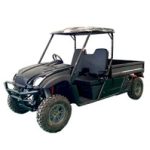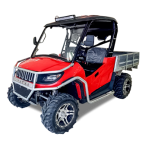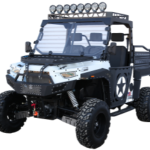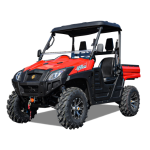
With the development of domestic agricultural scale and intensification, the shortcomings of the traditional farming model have become more and more prominent. Whether it is a small or medium-sized family farm, or a large planting base, large-scale animal husbandry ranch, farmers are facing similar operational difficulties. Large areas of farmland manual inspection efficiency is extremely low, round-trip transportation of agricultural materials consumes a lot of time and physical strength, complex slopes, muddy plots of large-scale agricultural machinery can not be driven into, relying solely on manual and traditional agricultural machinery is difficult to balance efficiency and cost.
Whether it is a mountain orchard, flat farmland, ecological plantation, or cattle and sheep ranch, side-by-side UTVs can effectively simplify the operation and maintenance process, reduce the burden of labor, and improve the overall operational efficiency. In order to help farmers fully understand the value of agricultural UTVs, distinguish the differences between models, and accurately purchase suitable equipment, this article will comprehensively analyze the core advantages of side-by-side UTVs, highlights of electric vehicle upgrades, real farm application scenarios, as well as professional purchasing skills.
In the purchase of agricultural equipment, many novice farmers are very easy to confuse UTVs, ATVs and other equipment. Various types of off-road equipment look similar, but the positioning, performance, and application scenarios are very different, and choosing the wrong model will not only fail to improve operational efficiency, but also increase the cost of purchasing the machine and the burden of operation and maintenance. In fact, side-by-side UTVs are multifunctional off-road equipment designed for practical working conditions, also referred to as SxS and SSV in the industry, and officially defined as multifunctional task vehicles, which are currently the most suitable for lightweight and high-frequency operations in modern agriculture.
From the perspective of naming core features, the most iconic design of the side-by-side UTV is the **side-by-side double and multiple seats**, which completely distinguishes it from the traditional straddle-type off-road equipment. At the same time using the same car steering wheel, throttle brake foot pedal control structure, the operating logic and household cars are identical, the threshold for getting started is extremely low. Farmers who have not been in contact with off-road equipment can quickly get started with independent operations by simply familiarizing themselves with the operation process, without the need for professional driving skills.
In terms of safety structure design, the agricultural side-by-side UTV adopts a high-strength integrated anti-roll bar, and the whole frame is sturdy and stable, which can effectively resist the safety risks brought about by bumps in the field and slight rollover. Most of the models support flexible retrofitting accessories, including closed doors, high-strength roofs, windproof and rainproof windshields, and seat belt assemblies, etc., to ensure the safety of farmers’ outdoor work in an all-round way, and to adapt to complex outdoor working conditions.
In terms of body structure and passability, the side-by-side UTV is equipped with a four-wheel and above stability layout as standard, and the chassis has been professionally tuned with sufficient ground clearance, which is specially optimized for the complicated terrain such as muddy roads, gravel slopes, and concave and convex dirt roads in the farmland. Compared with ordinary vehicles, the body stability is stronger, the sense of bumps is weaker, and it is not easy to break down when traveling for a long time in the field, and the durability is fully adapted to the needs of high-frequency operations on farms.
In terms of core practical performance, the agricultural UTV abandons the speed-prioritized design of leisure off-road vehicles and focuses on **heavy-duty practical attributes**. The model comes standard with an exclusive enclosed cargo box, which supports self-unloading function and has excellent loading capacity, and at the same time, it is reserved for professional trailer interface, which can be adapted to all kinds of agricultural implements. The conventional agricultural vehicle model supports 2 to 6 people to ride at the same time, which fully meets the travel needs of farm group inspection, team operation and maintenance, and multi-people cooperative operation.
ATV is also commonly referred to by farmers as four-wheeled motorcycle, beach car, the use of traditional cross-rider design and handle control, the core advantage of small size, flexible steering, low price. However, the short board is very obvious, mainly single rider, rarely support two-person ride, load capacity is very poor, body stability is insufficient, there is no perfect safety protection structure, only suitable for ultra-simple short-distance field inspection, completely unable to bear the core agricultural work such as transportation, towing, teamwork.
Leisure cross-country models UTVs are specially designed for outdoor play and cross-country adventure, with the design core focusing on driving speed, shock absorption performance and handling fun. This type of vehicle body lightweight, narrow cargo box, weak load, body structure is not wear-resistant, only suitable for flat off-road surface for short-term play. If used for a long time in heavy load, mud, bumpy farm conditions, it is very easy to body deformation, damage to accessories, power attenuation and other problems, durability is completely substandard.
Farm-specific side-by-side UTVs are professional models optimized for agricultural scenarios in depth, which are fundamentally different from the above two types of equipment. The manufacturer has strengthened the durability of the body frame, the stability of low-speed and heavy-duty, and the ability to resist abrasion in the field, while retaining the flexibility and maneuverability, taking into account the four core functions of multi-people, heavy-duty cargo, trailer operation, and implement expansion, and it is the only off-road operation equipment that is suitable for daily operation and maintenance of farms in all scenarios at present.
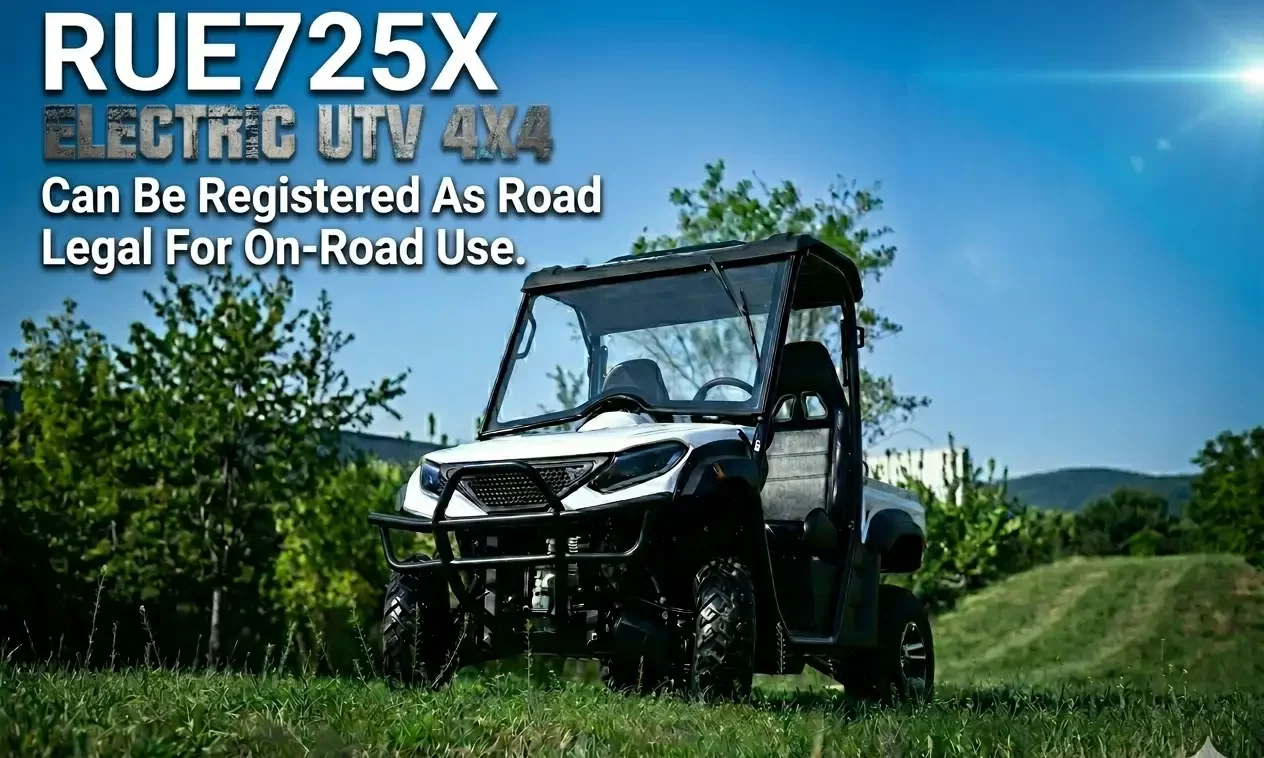
The core development logic of modern agriculture is to reduce costs and increase efficiency by replacing manual labor with mechanical equipment to reduce labor dependence and improve operational precision and efficiency. For the vast majority of farms, 90% of daily work is short-distance, high-frequency, trivial and repetitive operations, large-scale agricultural machinery is too big and too high in energy consumption, and small-scale equipment is not capable and inefficient. The emergence of side-by-side UTVs perfectly matches the operational rhythm and working conditions of farms, and has become an indispensable working tool for farmers.
Transportation of agricultural materials is the daily essential work of the farm, and also the most labor-intensive part. The feed and hay needed for daily farming, seeds, fertilizers and pesticides needed for planting, fencing building materials, hardware tools and machinery accessories needed for farm operation and maintenance, as well as fruits, vegetables and food crops after harvesting, all need to be frequently transferred across regions. Artificial carts, hand-carrying and shoulder-carrying transportation methods are not only inefficient, but also consume a lot of manual labor and increase labor costs.
Agricultural side-by-side UTVs are targeted to solve the problem of farm transportation, and the whole series is equipped with high-strength and thickened dumping box as standard, which is resistant to abrasion and deformation, and is suitable for gravel, fertilizer, feed and other types of material loading. Mainstream agricultural models can load up to 1,000 pounds or more, and the high-fitting professional agricultural models have even stronger loading performance, which can complete the transportation of multiple batches of materials at one time and significantly reduce the number of round trips.
In addition to autonomous loading, UTVs also have excellent towing capabilities, with conventional models towing up to 1,500-2,500 lbs. It can easily tow small transport trailers, agricultural fertilizer spreaders, high-pressure sprayers, soil deep cultivation of small machines and other ancillary equipment, to achieve “one vehicle with multiple functions”. Compared with large tractors, the UTV does not require cumbersome warm-up and start-up and commissioning processes, and can be used over short distances with very low energy consumption, which does not result in excessive loss of equipment and completely solves the pain point of uneconomical short-distance operation of traditional agricultural machinery.
Most of the farms and ranches in China have complex terrain conditions, not all of which are leveled arable land. There are a lot of undulating hills and slopes in mountain farms, open farmland is easy to be muddy and slippery after rain, forest plantations have narrow roads and gravel everywhere, and remote pastures are even more pitted and overgrown. Ordinary family trucks and large tractors with wide bodies and fixed chassis are unable to enter such complex areas, resulting in many remote plots of inspection, operation and maintenance, and transportation in a long-term blank state.
Agricultural side-by-side UTVs are designed for complex outdoor terrain, equipped with a professional chassis with high ground clearance, non-slip deep off-road tires and high-strength durable suspension system, as well as switchable four-wheel drive mode. In the face of muddy paddy fields and plowed fields after rain, rugged and steep mountain slopes, narrow and winding field paths, and gravel-strewn forest plots, the vehicle is able to pass smoothly and evenly without skidding, trapping, or bottoming out.
Strong all-terrain adaptability allows farmers to cover every corner of the farm. In the past, remote plots that require more than half an hour on foot can be reached in just a few minutes with the help of UTVs, which significantly shortens the time for field inspection, equipment operation and maintenance, emergency repair and material distribution, and completely solves the industry pain points of difficult operation, difficult passage and low efficiency in complex terrain.
Farm operation and maintenance has obvious phased centralized operation needs, such as spring plowing and fall harvesting, seasonal maintenance, disaster investigation, fence maintenance and other scenarios, which require multiple staff members to work together to complete. Traditional single ATVs and electric tricycles can only accommodate single-person operations, and team trips need to be made in batches, wasting a lot of time and seriously slowing down the overall operation progress.
Agricultural side-by-side UTVs support 2 to 6 people to ride comfortably side by side, with reasonable seat layout and sufficient space, so that a long time ride will not produce congestion and fatigue. The whole vehicle is equipped with professional safety belts and high-strength anti-roll bar as standard, together with the automobile-style stability control system, compared with cycling off-road equipment, the safety and stability are greatly improved, effectively avoiding the safety hazards brought by bumps and side-slips in the field.
In the team operation scenario, the staff can arrive at the operation area together by car, synchronize the fence maintenance, livestock inspection, field survey, pest and disease investigation, equipment maintenance and other work, division of labor, synchronous promotion. Not only significantly improve the team’s operational efficiency, but also to ensure the safety of many people travel, is the scale of farms, cooperatives team operation and maintenance of the optimal travel equipment.
Many farmers have concerns about purchasing the machine, worrying about the single function of the special equipment, low utilization rate, idle waste. However, agricultural side-by-side UTVs have strong functionality and expandability, and they are not just transportation equipment, but also multifunctional operation platforms that can be expanded. By adding all kinds of special agricultural accessories and implements, it can flexibly switch operation modes and cover the whole scene of farm operation and maintenance work.
In the livestock breeding scenario, the UTV can transport bulk feed and drinking water supplies on a daily basis, complete the patrol and monitoring of the whole area of the ranch, and check the feeding, activity and health status of the livestock in real time. In the event of livestock injury, loss and other emergencies, the UTV can quickly complete the emergency transportation and rescue, and at the same time, it can undertake the daily maintenance of fences, water supply pipelines and power supply equipment to ensure the stable operation of the ranch.
In planting farmland scenarios, equipped with spraying equipment can complete large-area pesticide spraying, foliar fertilization operations, with fertilizer spreading equipment to achieve automated uniform fertilization. At the same time, it can clean up field debris, weeds, discarded straw, and maintain field irrigation pipelines and water-fertilizer integration equipment, taking into account planting, maintenance, cleaning and operation and maintenance work.
A qualified agricultural UTV can replace a variety of small agricultural equipment such as small transportation trucks, manual spraying equipment, simple operation and maintenance tools. It can effectively reduce the number of farm equipment purchased, save equipment storage space, and reduce the cost pressure of simultaneous operation, maintenance and repair of multiple pieces of equipment, thus truly realizing multi-purpose and high efficiency and cost reduction.
Cultivated land soil state directly determines crop yield, large freight vehicles, heavy tractors are extremely heavy, repeated crushing of field land, easily caused by soil crusting, soil compaction, destroying soil permeability and fertility. This not only affects the root growth of crops and reduces yield, but also requires a lot of manpower and machinery for deep plowing and loosening, which increases additional operation and maintenance costs.
The agricultural side-by-side UTV adopts lightweight body design, with a weight much lower than that of large agricultural machines, and is equipped with the exclusive turf cultivation protection mode. During driving, it can minimize the crushing damage to the surface soil, which is perfectly suited to the scenarios of seedling farmland, delicate crop planting area, ecological pasture, etc., to protect the ecology of arable land and avoid the secondary destruction of the land.
In terms of operating costs, the advantages of UTVs are even more prominent. Compared with large tractors and freight trucks, UTVs have extremely low fuel consumption, and electric models require only low-cost electricity. At the same time, the simple structure of the equipment, low failure rate, simple routine maintenance process, low price of spare parts, long-term high-frequency use of the operation and maintenance costs are extremely low, and can continue to reduce costs and increase efficiency for the farm to enhance the overall operating income.
With the rapid popularization of dual-carbon policy, green agriculture and smart agriculture, the shortcomings of traditional fuel farm machinery have gradually come to the forefront, with problems such as noise pollution, exhaust emissions, high energy consumption and high maintenance costs, which are no longer able to meet the development needs of modernized eco-farms. In this context, with the core advantages of ultra-low operation and maintenance costs, zero pollution, silent operation and intelligent adaptation, electric UTVs are rapidly replacing traditional fuel models and becoming the first choice for upgrading the equipment of modern farms, and they are the core equipment for the development of large-scale, refined and sustainable agriculture.
Traditional fuel UTVs are driven by fuel engines, which have complex internal structures and many accessories, and are prone to wear and tear during long-term high-frequency operations. Daily use not only requires continuous consumption of high-priced fuel, but also requires regular comprehensive maintenance, including the replacement of oil, oil filter, fuel filter, spark plugs, transmission fluid and many other maintenance items, annual maintenance costs, parts replacement costs remain high. Once the engine malfunctions, the maintenance cost is high and the maintenance period is long, which will directly delay the progress of farm operations.
The electric side-by-side UTV adopts pure motor drive, no fuel engine, no complex oil system, no combustion parts, from the root to reduce the probability of failure. Daily use only needs to consume low-cost electricity, and the cost of electricity is only about 1/5 of the cost of fuel for the same operating hours, which can save a lot of energy consumption expenses in the long run.
In terms of maintenance, electric UTVs do not need oil replacement, spark plug replacement, oil cleaning and other tedious maintenance projects, and only need to simply check the battery status, wiring interfaces, tire condition on a daily basis. Industry data shows that the lifetime maintenance cost of electric UTVs is about 70% lower than that of traditional fuel models, with almost no additional maintenance pressure. The long-term cost-effective advantage of electric UTVs is very significant, which is very suitable for daily high-frequency cyclic operations on farms.
Livestock breeding and ecological planting require a very high operating environment, and traditional fuel farm machinery produces a loud roar and a large amount of exhaust fumes during operation. High-decibel noise easily leads to stress reaction of livestock such as cows, sheep, poultry and dairy cows, resulting in decreased food intake, restlessness, reduced milk production and breeding, which directly jeopardizes the economic benefits of the farm. Tailpipe emissions will also pollute the air, soil and water in the field, which is not in line with the environmental standards of organic agriculture and eco-agriculture.
Electric UTV relies on the motor to run operations, almost zero noise, zero vibration, zero exhaust emissions during operation. The silent operation mode will not disturb the normal growth and rest of livestock, and can support the operation and maintenance of the ranch in the early morning, late at night, lunch break and other special times, without affecting the farming environment.
Meanwhile, the zero-emission and zero-pollution features perfectly fit the production standards of green farming and organic agriculture, which can help farms successfully pass the eco-agriculture certification and green food certification, and enhance the added value of agricultural products. Whether it is a suburban tourist farm, ecological plantation, or large-scale animal husbandry ranch, electric UTVs are able to adapt to the needs of the scene and help farms green and brand development.
Many farmers have cognitive misunderstandings about electric farm machinery, believing that electric equipment has weak power, insufficient climbing and heavy-duty capability, and is unable to perform heavy farm work. In fact, most of the farm work is low-speed heavy-duty, short-distance hauling, and hill-climbing conditions, which is exactly where the performance advantage of electric UTVs lies, and it is completely equal to or even better than fuel models.
The electric motor has the core characteristic of instantaneous full torque output, which can release the maximum power at startup, and the power response for low-speed traction, heavy-duty startup, and climbing steep slopes is faster and smoother, and there will not be the problem of power stagnation and unstable rotation speed of fuel models. In the high-frequency working conditions of farms with full loads of agricultural materials, hauling farm implements and climbing slopes, the operating performance is more stable and reliable.
In addition, the electric UTV is equipped with an intelligent regenerative braking system, which automatically recovers excess power during downhill, deceleration and braking, effectively extending the range. For the majority of small and medium-sized farms with daily short-distance cyclic operations, a single charge can meet the needs of all-day operation and maintenance, and the range is fully adapted to the actual working conditions of the farm, so there is no need to worry about the problem of insufficient range.
In order to promote the green transformation of agriculture, help rural revitalization, and reduce agricultural carbon emissions, all provinces and cities have introduced green agricultural equipment support policies. For electric agricultural UTVs, electric farm machinery and other green equipment, special purchase subsidies, tax breaks, local rebates, project support and many other preferential policies have been introduced.
Farmers who purchase regular brands and compliant models of electric agricultural UTVs can directly enjoy the policy dividends and significantly reduce the cost of equipment purchase. Combined with ultra-low energy consumption and operation and maintenance costs, the return on investment cycle of the equipment is greatly shortened, and the cost-effectiveness far exceeds that of traditional fuel equipment.
At the same time, electric UTVs are highly adaptable to the development trend of smart farms and precision agriculture, and the equipment can be seamlessly connected to intelligent sensors, GPS positioning systems, field monitoring equipment, and intelligent control terminals. It can realize the integration of field data collection, intelligent inspection and precision operation, and become the core mobile operation carrier of modern smart farms, helping farms upgrade digitally and intelligently, and enhancing core competitiveness.
The UTV can be used to assist in the operation and maintenance, service, and emergency functions, which can greatly improve the operation efficiency and service quality of the park.
It takes a long time to inspect large farmland manually on foot, and the compact body of side-by-side UTVs with strong four-wheel-drive passability allows them to quickly travel along field ridges, slopes, and irrigation canals. Mountain orchards, terraced tea gardens, narrow paths trucks can not pass, the UTV can reach each planting area, the first time to find the lack of water, disease, wildlife damage and other problems, to reduce crop yield losses. The electric model runs quietly and does not disturb pollinating insects during the flowering period of fruit trees, which is suitable for refined fruit and vegetable plantations.
Fertilizers, organic fertilizers, seeds, pesticides, mulch, bamboo poles, irrigation pipes, and other planting supplies are the daily high-frequency transportation materials for farms, and the UTV comes with a self-unloading cargo box with a load capacity of thousands of pounds, which can load many bags of agricultural materials in a single trip, replacing the repeated round trips made by manual wheelbarrows and tricycles. During harvest season, the UTV can transport baskets of fruits and vegetables and sacks of grain directly to the field, eliminating the need for large trucks to drive into arable land and crush the soil. With a small trailer, the carrying capacity is further increased, suitable for continuous planting base batch material dispatch.
Through the original factory expansion interface, UTV can be quickly installed with various types of field operation tools to realize multi-purpose use:
High-pressure sprayer: uniform spraying of pesticides and foliar fertilizers in small fields, slopes and orchards;
Fertilizer / spreader: slow-release fertilizer, lime, weed particles evenly sown;
Small snow shovel, harrowing machine: spring and fall land preparation, clean up the field debris straw;
Winch: towing fallen trees, stuck small farm machinery, cleaning ditches and debris. Small machines do not need to use heavy tractors to start, short-distance operations with the use of driving, significant savings in fuel and equipment wear and tear costs.
At present, the domestic agricultural UTV market is characterized by a wide range of models, with huge differences in performance parameters between leisure, sport, competitive and agricultural models. Many farmers lack experience in purchasing and blindly buy machines at low prices or follow the trend, which is prone to problems such as insufficient load, weak power, poor terrain suitability, and idle functions, which not only fails to improve operational efficiency, but also results in a waste of funds. Farmers must combine their own farm business, terrain, operational needs and budget to accurately screen the appropriate models.
Before purchasing the machine, first sort out their own core operational scenarios, targeted matching model performance. If the farm is mainly engaged in the transportation of agricultural materials, material transfer, harvesting and cargo transportation, the core demand is the load and towing capacity, and it is necessary to prioritize the screening of wide cargo box, high load parameters, and strong towing performance of the professional agricultural vehicle models.
If the farm is located in mountainous, hilly and muddy areas, it is mostly used for field inspections, terrain surveys and equipment repair, so it is necessary to pay attention to the chassis height, four-wheel-drive performance, cross-country passability and vibration-damping configurations of the model to ensure that it is suitable for long-term operations in complex terrain.
Scale farms and cooperatives need to work together as a team, so they should give priority to 4 to 6-seat models to meet the travel needs of many people; small and medium-sized family farms focus on single- and two-person lightweight operation and maintenance, and they can choose 2-seat streamlined models, which are more cost-effective. Daily short-distance, high-frequency, lightweight operation priority electric models, long-distance heavy-duty, all-weather high-intensity operation priority fuel, diesel models. At the same time, the comprehensive consideration of the purchase budget and long-term operation and maintenance costs, do not blindly pursue the low price, nor excessive stacking of redundant configurations.
Load and towing capacity: 800-1500 lbs load model is recommended for regular agricultural operations, which can meet the daily loading needs of feed, fertilizer, agricultural tools and harvested crops. The towing capacity is recommended to be above 1500 pounds, which can be adapted to most of the agricultural trailers, fertilizer spreaders, sprayers, small cultivating machines, and the heavy duty operation is stable and not strained, and the adaptability is wider.
Terrain-adapted configuration: for farm work, the model with switchable 4WD mode and high ground clearance chassis is preferred, taking into account off-road passability and driving stability. At the same time, the model with turf cultivation anti-compaction mode is preferred, which can effectively protect the soil structure of farmland and avoid damage to the cultivated land by crushing, and is suitable for all kinds of farmland and pasture scenarios.
Choice of power type: For daily short-distance inspection, light transportation, and fine operation and maintenance of farmland, electric UTVs are preferred, which are quiet and environmentally friendly, with very low energy consumption, simple operation and maintenance, and high cost performance. Long-distance traveling, high-frequency heavy-duty towing, all-weather high-intensity operation of large farms, you can choose fuel or diesel models, sufficient power reserves, no pressure on the range, suitable for heavy-duty working conditions.
Expansion and safety configuration: Priority is given to models with perfect accessory system and strong expandability, which can be flexibly retrofitted with tipping container, vehicle winch, agricultural spraying equipment, closed cab, lighting system and other accessories according to the needs. At the same time, it must be equipped with high-strength anti-roll bar, professional safety belt and other basic safety configurations as standard, to ensure the safety of outdoor work in complex working conditions in an all-round way.
With the core advantages of multi-function, high mobility, low damage, high safety and easy operation, side-by-side UTV precisely fills the operation blank of modern agricultural equipment. From the basic transportation of agricultural materials and field inspection, to the multi-functional farm machinery supporting operations and team operation and maintenance, a high-quality agricultural UTV can simplify the workflow of farms, significantly save labor costs and operating time, and continuously improve the productivity and overall economic benefits of farms.
In particular, the rapid popularization of electric side-by-side UTVs has completely solved the pain points of high energy consumption, high pollution and high operation and maintenance costs of traditional fuel farm machinery. The core advantages of quietness and environmental protection, ultra-low operation and maintenance costs, and intelligent adaptability perfectly fit the development direction of intelligent agriculture, ecological agriculture, and green agriculture, and are gradually becoming the mainstream choice for upgrading equipment on modern farms.


-150x150.png)