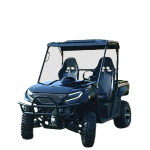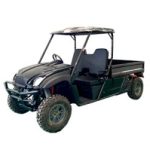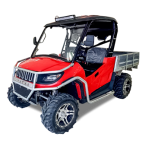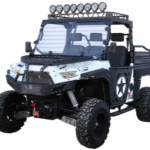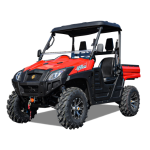
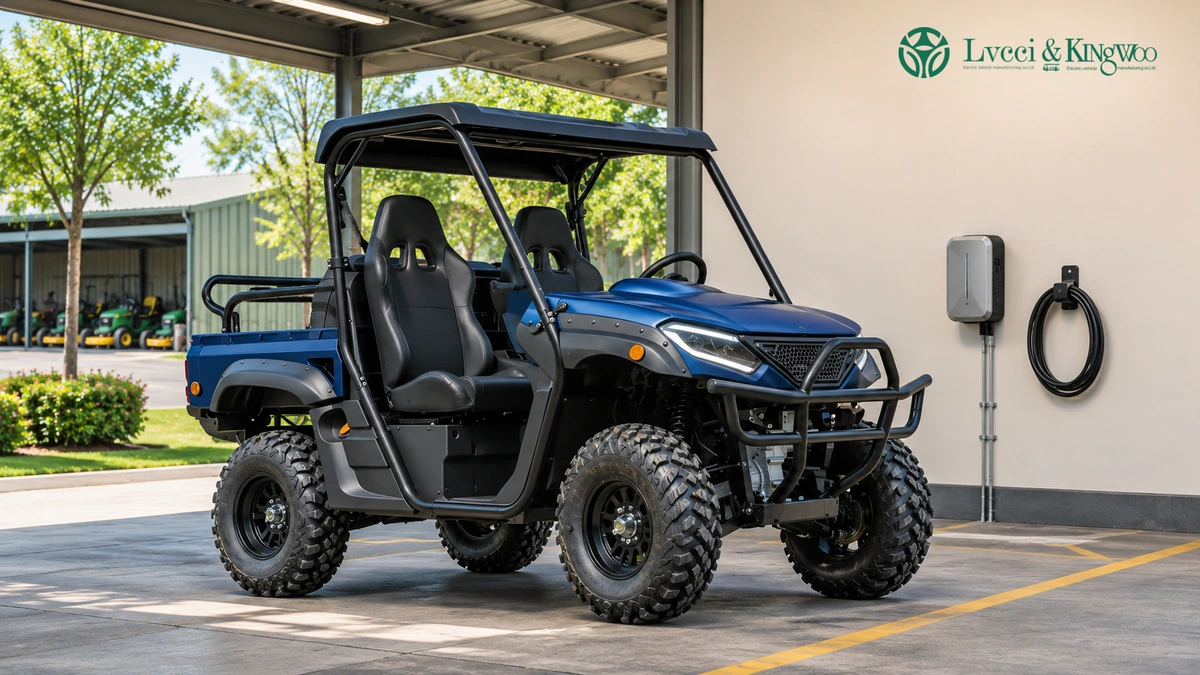
With the core advantages of flexible access, excellent load, strong terrain adaptability and multi-functional expansion, UTV it has become the core equipment for large-area site operation and maintenance, and can complete all-quarter operations such as material transfer, lawn maintenance, spray fertilization, snow removal and cleaning, and personnel commuting in one stop, thus perfectly making up for the short board of traditional equipment.
In this paper, combined with professional operation and maintenance scenarios, the selection points of special high-quality UTV for site maintenance are comprehensively disassembled, covering vehicle type classification, scene adaptation, power comparison, configuration priority, cost accounting and pit avoidance skills, helping government and enterprise units and operation and maintenance teams to accurately select products, adapt to the operation requirements of various large-area sites, and realize efficient operation and maintenance, cost reduction and efficiency increase.
The full name of UTV Utility Task Vehicle, also known as Utility Terrain Vehicle, is often referred to in the industry side-by-side ATV (Side-by-Side/SxS) it is a small all-terrain operation vehicle specially designed for outdoor operation and mild leisure. Different from ordinary off-road vehicles, UTV’s core positioning is “tool-based operation equipment” instead of pure entertainment transportation equipment. With its control mode, safety protection structure and modular expansion capability, UTV has become a special main equipment for large-area site maintenance.
In large-area site maintenance scenarios, UTV can replace labor, trucks and small tractors as core operation equipment. The core reason is that it perfectly fills the operation gap between large equipment and small tools, takes into account efficiency, cost, flexibility and scene adaptability, and 5 major core advantages to accurately match the pain points of site operation and maintenance.
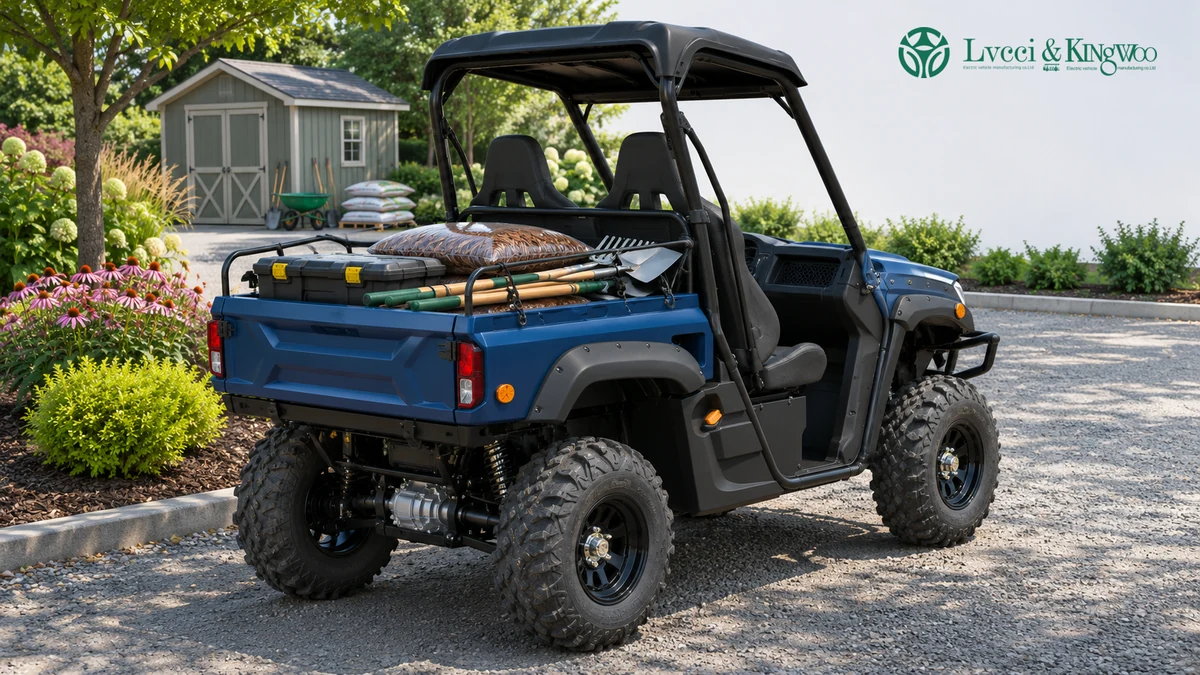
Material transfer is the core high-frequency work of site maintenance, including humus, gravel, lawn mulch, maintenance tools, garbage, fertilizer and so on. Professional operation-level UTV is equipped with high-strength steel cargo bucket. The load of mainstream models can reach 800-1500 pounds, and the load of heavy-duty versions exceeds 1500 pounds, which fully meets the transportation requirements of daily bulk materials and complete operation and maintenance tools. Most high-end models are equipped with hydraulic/pneumatic power-assisted dump hoppers, which eliminates the need for manual unloading, greatly reducing labor consumption and shortening operating hours.
The towing capacity is also the core highlight of UTV. The towing capacity of mainstream vehicles can reach 1100-2500 pounds, and the heavy-duty commercial version can exceed 2500 pounds. It can be stably matched with various operation and maintenance machines such as towed lawn mower, fertilizer spreader, spray equipment, small cleaning equipment, etc. It can complete material transfer and site maintenance operations in one stop and completely bid farewell to the inefficient mode of single manual operation.
The terrain of the large area site is generally complex, with smooth lawns and hardened roads, as well as complex areas such as muddy depressions, steep slopes, forest land, fences and shrub gaps. Large trucks and tractors have wide body and large turning radius, so they cannot enter narrow areas and have large dead weight, which can easily crush and damage the lawn and cause soil compaction.
However, UTV has compact body and extremely small turning radius, and can easily shuttle through narrow operation areas such as fence sidelines, forest trails, landscape cracks, etc. At the same time, it is equipped with 10-14 inch ultra-high no-load ground clearance, and is equipped with switchable four-wheel drive system, differential lock and professional lawn mode. When working on soft lawn and muddy ground, it can effectively reduce tire slippage and ground rolling, and protect lawn vegetation and soil structure to the greatest extent, perfect adaptation fine landscape site maintenance needs. With the special lawn mute tire, it can further reduce the ground pressure and eliminate the problem of landscape damage.
Professional site operation and maintenance includes four seasons of differentiated operations: weeding, fertilization, spraying, replanting, debris cleaning, snow cleaning in winter, and antifreeze maintenance on the road surface. Traditional equipment has a single function, different operation scenarios need to replace different equipment, procurement and maintenance costs are very high.
Operation-level UTV has strong accessory expansion capability and mature modular accessory ecology. It can quickly carry various accessories such as lawn mower, rake machine, medicament sprayer, fertilizer spreader, snow shovel, snow blower, vehicle-mounted winch, toolbox, high-pressure cleaning equipment, etc. A UTV can cover the whole scene of lawn maintenance, pest control, material transfer, site cleaning, winter snow removal, obstacle cleaning and other operations throughout the year. There is no need to repeatedly purchase multiple equipment, thus greatly reducing the input cost of equipment and improving the utilization rate of equipment throughout the year.
UTV, specially built for commercial operations, adopts high-strength frame, thickened body structure and durable transmission system, which is different from the lightweight design of entertainment UTV. It can be adapted to continuous operation scenarios with high load for several hours a day and throughout the year for a long time. It has strong anti-wear, anti-bump and anti-corrosion capabilities and is suitable for complex working conditions such as outdoor sun, rain, mud and low temperature.
Compared with large tractors and freight trucks, UTV has lower purchase price, less energy consumption, simpler maintenance process, strong versatility of accessories, and greatly reduced daily operation and maintenance costs. In particular, the new electric UTV does not need to replace consumables such as oil and filter elements, and its long-term economic advantages are more prominent. It is perfectly suitable for large-scale and normal operation and maintenance needs of large-scale sites such as government enterprises, parks and properties.
A single operation and maintenance of a large area often requires multiple staff to work together, and manual walking commutes are time-consuming and laborious, and tools and materials cannot be carried. UTV supports a team of 2-6 people to ride. It can transport operation and maintenance personnel, a full set of operation tools and maintenance consumables to each operation area at one time without multiple round-trip transportation, greatly shorten commuting time, reduce labor consumption, effectively improve the overall operation efficiency of the team, and adapt to the team operation and maintenance mode of large-area sites such as parks, parks and large pastures.
According to the operation intensity, scene characteristics, terrain conditions and environmental protection requirements of site operation and maintenance, UTV suitable for large-area operation can be divided into 5 categories. Each type of vehicle type has its own suitable scene, which accurately matches the core requirements of different users and avoids product selection redundancy or insufficient performance.
Full-size commercial UTV is a common benchmark model for site maintenance, and it is also the model with the highest utilization rate of municipal, park, large landscape, agricultural and forestry sites. This type of vehicle abandons the entertainment attribute and is completely designed with the operation ability as the core. The load, drag, terrain adaptation and expansion ability are full. The comprehensive performance is balanced and there is no short board. It is suitable for most conventional large-area site operation and maintenance scenes.
Core performance advantages: the cargo hopper has a load of 800-1500 pounds, a drag bearing capacity of 1500-2500 pounds, standard four-wheel drive, high clearance, hydraulic self-unloading cargo hopper, complete accessories ecology, adaptable to most operation and maintenance machines, solid body structure, and support long-term high-frequency continuous operation.
Benchmark recommended models: Kawasaki Mule Pro Series, John Deere Gator Full Size Series, Polaris Ranger XP Series, Bombardier Can-Am Defender HD Series, Kubota RTV Series.
Adaptation scene: daily material transfer, machine and tool towing, team commuting and normal maintenance operations in parks and green spaces, industrial parks, large estates, agricultural and forestry pastures and municipal public places are the preferred models with the strongest versatility and the highest cost performance.
Diesel-powered UTV is specially designed for high-intensity, long-term and heavy-duty operation scenarios. It is the core main equipment of large-scale agricultural and forestry sites, remote large-scale sites and commercial operation and maintenance teams. Compared with the fuel gasoline version, the diesel UTV has stronger low-torque explosive power, more power when heavy-duty, climbing, and towing heavy-duty machinery, and more stable power output.
Core performance advantages: low speed and high torque, no power attenuation under heavy load conditions, better fuel economy, longer continuous operation endurance, no need for frequent refueling; the frame and transmission system have been strengthened and upgraded to resist fatigue and wear. Stronger, can be adapted to all-weather uninterrupted heavy-duty operations.
Benchmark recommended models: Kawasaki Mule Pro Diesel Edition, John Deere Gator XUV Diesel Series, Kubota RTV-X Diesel Series.
Adaptation scenarios: heavy-duty and long-term operation scenarios such as super-large farms, large pastures, remote field sites, daily high-intensity material transfer, heavy-duty machine dragging, etc.
With the upgrading of environmental protection requirements and the increasing demand for fine operation and maintenance, electric UTV has become the preferred model for high-end landscape venues and public leisure venues by virtue of its advantages of zero emission, low noise and low operation and maintenance costs. The new commercial electric UTV has completely solved the short board of insufficient power and limited load of early electric vehicles, and its performance is completely in line with the standard fuel models.
Core performance advantages: zero exhaust emission, fully in line with environmental protection operation and maintenance standards; The operating noise is extremely low, will not interfere with tourists, office workers and surrounding residents in the park, and supports early morning and night peak shifting operations. Simple structure, no oil, filter element, spark plug and other vulnerable consumables, extremely low daily maintenance cost; The instantaneous torque output is strong, and the low-speed start-up and stop, heavy-load start-up and climbing operations are more stable. At present, the mainstream electric UTV has a load of 1000-1300 pounds and a towing capacity of 1500-2500 pounds, which fully meets the needs of conventional site operation and maintenance.
Benchmark recommended models: John Deere Gator GX electric series, Greenfield Greenworks OPTIMUS commercial electric UTV, Cushman commercial electric operation and maintenance models.
Adaptation scenarios: golf courses, sports venues, campus parks, high-end holiday estates, city parks, residential areas and other noise-sensitive venues with strict environmental control.
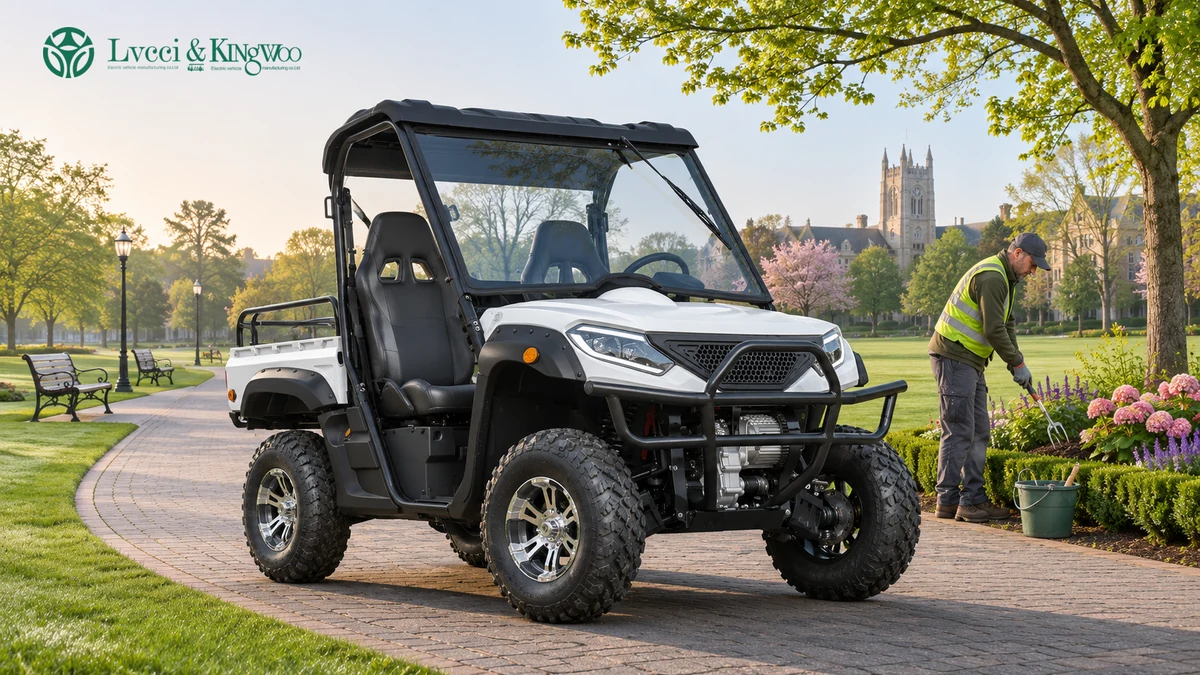
For high-end landscape sites with fine maintenance, the full-size UTV body is too large, which is easy to limit the operation in narrow landscape areas, and the self-weight is too high, which may damage the fine lawn. The compact medium UTV is specially designed for fine and lightweight site maintenance. The body is small and flexible, with low grounding pressure, and is perfectly suitable for exquisite landscape scenes.
Core performance advantages: compact body, extremely small turning radius, and can shuttle through various narrow landscape gaps; Lightweight body with low-pressure lawn tires to avoid soil compaction and lawn rolling damage to the greatest extent; softer operation, precise low-speed control, and adaptation Fine maintenance operations.
Recommended models: Toro Workman series, Cushman Hauler series, John Deere small Gator series, Kubota small RTV model.
Adaptation scenes: golf course fairways, professional sports lawns, high-end garden landscapes, exquisite villa areas, small public green spaces and other refined operation and maintenance scenes that require extremely high integrity and aesthetics of the venue.
The multi-seat passenger version UTV takes 4-6 seat layout as its core feature and adopts convertible design. It can flexibly adjust the passenger space and cargo space according to the operation requirements, taking into account the dual requirements of team commuting and material transfer. It is the rigid equipment of large-scale operation and maintenance team.
Core performance advantages: 1 vehicles are multi-used, no separate commuter vehicles are required, and team personnel transfer + tool material carrying can be completed at one time; The seat layout is reasonable, the riding comfort is high, and it is suitable for cross-regional operations in large-scale sites. The standard cargo hopper and expansion capability are retained without affecting routine maintenance operations.
Benchmark recommended models: Polaris Ranger Crew 6-seat Edition, Kawasaki Mule Pro-FXT Transfer Edition, John Deere Gator Crew Series, Bombardier Defender MAX Multi-seat Edition.
Adaptation scenarios: large parks, municipal parks, contiguous green spaces, engineering operation and maintenance sites, etc. that require multi-person collaborative work and high-frequency cross-regional commuting.
In order to facilitate rapid and accurate selection of products, models can be directly matched according to core operation requirements: full-size fuel/diesel UTV is preferred for heavy-duty high-frequency operation, electric UTV is preferred for environmental protection mute scene, compact lawn special UTV is preferred for fine lawn operation and maintenance, multi-seat crew UTV is preferred for team cooperation operation, and diesel UTV is preferred for remote field high-intensity operation.
The operation requirements, terrain conditions, and performance focus of different site operation and maintenance scenarios vary greatly, and blind general-purpose models will lead to insufficient operation efficiency or waste of equipment performance. This section combines eight high-frequency operation and maintenance scenarios to provide UTV selection standards, core configuration requirements, and benchmark model recommendations.
Material transfer is the most basic and high-frequency work of site operation and maintenance. The core requirements are large load, convenient unloading and strong durability. The equipment is required to carry heavy-duty materials for a long time, reduce the number of round-trip transfers and reduce the intensity of manual unloading.
Preferred model: full size fuel/diesel commercial UTV
Core necessary configuration: more than 800 pounds of cargo bucket, hydraulic self-unloading system, high-strength steel bucket body, multi-point fixed strap interface, more than 1500 pounds of drag bearing capacity
The core requirements for equipment for pest control, fertilization and sowing are low-speed stability, stable body and strong expansibility. Spray tanks, fertilizer spreader and sowing tools need to be carried, and low-speed driving is not bumpy to ensure operation uniformity.
Preferred models: full-size commercial UTV, silent electric UTV
Core essential configuration: stable low-speed driving mode, sufficient body expansion space, on-board power supply system, four-wheel drive lawn mode, stable suspension system
Large area lawn trimming and wasteland cleaning need to be matched with traction lawn mower, rake floor machine and floor conditioner. The core requirements are sufficient drag power, sufficient low-speed torque and stable body without rollover.
Preferred model: Full size fuel/diesel UTV
Core necessary configuration: low-speed crawling gear, high-torque engine, standard rear towing interface, stable suspension, four-wheel drive differential lock
Large-scale parks, contiguous green spaces, and field work sites require frequent transfer of operation and maintenance teams and tool consumables. The core requirements are multi-person rides, flexible adaptation, and cargo loading.
Preferred model: multi-seat occupant conversion UTV
Core necessary configuration: 4-6 person safety seat, convertible cargo space, stable body structure, convenient getting on and off design
Golf courses, sports lawns, and high-end landscape green spaces have extremely high requirements for the integrity of the venue. Rolling, compaction, and scratches are strictly prohibited. The core requirements are low grounding pressure, silence, and non-destructive lawns.
Preferred models: compact lawn UTV, commercial electric UTV
Core essential configuration: lawn special low-pressure tires, turf non-destructive driving mode, lightweight body, silent operation system
Snow removal and antifreeze maintenance in winter sites require equipment to be adapted to low temperature, rain and snow, and wet and slippery terrain. The core requirements are four-wheel drive anti-skid, closed heat preservation, and snow removal machines.
Preferred model: Full size fuel UTV with enclosed cab
Core necessary configuration: closed thermal insulation cab, air conditioning, four-wheel drive differential lock, anti-skid tires, snow shovel/salt spreader expansion interface
The public space has a large flow of people and is sensitive to the environment. The operation needs to be efficient, quiet, safe and environmentally friendly, and at the same time adapt to the diversified operation needs of the four seasons.
Preferred models: full-size commercial UTV, electric silent UTV combination
Core essential configuration: safety protection structure, low noise operation, zero emission, full machine expansion capacity, high durability
The terrain of agricultural, forestry, pasture and field sites is complex, with steep slopes, muddy, woodland and potholes. The operation intensity is high and the distance is long. The core requirements are high passability, strong power, high durability and long endurance.
Preferred models: heavy duty diesel UTV, high horsepower fuel UTV
Core necessary configuration: ultra-high ground clearance, enhanced four-wheel drive system, differential lock, high torque power, thickened frame, anti-wear chassis
At present, the site operation and maintenance UTV is mainly divided into electric, fuel (gasoline/diesel) two power types, each has its own adaptation advantages, there is no absolute advantages and disadvantages. The core of product selection depends on the operating scenario, charging conditions, operating intensity, environmental protection requirements, and long-term operating costs.
There are obvious differences between electric UTV and fuel/diesel UTV in the dimensions of endurance, power, use cost, scene adaptation, etc. In order to facilitate rapid comparison and selection, the core parameters are now sorted into the following table:
| Contrast dimension | Electric UTV | Fuel/Diesel UTV |
| Endurance | No-load endurance of 40-80 miles, slight attenuation of endurance under heavy load, low temperature and climbing conditions, suitable for fixed routes and daily routine operations | No endurance anxiety, refueling can quickly replenish energy, support all-day uninterrupted, long-distance field operations |
| dynamic performance | Zero-speed instantaneous torque, stable start and stop, accurate low-speed control, suitable for fine spraying, fertilization, short-distance and heavy-duty operations | The torque increases steadily with the speed, high speed, continuous heavy load, and stronger climbing performance, suitable for high-intensity continuous operation |
| Noise and emissions | Zero exhaust emissions, ultra-quiet operation, suitable for campuses, parks, residential areas and other environmental protection, noise-sensitive sites | Exhaust emissions and operating noise, unable to adapt to silent, high environmental control scenarios |
| Operation and maintenance cost | There is no need to replace consumables such as oil and filter elements. Only tires and brakes are vulnerable parts. The energy consumption cost is only 1/5-1/10 of that of fuel models, which is cost-effective for a long time. | Need to replace all kinds of consumables regularly, fuel consumption, annual maintenance costs are higher, long-term operation and maintenance costs are high. |
| Environmental Adaptability | Low temperature environment battery life is slightly reduced, but the equipment starts stably without fault | Strong ability to resist low temperature and complex working conditions, stable performance in extreme cold and harsh environment |
| Acquisition and replenishment | Bare car purchase price is high, need supporting charging facilities, suitable for fixed site normal operation and maintenance | The price of naked cars is lower, refueling is convenient, there is no space restriction, and it is suitable for scenes without supporting facilities in the field. |
It has a fixed operation and maintenance site and complete supporting charging facilities. The operation route is fixed and the daily operation mileage is moderate. The site is sensitive to noise and environmental protection such as campuses, parks, high-end parks, residential areas, etc. The pursuit of long-term low-cost operation and maintenance, low failure and low labor maintenance; A site that needs to be mute in the morning and at night.
Remote field sites, no fixed charging conditions; Daily high-intensity, long-distance, all-day uninterrupted heavy-duty operations; Severe cold, low-temperature and high-frequency operating environment; Just-needed operation and maintenance scenarios that require fast energy replenishment and no downtime waiting time.
For a large area, multi-scenario integrated operation and maintenance site, the optimal solution is. Oil and electricity mix and match: Electric UTV is responsible for daily fine maintenance, mute operation in public areas, short-distance material transfer and team commuting. Fuel/diesel UTV is responsible for field heavy load transfer, long-distance operation, winter snow removal, high-intensity machine towing, taking into account operation efficiency, environmental protection standards and long-term economy.
The purchase of operation-level UTV needs to abandon the purchase thinking of entertainment models, not blindly pursue high horsepower, cool appearance and speed performance, focus on the core configuration of commercial operations, and screen according to priority to ensure that the equipment is suitable for long-term high-frequency operation and maintenance work.
| Priority | Core Configuration Item | Key Points and Configuration Recommendations |
| Priority 1 | Load and discharge capacity | The cargo hopper has a load of more than 800 pounds and comes standard with hydraulic/pneumatic self-unloading function. Equipped with multi-point strap fixing interface and thickened steel bucket body; Calculate the total load of the whole vehicle (including personnel + materials) to avoid overload operation. |
| 2nd Priority | Drag and low speed control capability | The towing bearing capacity is more than 1500 pounds, and the original rear towing interface and low-speed crawling gear are standard. Ensure smooth operation of towing machines and tools without slipping or warping. |
| Priority 3 | Four-wheel-drive terrain adaptation and lawn protection | Can switch 2WD/4WD four-wheel drive system, differential lock, professional lawn mode; effectively deal with complex terrain, avoid lawn rolling damage. |
| Priority 4 | Ground clearance and suspension configuration | Full load ground clearance of more than 10-12 inches, with independent suspension, high-strength chassis guard; anti-bump and anti-bump, suitable for potholes, muddy, and complex terrain of woodland. |
| 5th Priority | Special tire configuration | Select low-pressure mute lawn tires for fine lawn scenes; Select high-strength wear-resistant all-terrain tires for complex terrain in the field; Accurate matching according to the operation scene, taking into account traffic and site protection. |
| Priority 6 | power system matching | Fine, quiet, fixed site selection of electric power, heavy load, field, all-weather operation selection of diesel power, general comprehensive scene selection of gasoline power. |
| Priority 7 | Cab and comfort configuration | Long-term outdoor operation, four-season all-weather operation and maintenance, preferably closed cab, cold and warm air conditioning, power steering models; reduce personnel fatigue and improve long-term operation comfort. |
| Priority 8 | Accessories to expand compatibility | Priority selection of accessories ecological perfect mainstream brands, can adapt to all kinds of operation and maintenance equipment, support the later function expansion, improve equipment reuse rate. |
| Priority 9 | Commercial durability and after-sales protection | Commercial grade frame, wet brake and lubrication points of the whole machine are preferred. The accessories have strong versatility and perfect local after-sales outlets to reduce equipment downtime. |
Most users buy UTV only pay attention to the price of naked cars and ignore the long-term operating costs, resulting in the problem of low-cost car purchase and high-cost car maintenance. This section provides a professional UTV full life cycle cost accounting method, accurate calculation of annual, hourly, unit area operation and maintenance costs, to help scientific selection.
According to the size of the site to determine the annual operation time: light operation and maintenance 200-400 hours/year, conventional commercial operation and maintenance 500-1000 hours/year, high-intensity normal operation and maintenance 1200-2000 hours/year, while recording the operation terrain, load, idle time, as the basis for cost accounting.
Fixed costs are not related to the length of the operation and include equipment depreciation, insurance costs, loan interest, and annual inspection storage costs. Depreciation expense calculation formula: (total purchase price-salvage value) ÷ useful life, commercial UTV regular useful life of 8-10 years, salvage value rate of about 20%-30%. Insurance, interest and storage expenses can be counted according to the actual annual expenditure.
Variable costs increase with the length of the job and are a core component of long-term operational costs. The first is the cost of energy consumption. Fuel models are calculated by hourly fuel consumption × oil price, and conventional fuel consumption is 1-3 gallons/hour. Electric models are calculated by hourly power consumption × electricity price, and the energy consumption cost is much lower than that of fuel models. The second is the maintenance cost. Fuel models need to regularly replace oil, filter elements, spark plugs, belts and other consumables. The annual maintenance cost is more than US $300-1,000; there are very few maintenance items for electric models, and only tires, brakes and other vulnerable parts need to be replaced., Maintenance costs are greatly reduced. The third is the cost of consumables loss and maintenance, including tire wear, parts replacement, sudden failure repair, maintenance consumables and other costs.
Total annual cost = fixed holding cost + variable operating cost; unit hourly cost = total annual cost ÷ annual operating hours; unit area cost = total annual cost ÷ operating site area. At the same time, it can account for the 10-year full life cycle cost. Although the initial purchase price of electric models is high, the long-term energy consumption and maintenance costs are lower, and the full-cycle economy far exceeds that of fuel models.
Combined with a large number of commercial UTV selection and site operation and maintenance actual combat cases, the ten high-frequency purchase errors are sorted out, the errors and corresponding hazards are clearly listed, the site managers and operation and maintenance teams are helped to avoid pits accurately, and various problems such as idle equipment, insufficient performance, site damage, cost overruns, etc.
| Serial Number | Misunderstanding in purchasing | Core Hazards |
| 1 | Wrong selection of entertainment UTV for commercial operations | Poor load, durability, scalability, unable to adapt to high-frequency operation and maintenance, long-term high-intensity operation is prone to failure and damage. |
| 2 | Underestimating the actual combined load demand | Only refer to the no-load parameters, ignore the weight of personnel, tools and materials, and accelerate the wear of the frame and transmission system due to long-term overload. |
| 3 | Neglect lawn protection related configuration | No lawn mode, low-pressure tires, easy to run the lawn, resulting in soil compaction, damage to the landscape, increase the cost of repair. |
| 4 | Only look at the price, horsepower, ignoring the comprehensive commercial performance | Blindly choose low-cost, high-horsepower entertainment models, poor commercial suitability, high operation and maintenance costs, the overall cost-effectiveness is extremely low. |
| 5 | Ignore long-term job comfort configuration | No power steering, closed cab and other configurations, long-term operation is easy to fatigue, greatly reducing the efficiency of team operation and maintenance. |
| 6 | Ignore equipment accessories to expand compatibility | The niche model accessories ecology is not perfect, can not carry operation and maintenance equipment, equipment single function, low utilization rate. |
| 7 | Misjudged the actual endurance of electric UTV | Trust the official no-load endurance data, ignore the attenuation of heavy load, climbing and low temperature endurance, and are prone to power failure and shutdown during operation. |
| 8 | Ignore the brand local after-sales supporting ability | There are no local outlets for niche models, and accessories are scarce. Maintenance lags behind after failure, resulting in long-term downtime and missed work. |
| 9 | No real scene heavy load condition test | No-load test drive only in the exhibition hall. After purchase, it was found that the power and terrain passability did not match the actual operation scene. |
| 10 | Single season special selection, ignoring the four seasons commonality | Single equipment adaptation scenario, long-term idle in off-season, low equipment utilization rate, high overall operation and maintenance costs |
Most electric UTV in the market is modified from fuel models, there are power adjustment imbalance, unreasonable battery layout, lack of commercial durability and other short board, it is difficult to adapt to high-frequency site operation and maintenance conditions. And professional manufacturers to build native commercial electric UTV specially designed for large-area site operations, with significant comprehensive advantages.
Its original electric structure is suitable for low-speed and heavy-duty, high-frequency start-stop, long-term continuous operation scenarios, balanced chassis counterweight, smooth power output, and completely solve the problems of power caton and unstable center of gravity of the modified model. At the same time, the maintenance system is very simple, without complex consumables of fuel-free models, and the maintenance workload is reduced by more than 70%, which can effectively reduce the cost of accessories and labor and reduce the delay of equipment downtime.
In addition, the original electric UTV silent zero emissions, suitable for campuses, parks, high-end landscape and other environmental noise-sensitive sites, in line with green operation and maintenance needs. The whole machine adopts commercial-grade frame, reinforced suspension and heavy-duty cargo bucket. Its durability is comparable to that of high-end fuel models. It is matched with exclusive charging scheme, battery warranty and fleet management system. It is more suitable for large-scale commercial operation and maintenance. Its long-term stability and cost performance are far better than those of modified electric models.
Comprehensive full-text selection logic, site maintenance and large-area operation UTV’s core purchase principle is not “choose the most expensive, the largest horsepower”, but “accurately match the scene, taking into account efficiency and long-term cost”. Ordinary general scenes give priority to full-size fuel commercial UTV, environmental protection mute sensitive scenes give priority to native electric UTV, heavy-duty field high-intensity operations give priority to diesel UTV, fine landscape sites give priority to compact lawn special UTV, and team collaborative operations give priority to multi-seat conversion UTV.
Commercial operation selection should always give priority to load and drag capability, terrain adaptability, parts expansion, equipment durability and after-sales guarantee, abandon entertainment attribute parameters, combine with its own operation scene, charging conditions, operation and maintenance intensity, and budget, select suitable models, and adopt oil-electric hybrid fleet mode when necessary, so as to maximize operation efficiency, reduce whole life cycle operation and maintenance costs, and realize site refinement, high efficiency, normalization and long-term management and protection.
Full-size commercial fuel UTV is the most versatile model, represented by John Deere Gator, Polaris Ranger and Kawasaki Mule series, which takes into account load, towing, expansion and terrain adaptation capabilities, and can cover more than 90% of conventional large-area site operation and maintenance scenes with the best cost performance and stability.
The new professional commercial electric UTV has been fully adapted to conventional heavy-duty operations. The load of mainstream models can reach 1000-1300 pounds, with a towing capacity of about 2000 pounds. The instantaneous torque is better than that of fuel-fired models. It fully meets the requirements of material transfer, machine towing and site maintenance, and is only not suitable for super-heavy field continuous operations.
It is only suitable for large sites, daily high-intensity heavy-duty and long-distance field operations. For operation and maintenance of ordinary parks and small and medium-sized sites, the fuel gasoline version or the electric version are more cost-effective, and there is no need to blindly purchase diesel engines.
Conventional site operation and maintenance recommends a minimum load of 800 pounds, and large-area high-frequency material transfer is preferably 1000-1500 pounds of load vehicles, which can completely cover conventional loads such as tools, fertilizers, materials, garbage, etc. to avoid overload operations.
You can. Lawn mode can greatly reduce ground rolling and soil compaction by unlocking rear wheel differential speed, reducing tire sliding friction and matching low-pressure lawn tires. It is a necessary configuration for fine lawn operation and maintenance and can protect the integrity of landscape lawn to the greatest extent.